
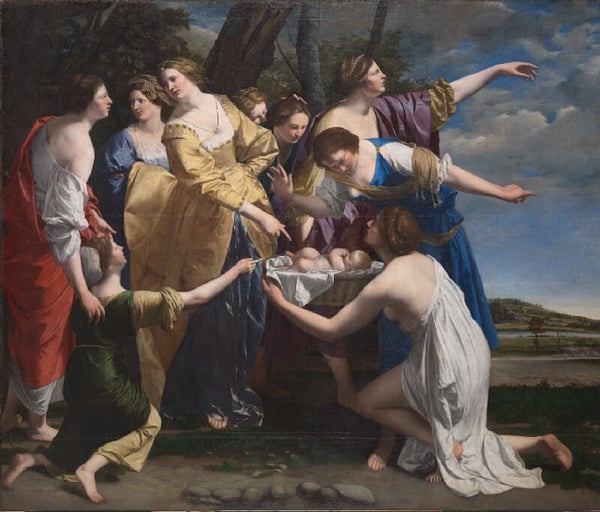
Analisi esperta di Finding of Moses di Orazio Gentileschi
Stile: Mannerism (Late Renaissance) · Genere: religious painting
Based solely on the provided facts—that Finding of Moses by Orazio Gentileschi is a Mannerist (Late Renaissance) religious painting—its significance lies in how it embodies the key artistic concerns of Mannerism while addressing a sacred narrative.
Analysis and Significance within Mannerism (Late Renaissance):
As a Mannerist work, Finding of Moses likely departs from the balanced, naturalistic ideals of the High Renaissance in favor of artifice, elegance, and emotional intensity. The “finding” of the infant Moses is a dramatic biblical episode (from Exodus), and Mannerist painters often heightened such scenes through:
- Composed Unnaturalness: Figures may be arranged in artificial, serpentine poses (the figura serpentinata) rather than natural stances, emphasizing grace over realism.
- Spatial Complexity: The composition might employ ambiguous or crowded space, with figures pushed to the foreground or arranged in shallow depth, rejecting clear perspective.
- Luminous Color: Mannerist palettes often feature acidic, cool, or artificial colors—such as sharp pinks, greens, or yellows—to create a sense of preciousness or tension rather than natural light.
- Intellectual Refinement: The painting would likely be self-consciously sophisticated, displaying the artist’s skill in elaborate drapery, detailed accessories, and learned references (e.g., Egyptianizing details for the setting).
Why It Matters:
- Late Renaissance Transition: This work exemplifies how religious painting evolved from the Renaissance’s emphasis on devotional clarity and harmony toward a more subjective, courtly, and theatrical style that foretold the Baroque.
- Gentileschi’s Role: Orazio Gentileschi was a key figure bridging the Mannerist tradition with the naturalist innovations of Caravaggio. In Finding of Moses, his Mannerist roots might be seen in the refined, almost precious treatment of figures and fabrics, even as he introduces a more direct, human immediacy in facial expressions.
- Narrative Impact: By choosing Moses’ discovery—a story of hidden identity and divine rescue—Gentileschi uses Mannerist artificiality to underscore the miraculous nature of the event, making the sacred feel both elegant and uncanny.
Ultimately, the work is a significant example of Late Renaissance religious art that prioritizes stylistic virtuosity and emotional complexity over simple naturalism, capturing the spirit of a period eager to push beyond classical restraint.
Museum / Gallery
Visivamente simili
20 opere con composizione e palette affini

[Unkown]
Jacopo Vignali

Moses saved from the waters
Giovanni Francesco Romanelli

Diana Resting After the Hunt, with Shepherdesses and Two Greyhounds, a Landscape Beyond
Gerard van Honthorst

Sacrifice of Iphigenia
Jan Steen
Death of Dido
Sebastien Bourdon

The Rape of Europa
Paolo Veronese

Psyche's Sisters Giving her a Lamp and a Dagger
Luca Giordano

Finding of Moses
Elisabetta Sirani

Massacre of the Innocents
Guido Reni

Romulus and Remus Given Shelter by Faustulus
Pietro da Cortona
The Justice of the High Court
Theodoor van Thulden

The Departure of Lot and His Family from Sodom
Peter Paul Rubens

The Flight of Lot and His Family from Sodom
Jacob Jordaens

Rinaldo and Armida
Giovanni Battista Gaulli
The finding of Moses
Sebastien Bourdon
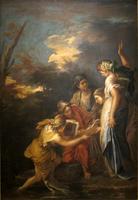
The Finding of Moses
Salvator Rosa

Granida and Daifilo
Dirck van Baburen
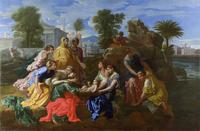
The Finding of Moses
Nicolas Poussin

Rebecca und Elezier
Hendrik Heerschop

The abduction of Europe
Guido Reni