Analisi esperta di The Tinted Venus (detail) di John Gibson
Stile: Neoclassicism · Genere: sculpture
Expert Analysis: "The Tinted Venus (detail)" by John Gibson
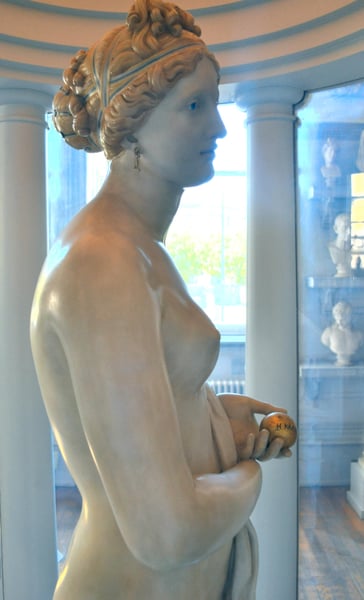
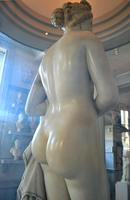
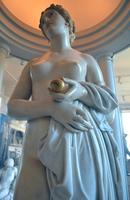
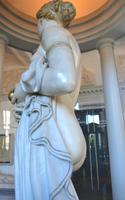
John Gibson’s The Tinted Venus (1851–56) stands as a pivotal—and at the time, controversial—monument within Neoclassical sculpture. Although the movement generally revered the pristine white marble of ancient Roman copies, Gibson deliberately challenged this orthodoxy by reintroducing polychromy, or surface tinting, a practice known to have been used on ancient Greek statuary but largely ignored by 19th‑century idealists.
The “detail” in question likely focuses on the goddess’s flesh tones, hair, or the subtle blush on her cheeks—elements that Gibson carefully applied in wax-based tints. This choice was inspired by contemporary archaeological discoveries of painted Greek sculptures, such as the Aegina marbles, and by Gibson’s own study of ancient polychrome fragments. By giving Venus a lifelike, warm hue, he aimed to restore the sensuous immediacy that the original Greek artists intended, arguing that plain white marble rendered the figure cold and disembodied.
Significance within Neoclassicism and its wider context:
-
Breaking the white‑marble taboos: Neoclassicism’s high priests—Winckelmann, Canova, Thorvaldsen—had championed monochrome as the pinnacle of pure, timeless beauty. Gibson’s tinting was seen as vulgar and too naturalistic; critics at the Royal Academy derided it as “doll‑like.” Yet the work forced a reconsideration of how much color belonged in high art.
-
Reviving ancient practice: Gibson was not merely decorative; his tinting was archaeologically informed. He used subtle gradients—pink for cheeks, amber for hair—that echoed the encaustic techniques described by Pliny. This made The Tinted Venus a bridge between historical accuracy and ideal form, predating the later polychrome experiments of French sculptors like Charles‑Henri‑Joseph Cordier.
-
Genre‑defying ambition: As a sculpture, it occupies a strange middle ground between the cool intellectualism of Neoclassicism and the emerging sensuality of Victorian naturalism. The detail—whether a subtle rendering of her lips or the soft glow of her skin—emphasizes the work’s palpable materiality. Gibson wanted viewers to feel the presence of a real, breathing Venus, not an abstract ideal.
In sum, The Tinted Venus (detail) is significant because it confronts the core Neoclassical dogma of uncolored marble and argues for a more historically authentic, tactile approach to ancient beauty. It remains a landmark in the debate over color in sculpture, influencing later movements from Pre‑Raphaelitism to the Aesthetic movement.
Visivamente simili
20 opere con composizione e palette affini
The Tinted Venus (detail)
John Gibson
The Tinted Venus (detail)
John Gibson
The Tinted Venus (detail)
John Gibson
The Tinted Venus (detail)
John Gibson
The Tinted Venus (detail)
John Gibson
Fata Morgana
Giambologna
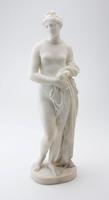
Venus
John Gibson
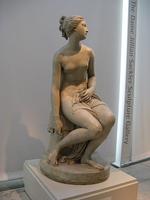
Nymph untying her sandal
John Gibson
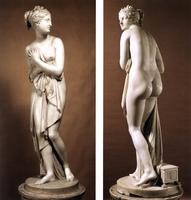
Venus Italica
Antonio Canova
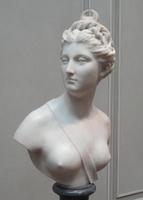
Diana
Jean-Antoine Houdon
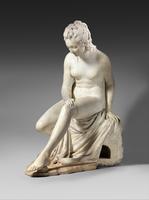
Bather (from a Fountain Group)
Jean-Antoine Houdon
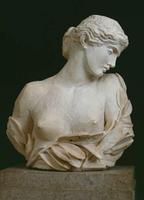
Daphne
George Frederick Watts
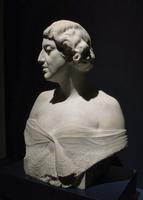
Quevedo Pessanha Carmen
Mariano Benlliure
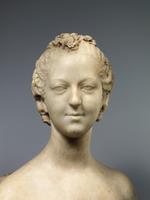
Madame De Pompadour (detail)
Jean-Baptiste Pigalle
Laughing Boy
Desiderio da Settignano
Giovinetto
Desiderio da Settignano
Anna Quincy Waterstone
Edmonia Lewis
The Three Graces
Antonio Canova
Diana
Jean-Antoine Houdon
Mme Vicuna
Auguste Rodin