Analisi esperta di Sleeping Shepherd Boy di John Gibson
Stile: Neoclassicism · Genere: sculpture
Expert Analysis: Sleeping Shepherd Boy by John Gibson
Style & Context:
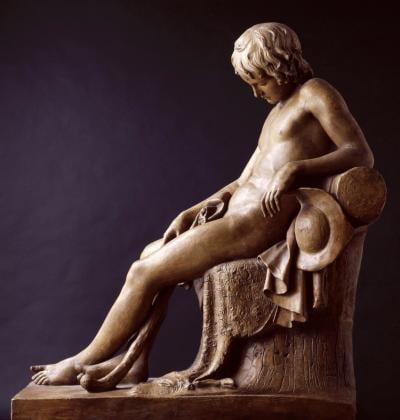
John Gibson was a leading figure in Neoclassical sculpture, a movement that sought to revive the clarity, restraint, and idealized forms of ancient Greek and Roman art. Sleeping Shepherd Boy exemplifies this ethos through its serene, balanced composition and polished marble surface. The subject—a young shepherd at rest—draws on the classical pastoral tradition, evoking the timeless Arcadian ideal of harmony between humanity and nature.
Significance within Neoclassicism:
What makes this work particularly notable is Gibson’s ability to merge classical idealism with a tender, naturalistic observation of childhood. Unlike the heroic or mythological figures common in Neoclassical sculpture, the shepherd boy is a humble, everyday subject. Yet Gibson elevates it by imposing the formal principles of ancient statuary: a clean silhouette, smooth transitions of mass, and a calm, withdrawn expression. The closed eyes and relaxed posture convey a state of pure innocence, free from the dramatic tension seen in Baroque predecessors.
Artistic Achievement:
Gibson’s technical mastery is evident in the delicate carving of the boy’s curls, the soft drapery of his sheepskin, and the careful shading that suggests both flesh and fabric. The figure’s subtle contrapposto—a slight twist in the torso—gives a sense of natural slumber while maintaining the sculptural solidity prized in Neoclassicism. Gibson also avoids overt sentimentality, instead offering a quiet, contemplative vision of youth that aligns with the era’s moral and aesthetic ideals.
Legacy:
Sleeping Shepherd Boy stands as a refined example of Neoclassical sculpture’s capacity to find universal grace in simple, human moments. It reflects Gibson’s commitment to the “noble simplicity and calm grandeur” defined by Johann Joachim Winckelmann, the movement’s theorist. The work remains significant for demonstrating how classical forms could be adapted to portray vulnerable, unidealized innocence—a bridge between antiquity and the emerging sensibility of Romanticism.
Visivamente simili
20 opere con composizione e palette affini
Bather (from a Fountain Group)
Jean-Antoine Houdon
Narcissus
John Gibson
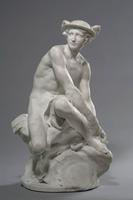
Mercury Attaching his Winged Sandals
Jean-Baptiste Pigalle
Ninfa Dormiente
Giambologna
Astronomy
Giambologna
Bronze à patine brun vert
Antoine-Louis Barye
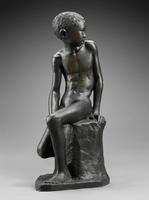
Young Boy
Augusta Savage
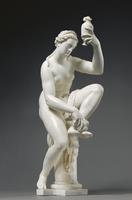
Female Figure
Giambologna
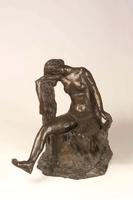
La Bacchante
Charles Despiau
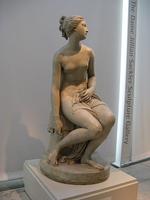
Nymph untying her sandal
John Gibson
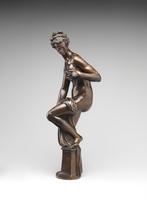
Bathing Venus
Giambologna
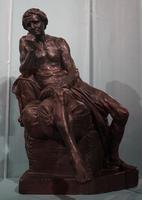
Le Citoyen
Jean-Baptiste Pigalle
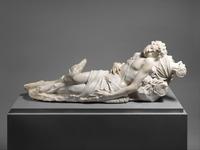
Adonis
Antonio Corradini
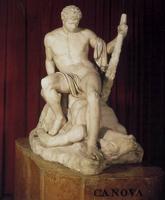
Theseus and the Minotaur
Antonio Canova
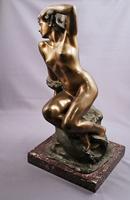
Pathos
Achille D'Orsi
Psychomachia Or Victory of Virtue over Vice
Giambologna
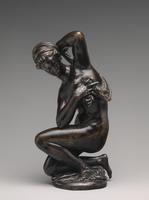
Crouching Venus
Giambologna
Resting
Yannoulis Chalepas
Architecture (or Geometry)
Giambologna
Tanagra
Jean-Leon Gerome