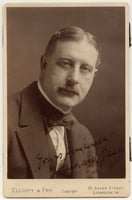
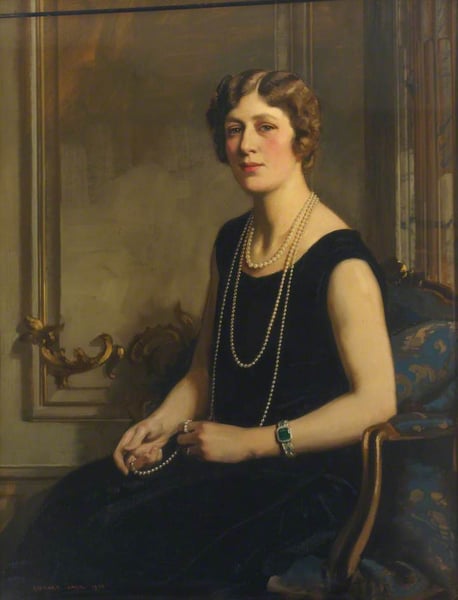
Mary, Princess Royal and Countess of Harewood
Analisi esperta di Mary, Princess Royal and Countess of Harewood di Richard Jack
Stile: Impressionism · Genere: portrait
Expert Analysis: "Mary, Princess Royal and Countess of Harewood" by Richard Jack
Style: Impressionism | Genre: Portrait
This portrait of Princess Mary—the only daughter of King George V and Queen Mary, painted after her 1922 marriage to the 6th Earl of Harewood—represents a fascinating convergence of traditional royal portraiture and the looser, more modern techniques of Impressionism. Richard Jack, a founding member of the Royal Society of Portrait Painters, was one of the first British artists to fully embrace Impressionist methods in official court painting, making this work significant as a bridge between Edwardian formality and early 20th-century artistic freedom.
What makes it significant within its style and period:
-
A Royal Portrait Reimagined
Unlike stiff, highly polished state portraits of the era, Jack employs visible brushwork, soft edges, and a vibrant but modulated palette. The sitter is not depicted on a throne or in ceremonial dress but in a more intimate, naturalistic setting—likely Harewood House—wearing a fashionable gown. This shift mirrors the broader Impressionist goal of capturing fleeting moments and personal character over idealized formality. -
Impressionism’s Entry into the Court
In the early 20th century, British royal portraiture was dominated by academic realism (e.g., works by Sir William Orpen). Jack’s use of broken color and atmospheric light—especially in the background and the rendering of fabric—marks a deliberate departure. The portrait’s significance lies in its proof that Impressionist principles could serve the dignity of a royal subject while still conveying modernity and approachability. -
Psychological Depth via Painterly Technique
The handling of light on the princess’s face and hands draws attention to her expression and poise, not as symbols of power but as a living person. Jack’s loose brushstrokes in the sitter’s dress and the surrounding interior suggest movement and life, aligning with the Impressionist insistence on capturing the sensory experience of the moment. -
Artistic Legacy
Richard Jack was a key figure in bringing British portraiture into the modern era. This work stands as an exemplar of how Impressionism—often associated with landscapes and leisure scenes—could be successfully adapted to the highest echelons of society painting, influencing later royal portraits by artists like Sir James Gunn.
In sum, "Mary, Princess Royal and Countess of Harewood" is significant because it effortlessly marries the gravitas of a royal commission with the freshness and spontaneity of Impressionism, marking a turning point in how British royalty chose to be seen—not as untouchable icons, but as individuals within a living, breathing world.
Visivamente simili
20 opere con composizione e palette affini
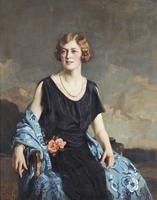
Lady Phyllis Hervey
Richard Jack
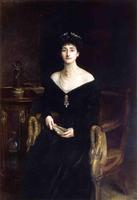
Portrait of Mrs. Ernest G. Raphael, nee Florence Cecilia Sassoon
John Singer Sargent
Ritratto Di Felicetta Paris
Pasquale Celommi
Portrait of Madame Leblanc
Jean Auguste Dominique Ingres
Helene de Rua, Princess Jean de Merode
Zinaida Serebriakova
Lady Evelyn Cavendish
John Singer Sargent
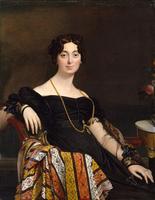
Madame Jacques Louis Leblanc Francoise Poncelle
Jean Auguste Dominique Ingres
Retrato de Josefa de Corte de Gargollo
Joaquin Manuel Fernandez Cruzado
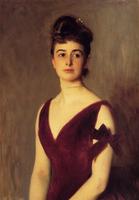
Mrs Charles E. Inches (Louise Pomeroy)
John Singer Sargent
Female Portrait
Konstantin Makovsky
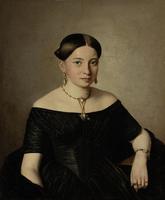
Countess Dimitri Tatischeff
Ferdinand Georg Waldmüller
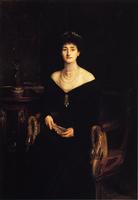
Mrs. Ernest G. Raphael (Florence Cecilia Sassoon)
John Singer Sargent
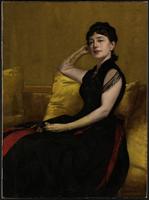
Kate Field
Francis Davis Millet
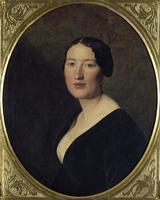
Portrait De Madame Josef Bayer
Ferdinand Georg Waldmüller
Portrait of Eugenia, Wife of Kleomenis Tsitsaras
Alekos Kontopoulos
Portrait of a P.I. Sapozhnikova
Vasily Tropinin
Lady Frances Gresley
Philip de Laszlo
Portrait of a lady (Alice Dorchy?), seated, wearing a blue dress and blue head-band
Diogène Maillart
Portrait of Madame Bruyere
Antoine-Jean Gros
The Duchess of York
Philip de Laszlo