The Parasol
Analisi esperta di The Parasol di Joseph Farquharson
Stile: Realism · Genere: genre painting
Expert Analysis of "The Parasol" by Joseph Farquharson
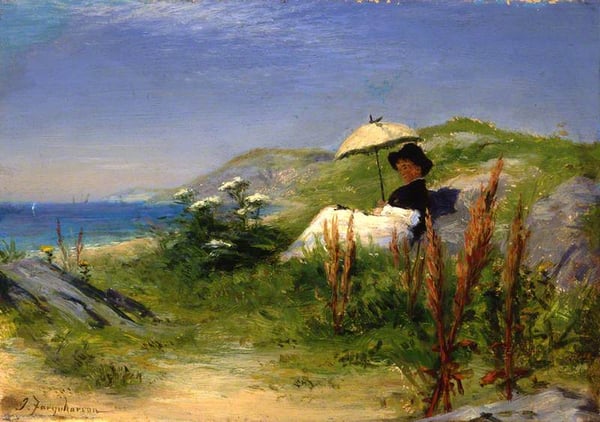
Joseph Farquharson’s The Parasol is a masterful example of Realist genre painting, a work that epitomizes the artist’s dedication to capturing the quiet dignity of rural life and the subtle interplay of natural light. While Farquharson is best known for his snow-covered landscapes and depictions of sheep in the Scottish countryside, this painting shifts focus to a solitary female figure—a reminder that his Realism extended beyond animals and weather to the human experience within nature.
The significance of The Parasol within the Realist tradition lies in its refusal to romanticize. Unlike the dramatic narratives of history painting or the idealized forms of Neoclassicism, Realist genre painting sought to present scenes of ordinary life with unembellished truthfulness. Here, Farquharson achieves this through a careful observation of light and atmosphere. The parasol, a fashionable accessory of the period, is not merely a prop but a compositional device that filters and reflects light, creating delicate shadows on the woman’s face and dress. The artist’s brushwork is precise yet painterly, capturing the textures of fabric, foliage, and the earthy tones of the landscape without sentimentality.
Farquharson’s technical skill is most evident in his handling of luminosity. Unlike the stark, high-contrast effects of his snowy scenes, The Parasol explores a softer, more diffused daylight—perhaps filtered through clouds or tree canopies. This nuanced control of tone aligns with the Realist emphasis on plein-air observation, even if the final work was completed in the studio. The composition is balanced yet informal: the figure is slightly off-center, her gaze directed away from the viewer, as if caught in a private moment. This sense of candidness reinforces the Realist goal of depicting life as it is lived, not as it is staged.
Within Farquharson’s oeuvre, The Parasol also demonstrates his range. While many of his works focus on the harshness of Scottish winters, this piece turns to a quieter, warmer season—possibly late summer or early autumn. The presence of the parasol suggests leisure, but the unpretentious setting (a grassy bank, perhaps near a field or wood) keeps the scene rooted in rural authenticity rather than aristocratic display. In this way, the painting bridges the gap between the genre painting tradition of the Dutch Golden Age (with its intimate domestic interiors and symbolic objects) and the 19th-century Realist insistence on truth to contemporary life.
Ultimately, The Parasol matters because it exemplifies how Realism could elevate the simplest of moments—a woman pausing in the shade—into a meditation on light, texture, and the quiet poetry of everyday existence. Farquharson’s careful observation, his refusal to idealize, and his mastery of atmospheric effect make this work a subtle but compelling contribution to the Realist movement.
Genere
Stile
Visivamente simili
20 opere con composizione e palette affini
The Hillside (reading in Sun and Shade)
Frank W. Benson
In the garden
Giuseppe De Nittis
Woman in the umbrella, Douarnenez Bay
Jules Breton
The Shore at Dornoch, Highlands
Charles Conder
A Summer’s Day
Marie Duhem
On the Shore
Julian Alden Weir
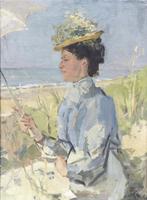
At the Beach - Portrait of Martha Salomon
Isaac Israels
Albert Edelfelt - Summer
Albert Edelfelt
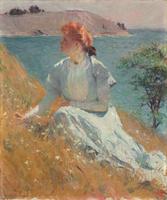
Margaret ("gretchen") Strong
Frank W. Benson
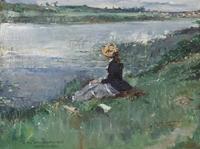
Contemplation on the riverbank
Adrien Moreau
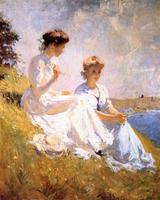
Elizabeth and Anna
Frank W. Benson
Young Girl in the Woods
Pierre-Auguste Renoir
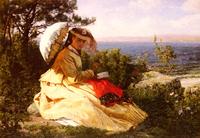
La Femme A L'ombrelle
Jules Breton
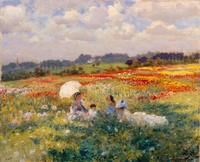
In the fields around London
Giuseppe De Nittis
A Summer Morning Tiff
Tom Roberts
In the Meadow
Claude Monet
On the Seashore
Kimon Loghi
The Beach in Normandy (also known as Good News)
Paul Peel
Idle Hours
William Merritt Chase
The Fairy Tale
William Merritt Chase