Katsushika Hokusai · Ukiyo-e · marina
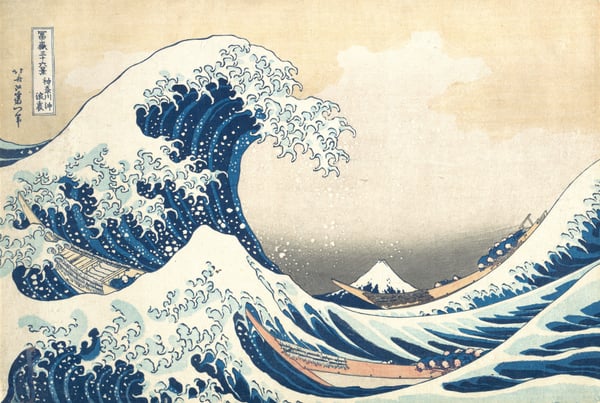
Die große Welle vor Kanagawa, eigentlich Unter der Welle im Meer vor Kanagawa, ist der Titel eines Farbholzschnitts im Ukiyo-e Stil des japanischen Künstlers Katsushika Hokusai.
30 Meisterwerke des japanischen Holzschnitts aus der fließenden Welt
Ukiyo-e, wörtlich 'Bilder der fließenden Welt,' ist eine der einflussreichsten Kunstformen Japans. In der Edo-Zeit (1603-1868) blühend, fingen diese Holzschnitte die lebendige Welt der Kabuki-Schauspieler, schönen Kurtisanen, Sumo-Ringer, legendären Landschaften und Alltagsszenen ein. Die technische Meisterschaft, die erforderlich war, um diese mehrfarbigen Bilder aus Kirschholzblöcken zu schnitzen, zu färben und zu drucken, bleibt eine der großen Errungenschaften der Druckkunst.
Hokusais Große Welle vor Kanagawa gehört zu den bekanntesten Bildern der Weltkunst, während Hiroshiges atmosphärische Landschaften Van Gogh, Monet und Whistler direkt inspirierten. Utamaros sinnliche Frauenporträts und Sharakus dramatische Schauspielerbildnisse vervollständigen eine Tradition, die den westlichen Impressionismus und Jugendstil tiefgreifend prägte.
Nutze die Checkliste, um zu verfolgen, welche Ukiyo-e-Meisterwerke du persönlich gesehen hast.
Katsushika Hokusai · Ukiyo-e · marina
Die große Welle vor Kanagawa, eigentlich Unter der Welle im Meer vor Kanagawa, ist der Titel eines Farbholzschnitts im Ukiyo-e Stil des japanischen Künstlers Katsushika Hokusai.
Katsushika Hokusai
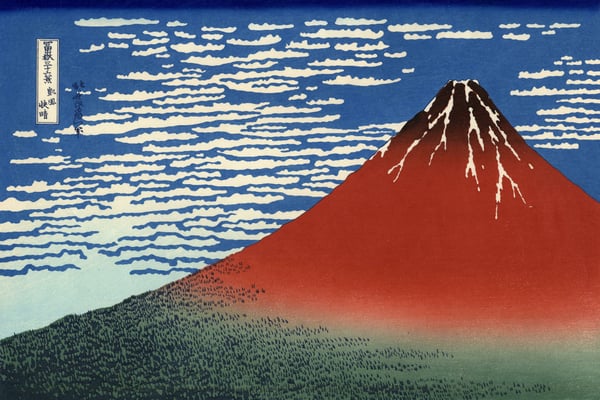
Fine Wind, Clear Morning , also known as Red Fuji , is a woodblock print by Japanese artist Hokusai (1760–1849), part of his Thirty-six Views of Mount Fuji series, dating from c. 1830 to 1832. The work has been described as "one of the simplest and at the same time one of the most outstanding of all Japanese prints".
Katsushika Hokusai
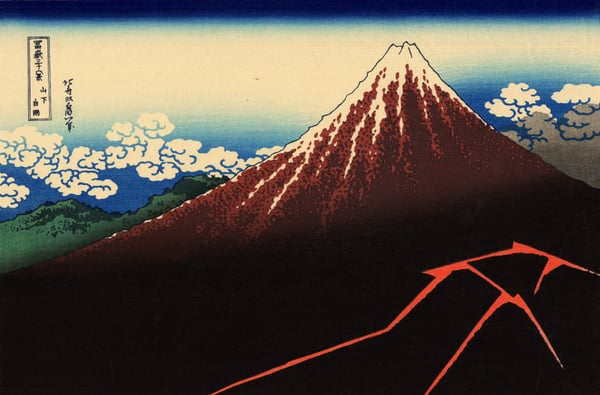
Thunderstorm Beneath the Summit , also known as Rainstorm Beneath the Summit, or sometimes Black Fuji is a woodcut print by the Japanese ukiyo-e master Hokusai (1760–1849). It is one of the most famous prints from his celebrated Thirty-six Views of Mount Fuji series, published c. 1830–1832.
Katsushika Hokusai
Kirifuri Waterfall is a woodblock print by Katsushika Hokusai.
Katsushika Hokusai
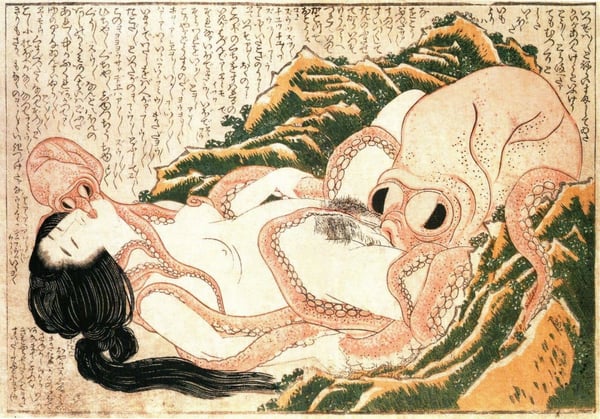
The Dream of the Fisherman's Wife , also known as Girl Diver and Octopi, Diver and Two Octopi, etc., is a woodblock-printed design by the Japanese artist Hokusai. It is included in Kinoe no Komatsu, a three-volume book of shunga erotica first published in 1814, and has become Hokusai's most famous shunga design. Playing with themes popular in Japanese art, it depicts a young ama diver entwined ...
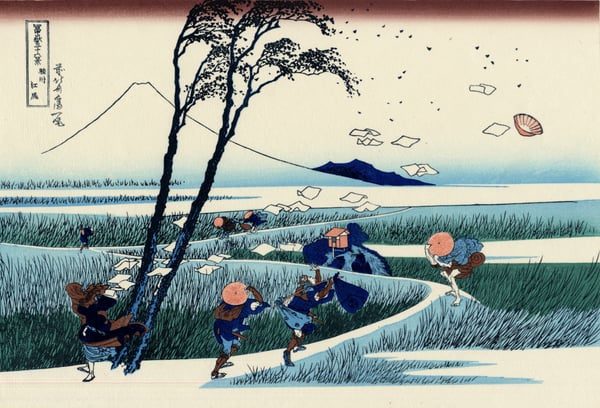
Katsushika Hokusai
Travellers Caught in a Sudden Breeze at Ejiri is a woodblock print by Katsushika Hokusai depicting the moment its title names—figures overtaken by wind at the location of Ejiri. The work belongs to Hokusai's series of landscape prints and demonstrates the characteristic formal conventions of that tradition.
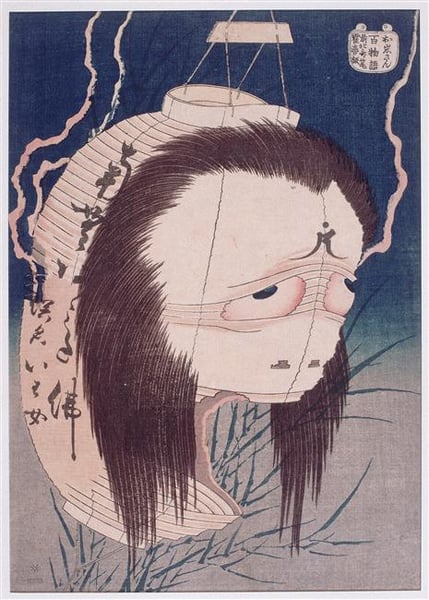
Katsushika Hokusai
Katsushika Hokusai's The Ghost of Oiwa is a work by the artist known for his woodblock prints and landscape compositions of the Edo and early Meiji periods.
Utagawa Hiroshige
Abendschauer über der großen Brücke in Atake oder auch Plötzlicher Schauer über der Shin-Ōhashi-Brücke und Atake ist der Titel eines Farbholzschnitts des japanischen Künstlers Utagawa Hiroshige. Das Werk wurde 1857 als Blatt Nr. 58 oder Nr. 52 der Serie 100 berühmte Ansichten von Edo veröffentlicht und ist eines der bekanntesten Drucke von Hiroshige. Der Holzschnitt zeigt Menschen, die versuche...
Utagawa Hiroshige
Utagawa Hiroshige's Plum Park in Kameido depicts the plum park at Kameido, a subject rendered in the woodblock print tradition of Edo-period Japan.
Utagawa Hiroshige
Night Snow at Kambara depicts a snow-covered landscape in the style of Japanese woodblock printing. The work is part of Hiroshige's documented body of art.
Utagawa Hiroshige
Hōeidō Edition: Nihonbashi is a woodblock print by Utagawa Hiroshige from his series depicting Japanese locations. The work belongs to the ukiyo-e tradition of Japanese printmaking.
Utagawa Hiroshige
Moon over the Sumida River by Utagawa Hiroshige depicts a nocturnal landscape featuring the Sumida River under moonlight. The work belongs to the ukiyo-e tradition of Japanese woodblock printing.
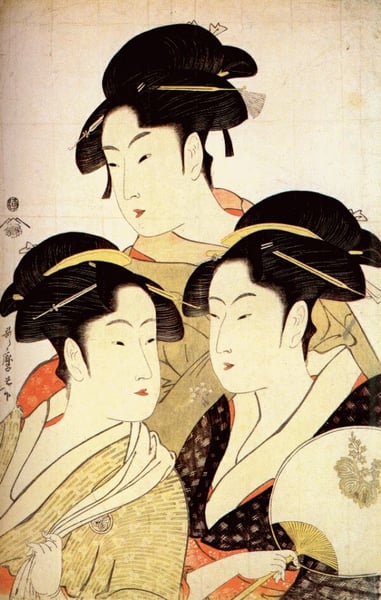
Kitagawa Utamaro · Ukiyo-e · portrait
Three Beauties of the Present Day is a nishiki-e colour woodblock print from c. 1792–93 by Japanese ukiyo-e artist Kitagawa Utamaro. The triangular composition depicts the profiles of three celebrity beauties of the time: geisha Tomimoto Toyohina, and teahouse waitresses Naniwaya Kita and Takashima Hisa. The print is also known under the titles Three Beauties of the Kansei Era and Three Famou...
Kitagawa Utamaro
Lovers in an Upstairs Room is a woodblock print by Kitagawa Utamaro.
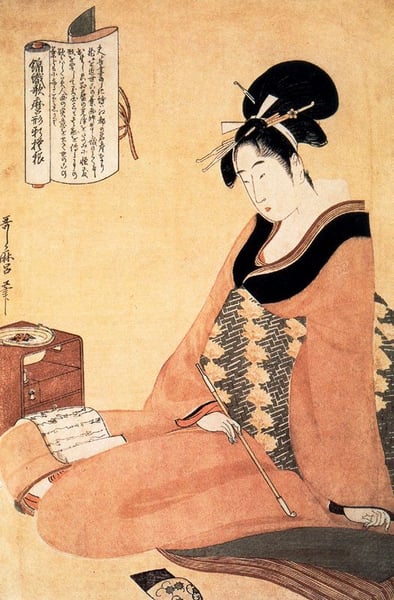
Gabriel Metsu · Baroque · genre painting
Woman Reading a Letter is a Baroque genre painting by Gabriel Metsu from 1666. The work depicts a woman engaged in the act of reading a letter, a subject characteristic of Dutch Golden Age painting's interest in domestic interiors and everyday moments.
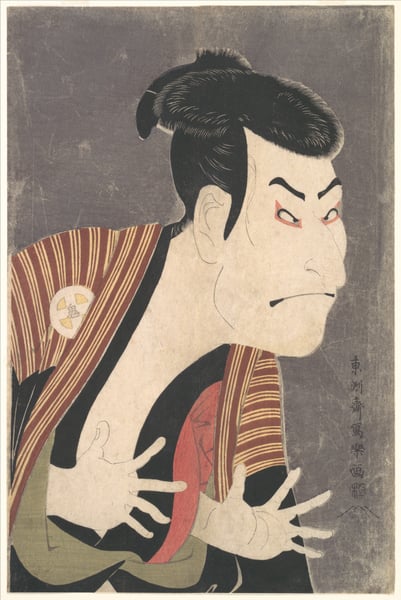
Tōshūsai Sharaku
Tōshūsai Sharaku's Ōtani Oniji III as Yakko Edobei is a woodblock print depicting the actor Ōtani Oniji III in the role of Yakko Edobei. The work belongs to the ukiyo-e tradition of Japanese printmaking.
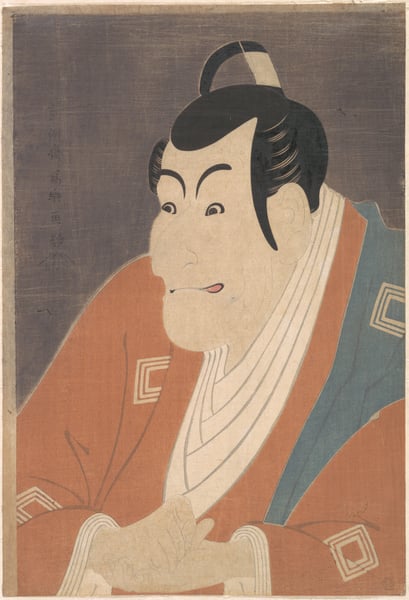
Tōshūsai Sharaku
Ichikawa Ebizō as Takemura Sadanoshin is a woodblock print by Tōshūsai Sharaku depicting the actor Ichikawa Ebizō in the role of Takemura Sadanoshin. Sharaku's work belongs to the ukiyo-e tradition of Japanese prints, which specialized in portraying kabuki actors and theatrical scenes.
Hishikawa Moronobu
Beauty Looking Back by Hishikawa Moronobu depicts a female figure turning to glance over her shoulder. The work exemplifies the ukiyo-e tradition of bijin-ga, or pictures of beautiful women, a genre in which Moronobu was a pioneering figure during Japan's Edo period.
Utagawa Kuniyoshi
Fuji from Gotenyama is a work by Utagawa Kuniyoshi.
Suzuki Harunobu
The Courtesan Hinazuru is a woodblock print by Suzuki Harunobu depicting a courtesan identified by that name.
Suzuki Harunobu
Crow and the Moon is a woodblock print by Suzuki Harunobu, a Japanese artist of the Edo period. The work depicts a crow and the moon, rendered in the ukiyo-e tradition that Harunobu helped pioneer as one of the first practitioners of full-color woodblock printing.
Utagawa Kunisada
Tōshōgū Shrine at Ueno is a woodblock print by Utagawa Kunisada depicting the shrine located at Ueno. The work belongs to the ukiyo-e tradition of Japanese printmaking.
Utagawa Kuniyoshi
Night Attack on the Faithful Samurai is a woodblock print by Utagawa Kuniyoshi.
Torii Kiyomasu
The Actor Ichikawa Danjūrō is a work by Torii Kiyomasu depicting a kabuki performer. The print belongs to the ukiyo-e tradition of Japanese woodblock art, in which Kiyomasu was a pioneering figure during the early 18th century.
Suzuki Harunobu
Suzuki Harunobu's Geisha and Attendant in Snow depicts two figures in a snowy setting. The work belongs to the ukiyo-e tradition, a genre of Japanese woodblock prints that flourished during the Edo period.
Utagawa Hiroshige
Views of Edo: Nihonbashi is a woodblock print by Utagawa Hiroshige depicting the Nihonbashi (Japan Bridge) in Edo. The work belongs to Hiroshige's series documenting views of the city, rendered in the ukiyo-e tradition of Japanese printmaking.
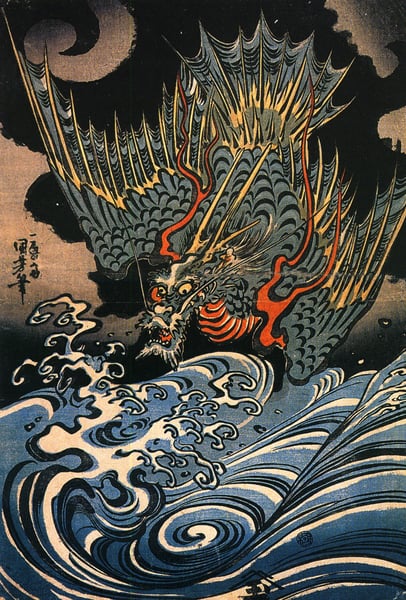
Utagawa Kunisada II · Ukiyo-e · mythological painting
The Dragon is a mythological painting by Utagawa Kunisada II executed in the ukiyo-e style.
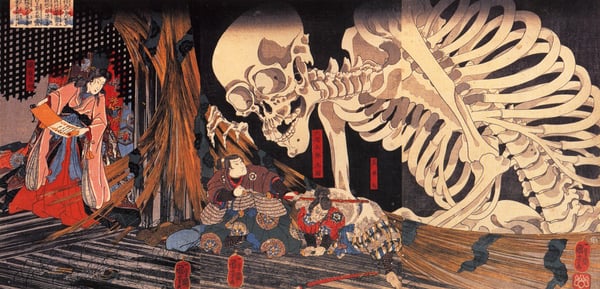
Utagawa Kuniyoshi
Skeleton Spectre is a work by Utagawa Kuniyoshi, the nineteenth-century Japanese woodblock printmaker known for his dynamic compositions and supernatural subjects. The title identifies the subject as a skeletal apparition, consistent with Kuniyoshi's interest in the dramatic and otherworldly themes that distinguished his career in the ukiyo-e tradition.
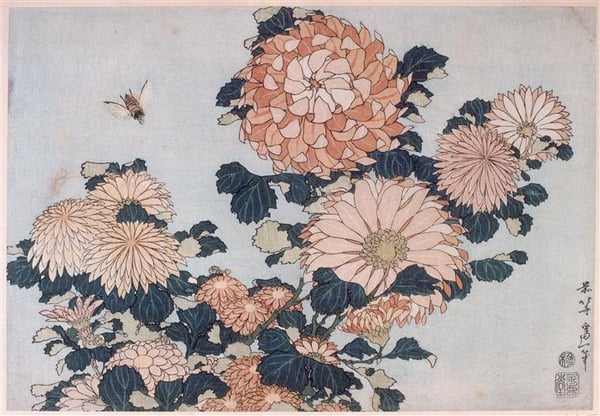
Katsushika Hokusai
Chrysanthemum and Bee is a work by Katsushika Hokusai.
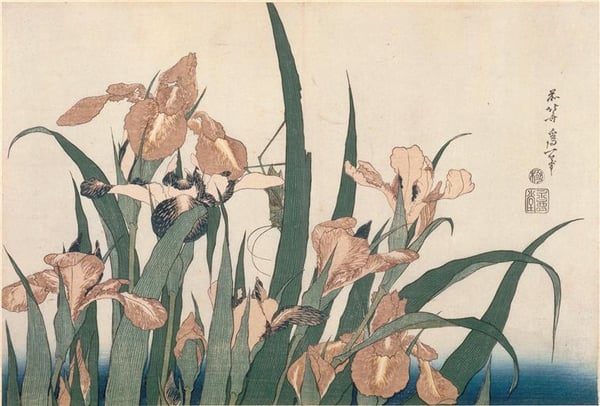
Katsushika Hokusai
Iris and Grasshopper is a work by Katsushika Hokusai.
Noch keine Kommentare — sei der Erste.