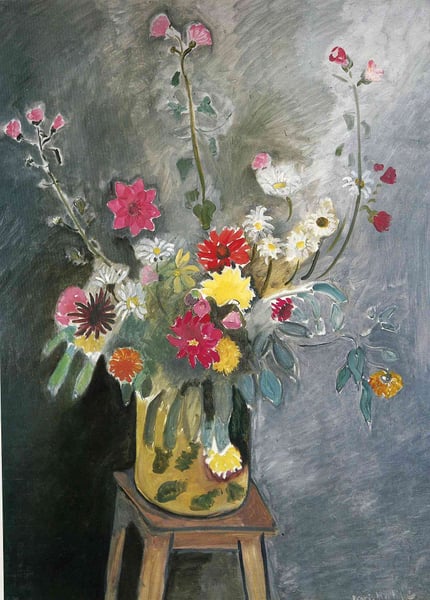
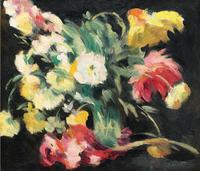
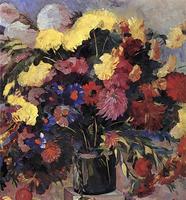
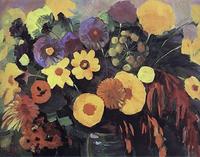
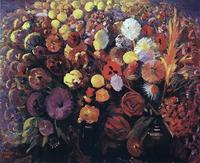
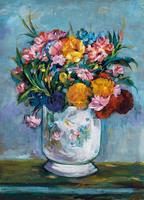
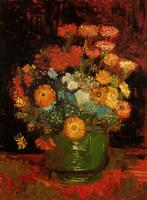
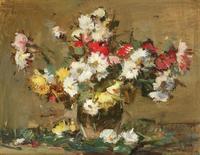
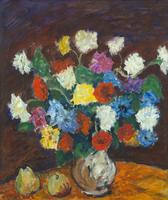
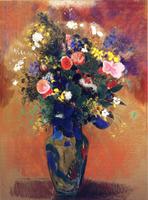
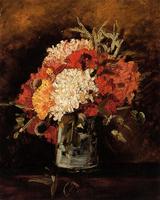
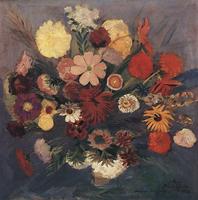
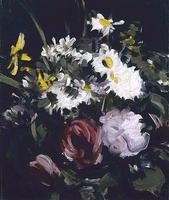
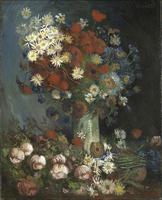
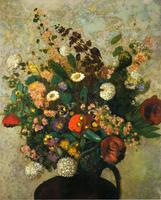
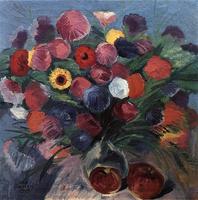
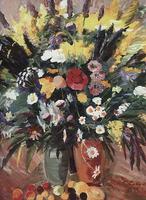
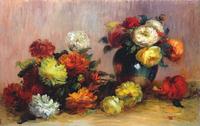
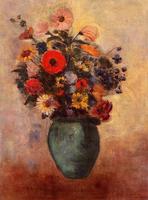
Henri Matisse’s Bouquet of Mixed Flowers exemplifies the Post-Impressionist shift toward expressive color and personal vision, even within the traditional genre of flower painting. The work’s significance lies in Matisse’s deliberate departure from naturalistic representation: he uses bold, non-local colors and a flattened pictorial space that prioritize the emotional and decorative impact over botanical accuracy. The bouquet becomes a vehicle for rhythmic brushwork and harmonious contrasts—hallmarks of Post-Impressionism that liberated still life from mere imitation. This painting anticipates Matisse’s later Fauvist explorations, yet here the intensity remains tempered by a structured composition, showcasing how flower painting served as a laboratory for modernist innovation.