Expertenanalyse zu Antoine Blanchards Place de la Madeleine
Stil: Impressionism · Genre: cityscape
Expert Analysis: "Place de la Madeleine" by Antoine Blanchard
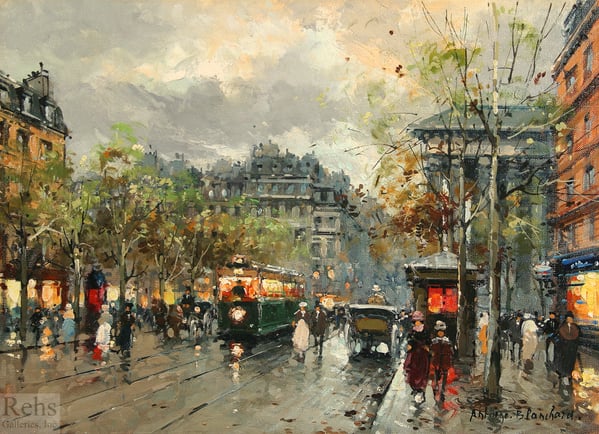
Antoine Blanchard’s Place de la Madeleine stands as a quintessential example of early‑20th‑century Impressionist cityscape painting, even though the artist worked decades after the movement’s height. What makes this work significant is its deliberate continuation—and subtle reinvention—of the core Impressionist concern: capturing the fleeting interplay of light, atmosphere, and modern urban life.
1. The Urban Spectacle as Impressionist Subject
Like Monet’s Boulevard des Capucines or Pissarro’s Place du Théâtre Français, Blanchard focuses on a bustling Parisian hub. The Place de la Madeleine, with its neoclassical church and surrounding shops, is depicted not as a static monument but as a living, breathing stage. Horse‑drawn carriages, pedestrians, and the play of sunlight on wet cobblestones and façades all evoke the Impressionist fascination with the ephemeral moment. Blanchard’s wet‑street reflections—a hallmark of his œuvre—add shimmering movement, turning the pavement into a mirror for sky and light.
2. Light, Atmosphere, and Color
True to Impressionist technique, Blanchard dissolves hard outlines in favor of broken brushstrokes and vibrant, often unblended color. The cool blues and grays of the sky contrast with warm ochres and golds of the church and building fronts, while patches of pure white and pale yellow indicate sun breaking through clouds. This atmospheric effect, combined with the dappled shadows of trees and the sparkle of lamplight, anchors the painting in the sensory experience of a specific time—likely a late‑afternoon in spring or autumn.
3. Significance Within the Style
Blanchard is often grouped with “Post‑Impressionist” or “École de Paris” painters, but his work is distinguished by its unwavering fidelity to the original Impressionist ethos. In an era when Modernism was fragmenting representation (Cubism, Fauvism), Blanchard’s Place de la Madeleine reaffirms the Impressionist belief that the ordinary modern landscape—a city square in all its quotidian activity—deserves to be treated with the same poetic intensity as a seascape or a haystack. His significance lies in this conscious preservation: he acts as a bridge between the 19th‑century pioneers and a 20th‑century public that still craved the lyricism of Parisian streets.
4. Technical Execution and Genre
As a cityscape, the painting deftly balances architectural accuracy (the church’s colonnade is recognizably rendered) with atmospheric impression. The distant figures are mere dabs of pigment, yet they convey the purposeful motion of a crowd. Blanchard’s mastery of perspective—the receding line of the rue Royale, the slight distortion of scale—draws the viewer into the picture space, making the square feel both intimate and grand.
Conclusion
Place de la Madeleine is significant not because it broke new ground, but because it perfected a beloved visual tradition. It reminds us that Impressionism’s true legacy was not a single style but a way of seeing—one that Blanchard applied with affection and technical brilliance to the enduring heart of Paris.
Visuell ähnlich
20 Werke mit ähnlicher Komposition und Farbpalette
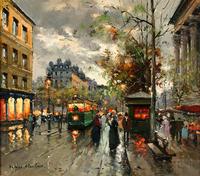
Place de la Madeleine
Antoine Blanchard
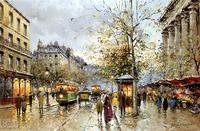
Flower market Madeleine
Antoine Blanchard
Place de la Madeleine, Marche aux Fleurs
Antoine Blanchard
Rue Tronchet la Madeleine
Antoine Blanchard
Place de la Madeleine, Winter
Antoine Blanchard
Place de la Madeleine
Antoine Blanchard
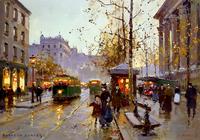
Place de la Madeleine
Edouard Cortes
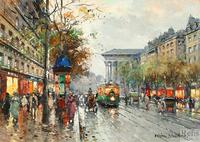
Boulevard de la Madeleine
Antoine Blanchard
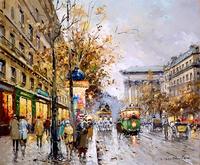
Boulevard des Capucines
Antoine Blanchard
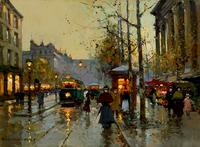
Flower Market At La Madeleine
Edouard Cortes
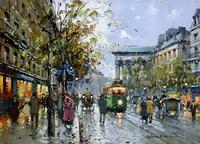
Boulevard de la Madeleine
Antoine Blanchard
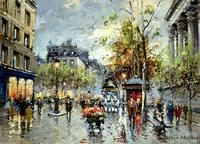
Place de la Madeleine
Antoine Blanchard
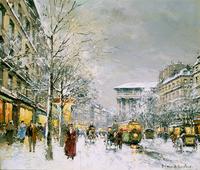
Boulevard de la Madeleine, Sous la Neige
Antoine Blanchard
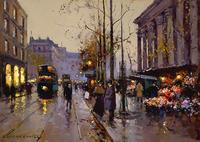
Flower Market At La Madeleine
Edouard Cortes
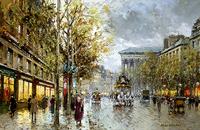
Boulevard de la Madeleine
Antoine Blanchard
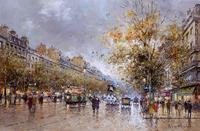
Theatre des Varietes Large
Antoine Blanchard
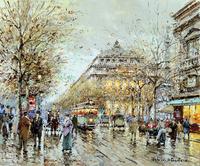
Paris, La Chatelet
Antoine Blanchard
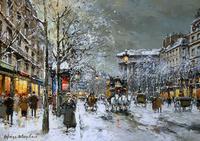
Boulevard de la Madeleine
Antoine Blanchard
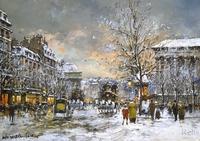
Omnibus on the place de la Madeleine, Winter
Antoine Blanchard
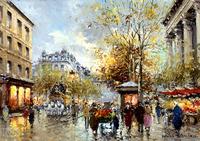
Boulevard des Capucines et Madeleine
Antoine Blanchard