30 obras maestras de la xilografía japonesa del mundo flotante
CE
Caleido Editorial Team9 de junio de 202625 min de lectura0 visualizaciones
Ukiyo-e, que significa 'imágenes del mundo flotante,' es una de las formas de arte más influyentes de Japón. Floreciendo durante el período Edo (1603-1868), estas xilografías capturaron el vibrante mundo de los actores de kabuki, las cortesanas, los luchadores de sumo, paisajes legendarios y escenas de la vida cotidiana. La maestría técnica necesaria para tallar, entintar e imprimir estas imágenes multicolores sigue siendo uno de los grandes logros del grabado.
La Gran Ola de Kanagawa de Hokusai es una de las imágenes más reconocidas del arte mundial, mientras que los paisajes atmosféricos de Hiroshige inspiraron directamente a Van Gogh, Monet y Whistler. Los sensuales retratos de mujeres de Utamaro y los dramáticos retratos de actores de Sharaku completan una tradición que influyó profundamente en el Impresionismo y el Art Nouveau.
Usa la lista para seguir qué obras maestras del ukiyo-e has visto en persona.
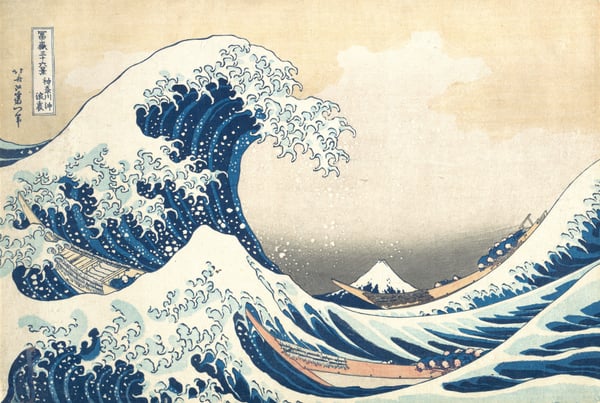
La gran ola de Kanagawa , también conocida simplemente como La ola o La gran ola, es una obra de una estampa japonesa del pintor especialista en ukiyo-e, Katsushika Hokusai, publicada entre 1830 y 1833, durante el período Edo de la historia de Japón.
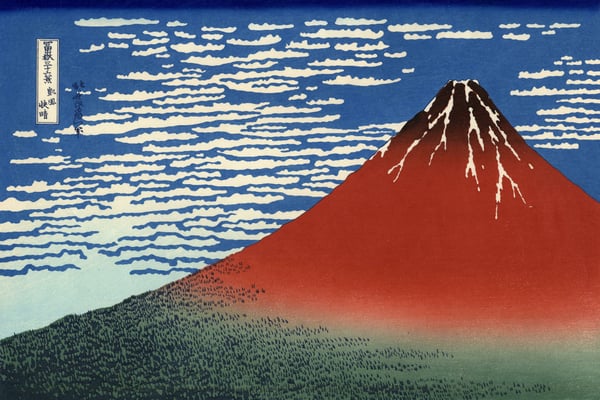
Fuji rojo —también conocida según su nombre original Viento del sur, cielo claro — es una estampa japonesa del pintor especialista en ukiyo-e, Katsushika Hokusai, que forma parte de la serie Treinta y seis vistas del monte Fuji. Fue publicada entre 1829 y 1833, durante el período Edo, y actualmente es propiedad de varios museos, incluyendo el Museo Británico en Londres, el Museo Metropolitano d...
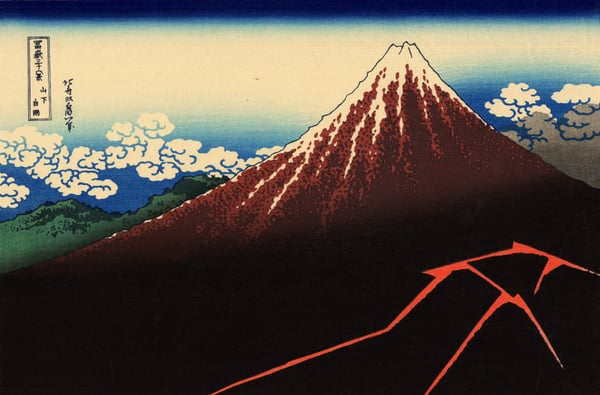
Tormenta debajo de la cumbre , a veces llamada Fuji negro , es una estampa japonesa del pintor especializado en ukiyo-e Katsushika Hokusai. Grabada entre los años 1830 y 1832, es una de las pinturas más conocidas de las Treinta y seis vistas del monte Fuji.
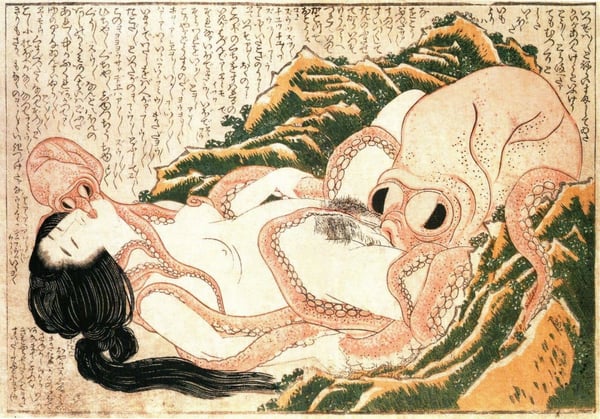
El sueño de la esposa del pescador es una xilografía erótica perteneciente al género ukiyo-e realizada en 1814 por el artista japonés Katsushika Hokusai. Hokusai desarrolló una iconografía durante el siglo XVIII alrededor de la leyenda de Taishokan. Está incluido en Kinoe no Komatsu, un libro de tres volúmenes de shunga publicado por primera vez en 1814, y se ha convertido en el diseño shunga ...
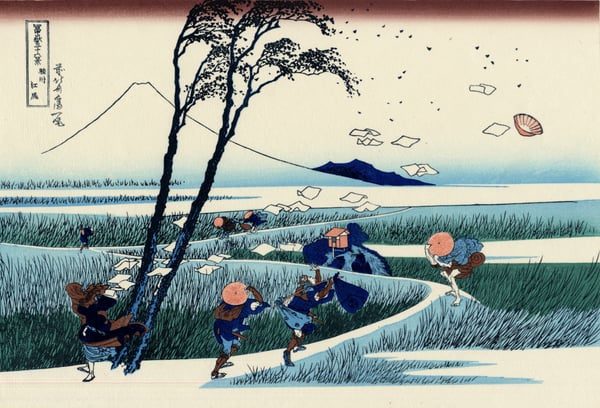
Travellers Caught in a Sudden Breeze at Ejiri is a woodblock print by Katsushika Hokusai depicting the moment its title names—figures overtaken by wind at the location of Ejiri. The work belongs to Hokusai's series of landscape prints and demonstrates the characteristic formal conventions of that tradition.
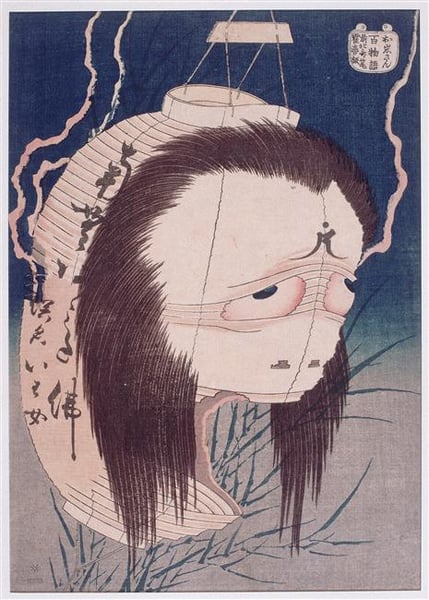
Katsushika Hokusai's The Ghost of Oiwa is a work by the artist known for his woodblock prints and landscape compositions of the Edo and early Meiji periods.
El puente Ōhashi en Atake bajo una lluvia repentina es una xilografía del género ukiyo-e obra del pintor japonés Utagawa Hiroshige, perteneciente a la serie Cien famosas vistas de Edo. Mide 34 cm de alto y 22.5 cm de ancho. Fechada en 1857, actualmente se encuentra en el Brooklyn Museum of Art de Nueva York.
09
Plum Park in Kameido
Utagawa HiroshigeObra de arte
Utagawa Hiroshige
Utagawa Hiroshige's Plum Park in Kameido depicts the plum park at Kameido, a subject rendered in the woodblock print tradition of Edo-period Japan.
10
Night Snow at Kambara
Utagawa HiroshigeObra de arte
Utagawa Hiroshige
Night Snow at Kambara depicts a snow-covered landscape in the style of Japanese woodblock printing. The work is part of Hiroshige's documented body of art.
11
Hōeidō Edition: Nihonbashi
Utagawa HiroshigeObra de arte
Utagawa Hiroshige
Hōeidō Edition: Nihonbashi is a woodblock print by Utagawa Hiroshige from his series depicting Japanese locations. The work belongs to the ukiyo-e tradition of Japanese printmaking.
12
Moon over the Sumida River
Utagawa HiroshigeObra de arte
Utagawa Hiroshige
Moon over the Sumida River by Utagawa Hiroshige depicts a nocturnal landscape featuring the Sumida River under moonlight. The work belongs to the ukiyo-e tradition of Japanese woodblock printing.
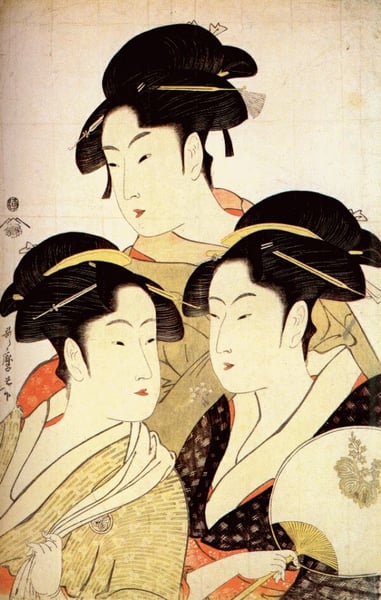
Tres bellezas de nuestros días , también conocido como Tres bellezas de la era Kansei y Tres bellezas famosas , es un grabado xilográfico del pintor japonés especialista en ukiyo-e Kitagawa Utamaro, publicado cerca de 1793. La composición triangular representa los perfiles de tres «bellezas» famosas de la época: la geisha Tomimoto Toyohina y las camareras de ochaya Naniwaya Kita y Takashima H...
Woman Reading a Letter is a Baroque genre painting by Gabriel Metsu from 1666. The work depicts a woman engaged in the act of reading a letter, a subject characteristic of Dutch Golden Age painting's interest in domestic interiors and everyday moments.
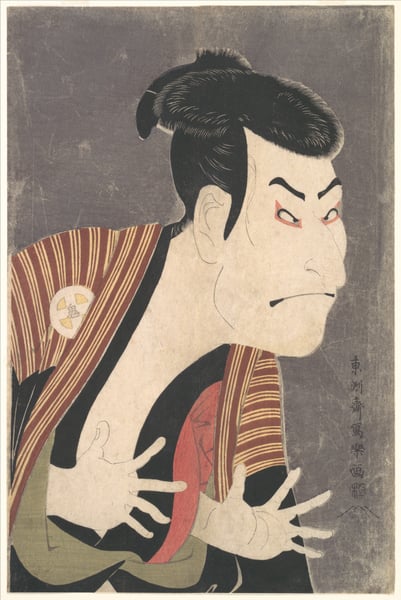
Tōshūsai Sharaku's Ōtani Oniji III as Yakko Edobei is a woodblock print depicting the actor Ōtani Oniji III in the role of Yakko Edobei. The work belongs to the ukiyo-e tradition of Japanese printmaking.
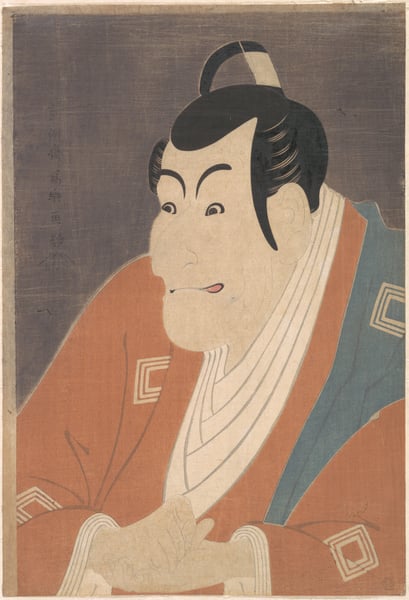
Ichikawa Ebizō as Takemura Sadanoshin is a woodblock print by Tōshūsai Sharaku depicting the actor Ichikawa Ebizō in the role of Takemura Sadanoshin. Sharaku's work belongs to the ukiyo-e tradition of Japanese prints, which specialized in portraying kabuki actors and theatrical scenes.
Beauty Looking Back by Hishikawa Moronobu depicts a female figure turning to glance over her shoulder. The work exemplifies the ukiyo-e tradition of bijin-ga, or pictures of beautiful women, a genre in which Moronobu was a pioneering figure during Japan's Edo period.
19
Fuji from Gotenyama
Utagawa KuniyoshiObra de arte
Utagawa Kuniyoshi
Fuji from Gotenyama is a work by Utagawa Kuniyoshi.
20
The Courtesan Hinazuru
Suzuki HarunobuObra de arte
Suzuki Harunobu
The Courtesan Hinazuru is a woodblock print by Suzuki Harunobu depicting a courtesan identified by that name.
21
Crow and the Moon
Suzuki HarunobuObra de arte
Suzuki Harunobu
Crow and the Moon is a woodblock print by Suzuki Harunobu, a Japanese artist of the Edo period. The work depicts a crow and the moon, rendered in the ukiyo-e tradition that Harunobu helped pioneer as one of the first practitioners of full-color woodblock printing.
22
Tōshōgū Shrine at Ueno
Utagawa KunisadaObra de arte
Utagawa Kunisada
Tōshōgū Shrine at Ueno is a woodblock print by Utagawa Kunisada depicting the shrine located at Ueno. The work belongs to the ukiyo-e tradition of Japanese printmaking.
23
Night Attack on the Faithful Samurai
Utagawa KuniyoshiObra de arte
Utagawa Kuniyoshi
Night Attack on the Faithful Samurai is a woodblock print by Utagawa Kuniyoshi.
24
The Actor Ichikawa Danjūrō
Torii KiyomasuObra de arte
Torii Kiyomasu
The Actor Ichikawa Danjūrō is a work by Torii Kiyomasu depicting a kabuki performer. The print belongs to the ukiyo-e tradition of Japanese woodblock art, in which Kiyomasu was a pioneering figure during the early 18th century.
25
Geisha and Attendant in Snow
Suzuki HarunobuObra de arte
Suzuki Harunobu
Suzuki Harunobu's Geisha and Attendant in Snow depicts two figures in a snowy setting. The work belongs to the ukiyo-e tradition, a genre of Japanese woodblock prints that flourished during the Edo period.
26
Views of Edo: Nihonbashi
Utagawa HiroshigeObra de arte
Utagawa Hiroshige
Views of Edo: Nihonbashi is a woodblock print by Utagawa Hiroshige depicting the Nihonbashi (Japan Bridge) in Edo. The work belongs to Hiroshige's series documenting views of the city, rendered in the ukiyo-e tradition of Japanese printmaking.
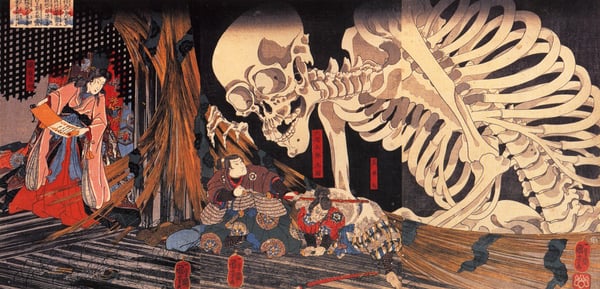
Skeleton Spectre is a work by Utagawa Kuniyoshi, the nineteenth-century Japanese woodblock printmaker known for his dynamic compositions and supernatural subjects. The title identifies the subject as a skeletal apparition, consistent with Kuniyoshi's interest in the dramatic and otherworldly themes that distinguished his career in the ukiyo-e tradition.
Aún no hay comentarios: sé el primero.