Análisis experto de The Pont Neuf de Camille Pissarro
Estilo: Impressionism · Género: cityscape
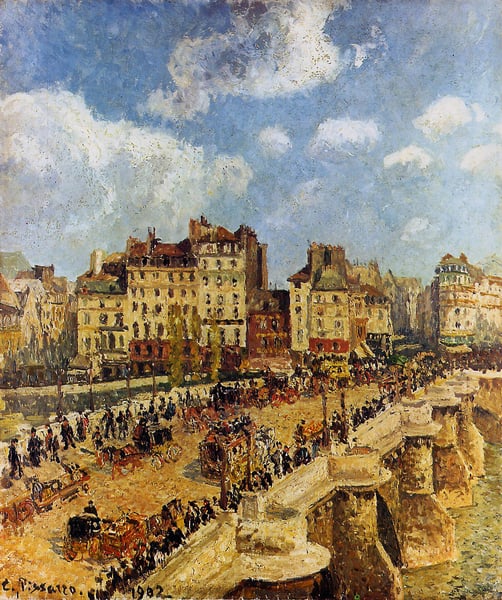
Camille Pissarro’s “The Pont Neuf” stands as a quintessential Impressionist cityscape that captures the vibrancy of modern Parisian life. Executed in the 1870s, this work exemplifies the movement’s core preoccupations: the fleeting effects of light, the dynamism of the urban environment, and a commitment to painting en plein air.
Significance within Impressionism and Pissarro’s Oeuvre
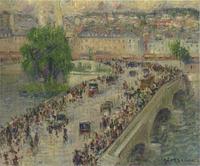
As one of the elder statesmen of the Impressionist circle, Pissarro brought a disciplined yet lyrical eye to the genre of the cityscape. “The Pont Neuf” is significant precisely because it elevates a bustling, contemporary subject—the oldest standing bridge in Paris, already a symbol of the city’s transformation under Haussmannization—into a study of atmosphere and movement. Rather than focusing on the bridge’s architectural grandeur, Pissarro dissolves its forms into dabs of color: the gray-blue Seine, the creamy stone of the bridge, and the jostling carriages and pedestrians are all rendered with a feathery, broken brushwork that suggests the shimmer of sunlight through a haze of dust and moisture.
Analysis of the Impressionist Cityscape
The composition is deliberately unmonumental. Pissarro chooses a viewpoint that emphasizes the bridge’s integration into the flowing river and the distant skyline, rather than its historic solidity. The palette—muted ochres, silvery blues, and soft greens—conveys the temperate Parisian light, while the rapid, horizontal strokes of paint create a sense of constant flux. This is a city in motion: the blurred figures and carriages on the bridge, the rippled reflections in the water, the shifting clouds—all conspire to make the viewer feel the pulse of modern urban life.
Why It Matters
Pissarro’s “The Pont Neuf” is a masterclass in translating the ephemeral into the enduring. It demonstrates how Impressionism transformed the cityscape from a static backdrop into a living, breathing organism. Moreover, it reflects Pissarro’s own socialist sympathies: by depicting ordinary Parisians—workers, shoppers, strollers—as the true subjects of the city, he democratized the genre. The painting is thus not merely a view of a bridge, but a record of a moment when the modern city became the central stage for artistic observation and social representation.
Museum / Gallery
Visualmente similares
20 obras con composición y paleta relacionadas
The Pont Neuf 2
Camille Pissarro
The Pont Neuf, Snow
Camille Pissarro
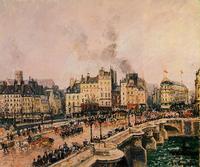
The Pont Neuf 2
Camille Pissarro
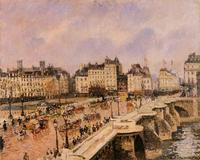
The Pont Neuf
Camille Pissarro
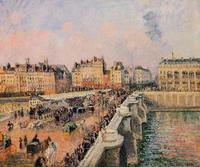
The Pont Neuf, Afternoon
Camille Pissarro
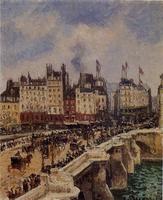
The Pont Neuf
Camille Pissarro
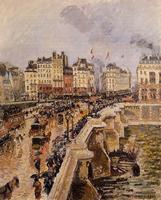
The Pont Neuf, Rainy Afternoon
Camille Pissarro
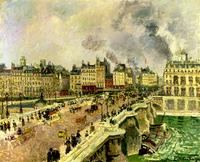
The Pont Neuf, Shipwreck of the Bonne Mere
Camille Pissarro
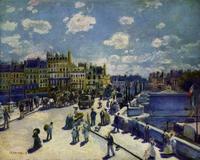
Pont Neuf
Pierre-Auguste Renoir
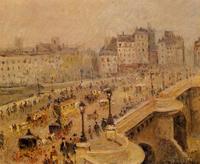
Pont Neuf Fog
Camille Pissarro
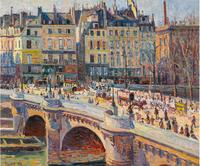
Paris, Le Pont-neuf Et Le Quai Conti
Maximilien Luce
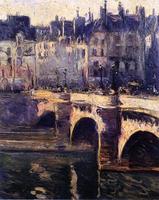
The Pont Neuf, Paris
Othon Friesz
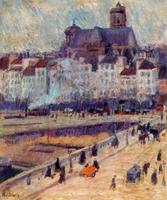
The Louis-Philippe Bridge and the Saint Gervais Church
Raoul Dufy
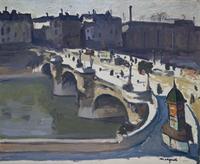
The Pont Neuf
Albert Marquet
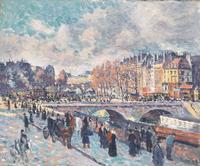
Seinequai in Paris
Maximilien Luce
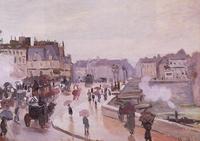
The Pont Neuf
Claude Monet
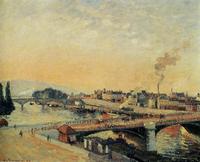
Sunrise at Rouen
Camille Pissarro
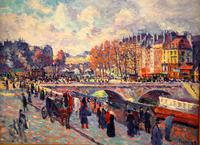
Quayside by the Seine in Paris
Maximilien Luce
Port Corneille at Rouen
Gustave Loiseau
Pont Neuf in the Snow
Gustave Loiseau