30 chefs-d'œuvre de la gravure sur bois japonaise du monde flottant
CE
Caleido Editorial Team9 juin 202625 min de lecture0 vues
Ukiyo-e, signifiant 'images du monde flottant,' est l'une des formes d'art les plus influentes du Japon. Florissant pendant la période Edo (1603-1868), ces estampes sur bois ont capturé le monde vibrant des acteurs de kabuki, des courtisanes, des lutteurs de sumo, des paysages légendaires et des scènes de la vie quotidienne. La maîtrise technique nécessaire pour graver, encrer et imprimer ces images multicolores reste l'un des grands accomplissements de la gravure.
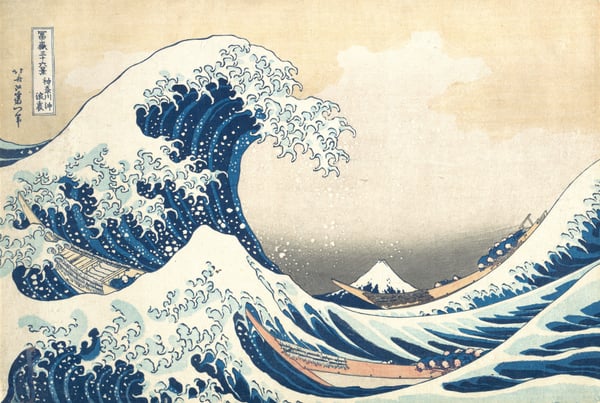
La Grande Vague de Kanagawa de Hokusai est l'une des images les plus reconnues de l'art mondial, tandis que les paysages atmosphériques de Hiroshige ont directement inspiré Van Gogh, Monet et Whistler. Les portraits sensuels de femmes d'Utamaro et les portraits dramatiques d'acteurs de Sharaku complètent une tradition qui a profondément façonné l'impressionnisme et l'Art nouveau.
Utilisez la liste pour suivre les chefs-d'œuvre ukiyo-e que vous avez vus en personne.
La Grande Vague de Kanagawa (神奈川沖浪裏, Kanagawa-oki nami-ura, littéralement Sous la vague au large de Kanagawa), plus connue sous le nom de La Vague, est une célèbre estampe japonaise du peintre japonais, spécialiste de l'ukiyo-e, Hokusai, publiée en 1830 ou en 1831 pendant l'époque d'Edo.
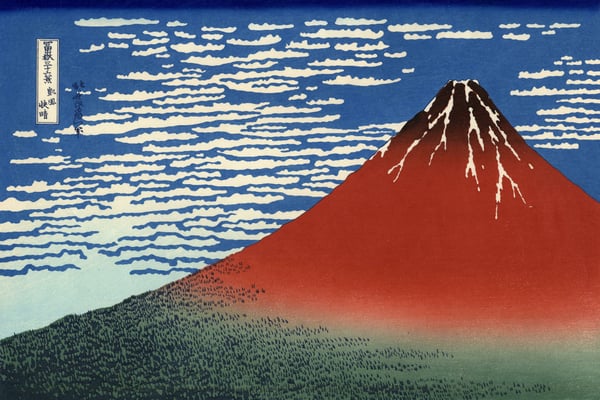
Vent frais par matin clair (凱風快晴, Gaifū kaisei, littéralement « Vent du sud, ciel clair »), connue aussi sous le nom de Le Fuji rouge, de Fuji rouge par temps clair ou de Le Fuji rouge dans une embellie, est une célèbre estampe japonaise réalisée par l'artiste japonais spécialiste de l'ukiyo-e Hokusai entre 1829 et 1833 pendant l'époque d'Edo.
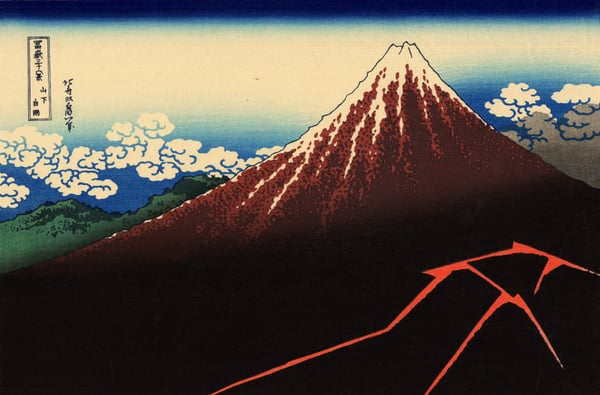
L'Orage sous le sommet, également connu sous le titre L'Averse sous le sommet, ou parfois Le Fuji noir est une gravure sur bois du maître japonais de l'ukiyo-e, Hokusai (1760-1849).
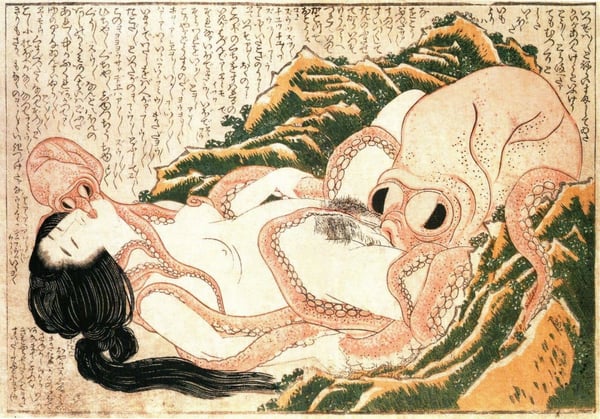
Le Rêve de la femme du pêcheur est le nom donné en français à une estampe sans titre de Hokusai inspirée de la mythologie japonaise, qui ouvrait le recueil Kinoe no Komatsu publié en 1814. Au Japon, elle est connue sous le nom de Poulpes et plongeuse (蛸と海女, Tako to ama) et est associée à la légende de Ryūjin, dieu de la mer, et de la princesse Tamatori, une plongeuse en apnée Ama. Il s'agit d'u...
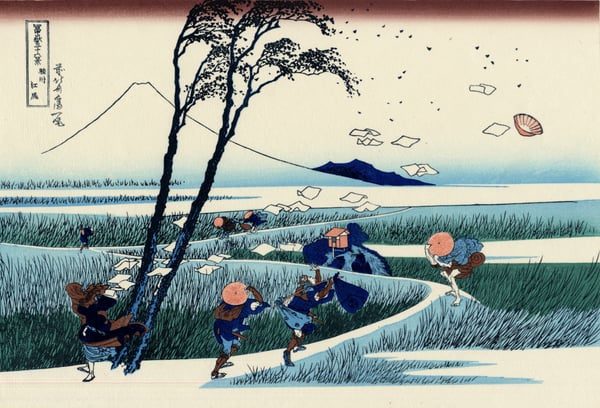
Travellers Caught in a Sudden Breeze at Ejiri is a woodblock print by Katsushika Hokusai depicting the moment its title names—figures overtaken by wind at the location of Ejiri. The work belongs to Hokusai's series of landscape prints and demonstrates the characteristic formal conventions of that tradition.
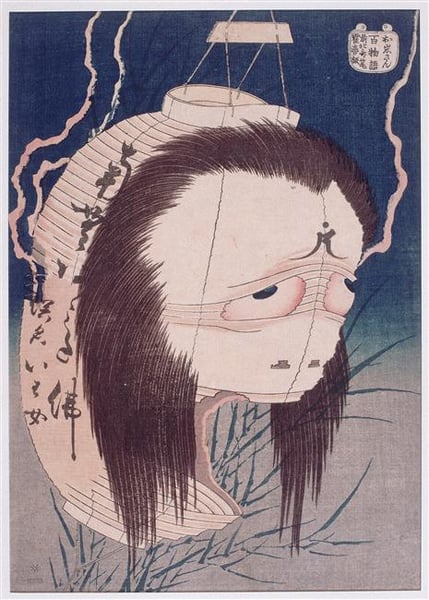
Katsushika Hokusai's The Ghost of Oiwa is a work by the artist known for his woodblock prints and landscape compositions of the Edo and early Meiji periods.
Sudden Shower over Shin-Ōhashi bridge and Atake is a woodblock print in the ukiyo-e genre by the Japanese artist Hiroshige. It was published in 1857 as part of the series One Hundred Famous Views of Edo and is one of his best known prints.
09
Plum Park in Kameido
Utagawa HiroshigeŒuvre
Utagawa Hiroshige
Utagawa Hiroshige's Plum Park in Kameido depicts the plum park at Kameido, a subject rendered in the woodblock print tradition of Edo-period Japan.
10
Night Snow at Kambara
Utagawa HiroshigeŒuvre
Utagawa Hiroshige
Night Snow at Kambara depicts a snow-covered landscape in the style of Japanese woodblock printing. The work is part of Hiroshige's documented body of art.
11
Hōeidō Edition: Nihonbashi
Utagawa HiroshigeŒuvre
Utagawa Hiroshige
Hōeidō Edition: Nihonbashi is a woodblock print by Utagawa Hiroshige from his series depicting Japanese locations. The work belongs to the ukiyo-e tradition of Japanese printmaking.
12
Moon over the Sumida River
Utagawa HiroshigeŒuvre
Utagawa Hiroshige
Moon over the Sumida River by Utagawa Hiroshige depicts a nocturnal landscape featuring the Sumida River under moonlight. The work belongs to the ukiyo-e tradition of Japanese woodblock printing.
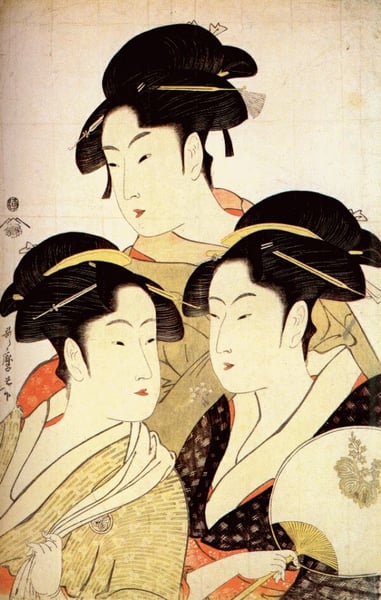
Trois beautés de notre temps (当時三美人, Tōji San Bijin) est une estampe couleur nishiki-e réalisée vers 1792-1793 par l'artiste japonais d'ukiyo-e Utamaro. La composition triangulaire représente les bustes de trois « beautés » célèbres de l'époque : la geisha Tomimoto Toyohina et les serveuses de salon de thé Naniwa Kita et Takashima Ohisa.
Woman Reading a Letter is a Baroque genre painting by Gabriel Metsu from 1666. The work depicts a woman engaged in the act of reading a letter, a subject characteristic of Dutch Golden Age painting's interest in domestic interiors and everyday moments.
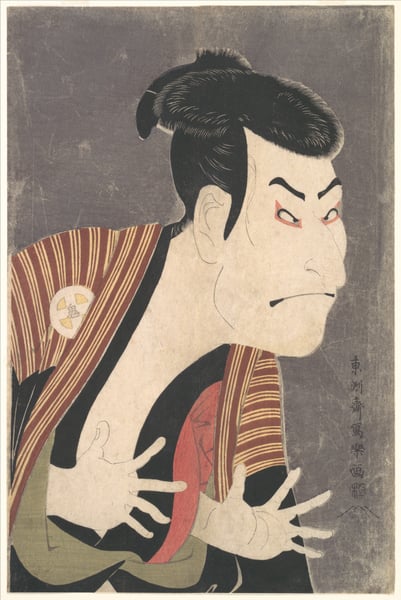
Tōshūsai Sharaku's Ōtani Oniji III as Yakko Edobei is a woodblock print depicting the actor Ōtani Oniji III in the role of Yakko Edobei. The work belongs to the ukiyo-e tradition of Japanese printmaking.
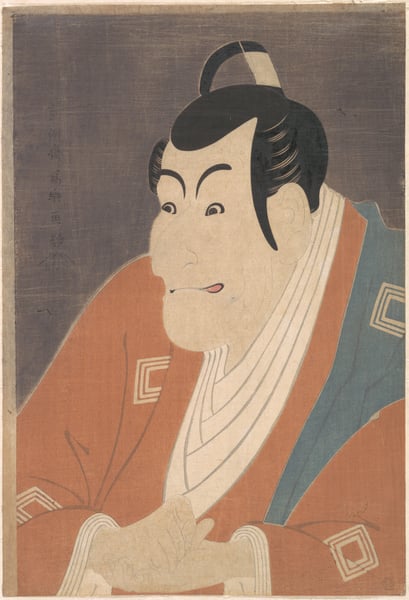
Ichikawa Ebizō as Takemura Sadanoshin is a woodblock print by Tōshūsai Sharaku depicting the actor Ichikawa Ebizō in the role of Takemura Sadanoshin. Sharaku's work belongs to the ukiyo-e tradition of Japanese prints, which specialized in portraying kabuki actors and theatrical scenes.
Beauty Looking Back by Hishikawa Moronobu depicts a female figure turning to glance over her shoulder. The work exemplifies the ukiyo-e tradition of bijin-ga, or pictures of beautiful women, a genre in which Moronobu was a pioneering figure during Japan's Edo period.
19
Fuji from Gotenyama
Utagawa KuniyoshiŒuvre
Utagawa Kuniyoshi
Fuji from Gotenyama is a work by Utagawa Kuniyoshi.
20
The Courtesan Hinazuru
Suzuki HarunobuŒuvre
Suzuki Harunobu
The Courtesan Hinazuru is a woodblock print by Suzuki Harunobu depicting a courtesan identified by that name.
21
Crow and the Moon
Suzuki HarunobuŒuvre
Suzuki Harunobu
Crow and the Moon is a woodblock print by Suzuki Harunobu, a Japanese artist of the Edo period. The work depicts a crow and the moon, rendered in the ukiyo-e tradition that Harunobu helped pioneer as one of the first practitioners of full-color woodblock printing.
22
Tōshōgū Shrine at Ueno
Utagawa KunisadaŒuvre
Utagawa Kunisada
Tōshōgū Shrine at Ueno is a woodblock print by Utagawa Kunisada depicting the shrine located at Ueno. The work belongs to the ukiyo-e tradition of Japanese printmaking.
23
Night Attack on the Faithful Samurai
Utagawa KuniyoshiŒuvre
Utagawa Kuniyoshi
Night Attack on the Faithful Samurai is a woodblock print by Utagawa Kuniyoshi.
24
The Actor Ichikawa Danjūrō
Torii KiyomasuŒuvre
Torii Kiyomasu
The Actor Ichikawa Danjūrō is a work by Torii Kiyomasu depicting a kabuki performer. The print belongs to the ukiyo-e tradition of Japanese woodblock art, in which Kiyomasu was a pioneering figure during the early 18th century.
25
Geisha and Attendant in Snow
Suzuki HarunobuŒuvre
Suzuki Harunobu
Suzuki Harunobu's Geisha and Attendant in Snow depicts two figures in a snowy setting. The work belongs to the ukiyo-e tradition, a genre of Japanese woodblock prints that flourished during the Edo period.
26
Views of Edo: Nihonbashi
Utagawa HiroshigeŒuvre
Utagawa Hiroshige
Views of Edo: Nihonbashi is a woodblock print by Utagawa Hiroshige depicting the Nihonbashi (Japan Bridge) in Edo. The work belongs to Hiroshige's series documenting views of the city, rendered in the ukiyo-e tradition of Japanese printmaking.
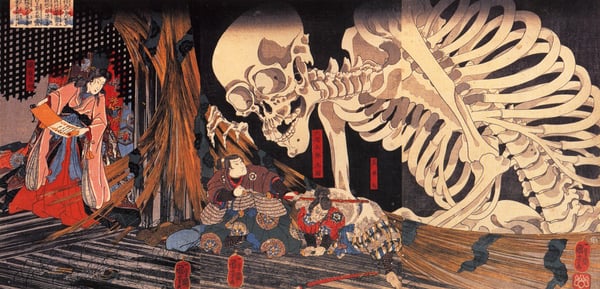
Skeleton Spectre is a work by Utagawa Kuniyoshi, the nineteenth-century Japanese woodblock printmaker known for his dynamic compositions and supernatural subjects. The title identifies the subject as a skeletal apparition, consistent with Kuniyoshi's interest in the dramatic and otherworldly themes that distinguished his career in the ukiyo-e tradition.
Aucun commentaire pour l’instant — soyez le premier.