Notes
Museum Ludwig is a museum of twentieth-century and contemporary art in Cologne, founded in 1976 when Peter and Irene Ludwig signed a donation contract with the City of Cologne, gifting 350 modern works that formed its core. Its holdings trace back further still to Cologne lawyer Josef Haubrich, who in 1946 donated his collection of Expressionist art and other Classical Modernist works to the city, laying the groundwork the Ludwig gift would later build on. The Ludwigs' 1976 donation also brought in a substantial group of Russian avant-garde works — Cubo-Futurism, Suprematism, and Constructivism dating from 1905 to 1935. The museum now holds Europe's most extensive collection of Pop Art, with numerous works by Andy Warhol and Roy Lichtenstein, and its Picasso holdings rank third-largest in the world after those in Barcelona and Paris.
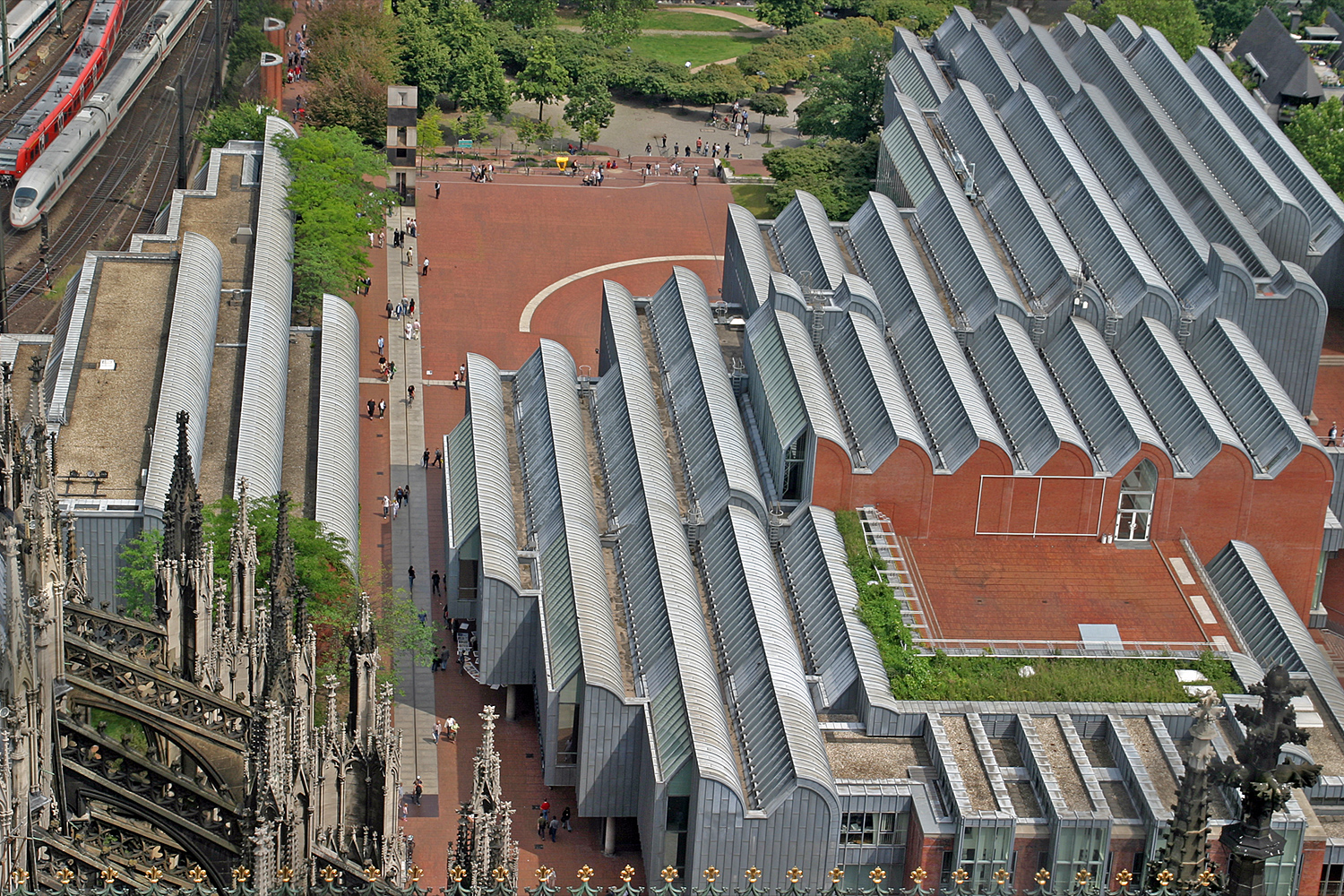
The museum occupies a purpose-built structure designed by Cologne architects Peter Busmann and Godfrid Haberer, constructed between 1980 and 1986 as a "double museum" shared initially with the Wallraf-Richartz Museum, sited between Cologne Cathedral, the Rhine, and the main railway station. The building is faced in brick — echoing the material of many of Cologne's historic structures — and topped with a distinctive sawtooth roofline. Visitors come to Museum Ludwig for a collection that spans from Expressionism and the Russian avant-garde through to Picasso and American Pop Art, housed in a single landmark building at the historic center of Cologne.
Sources
Détails
Lieu
Heinrich-Böll-Platz, 50667 Köln, DE