Notes
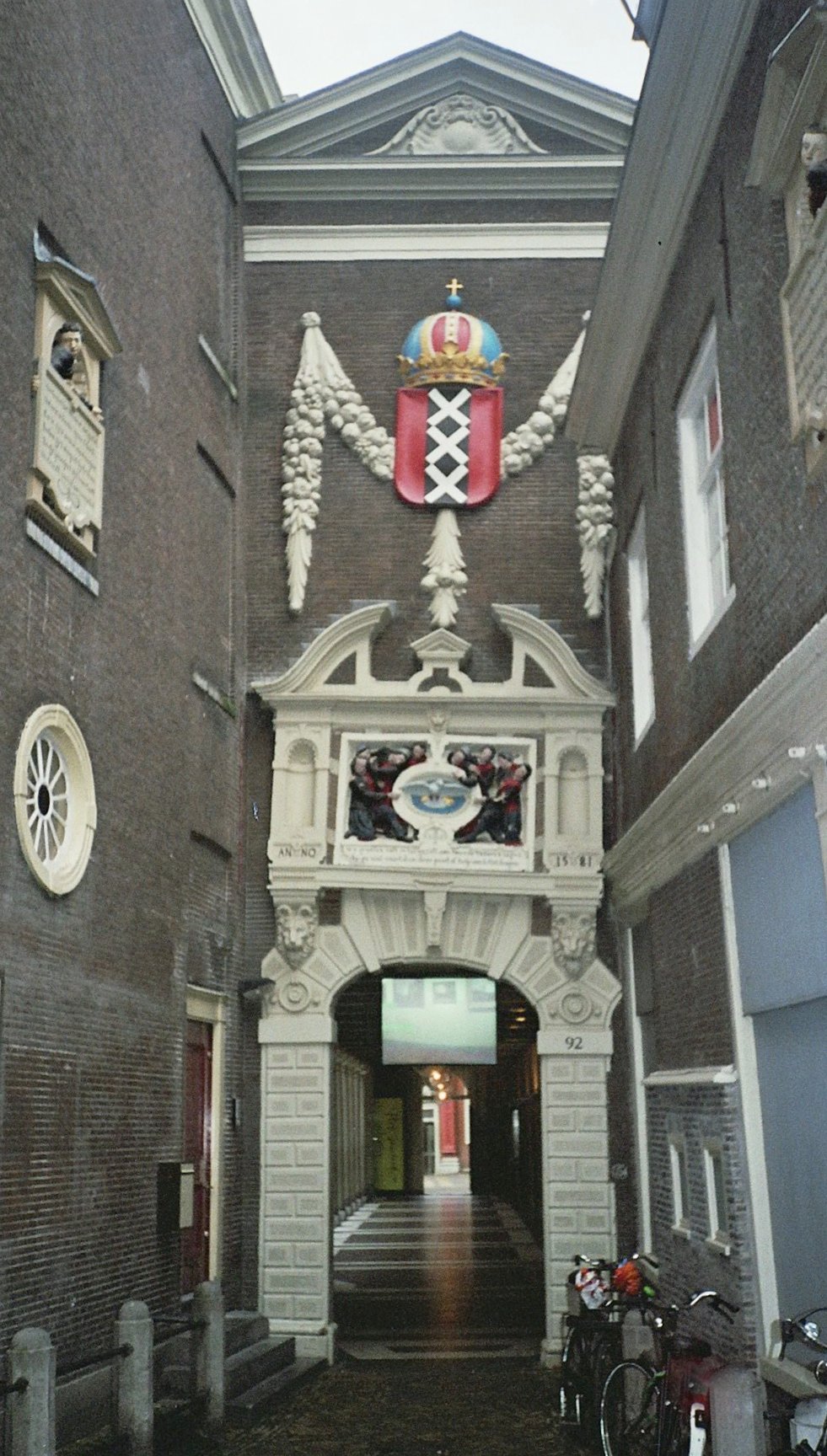
Amsterdam Museum is a municipal history museum currently housed at Amstel 51, Amsterdam, in a temporary location inside the Hermitage building since March 2022 while its main, permanent home on Kalverstraat undergoes renovation ahead of a planned 2028 reopening. Founded in 1926, the museum first occupied the Waag, Amsterdam's 15th-century city gate, before moving in 1975 into the Kalverstraat complex, a group of 25 interconnected buildings around two courtyards that once served as a monastery and later the Burgerweeshuis, the city's civic orphanage built in 1580. Its collection runs to roughly 70,000 objects, of which about 25,000 have been digitized, spanning paintings, archaeological finds, photographs, and everyday artifacts that trace Amsterdam's development across nearly nine centuries.
The holdings are organized around three chronological themes — the Young City, covering the medieval period; the Mighty City, covering the Golden Age; and the Modern City, covering the 20th and 21st centuries — giving visitors a structured path through the city's urban, economic, and social transformation rather than a single narrow genre or period. At the current Amstel location, this material is presented through the permanent exhibition "Amsterdam DNA," which combines period objects, artworks, historical photographs, and multimedia installations to walk visitors through key moments in the city's history. For anyone wanting to understand how Amsterdam grew from a medieval settlement into a Golden Age trading power and modern metropolis — through material culture and painting rather than a single artist's body of work — this makes it a natural stop, distinct from the city's fine-art-focused institutions.
Dettagli
Luogo
Amstel 51, 1018 EJ Amsterdam, NL