Notes
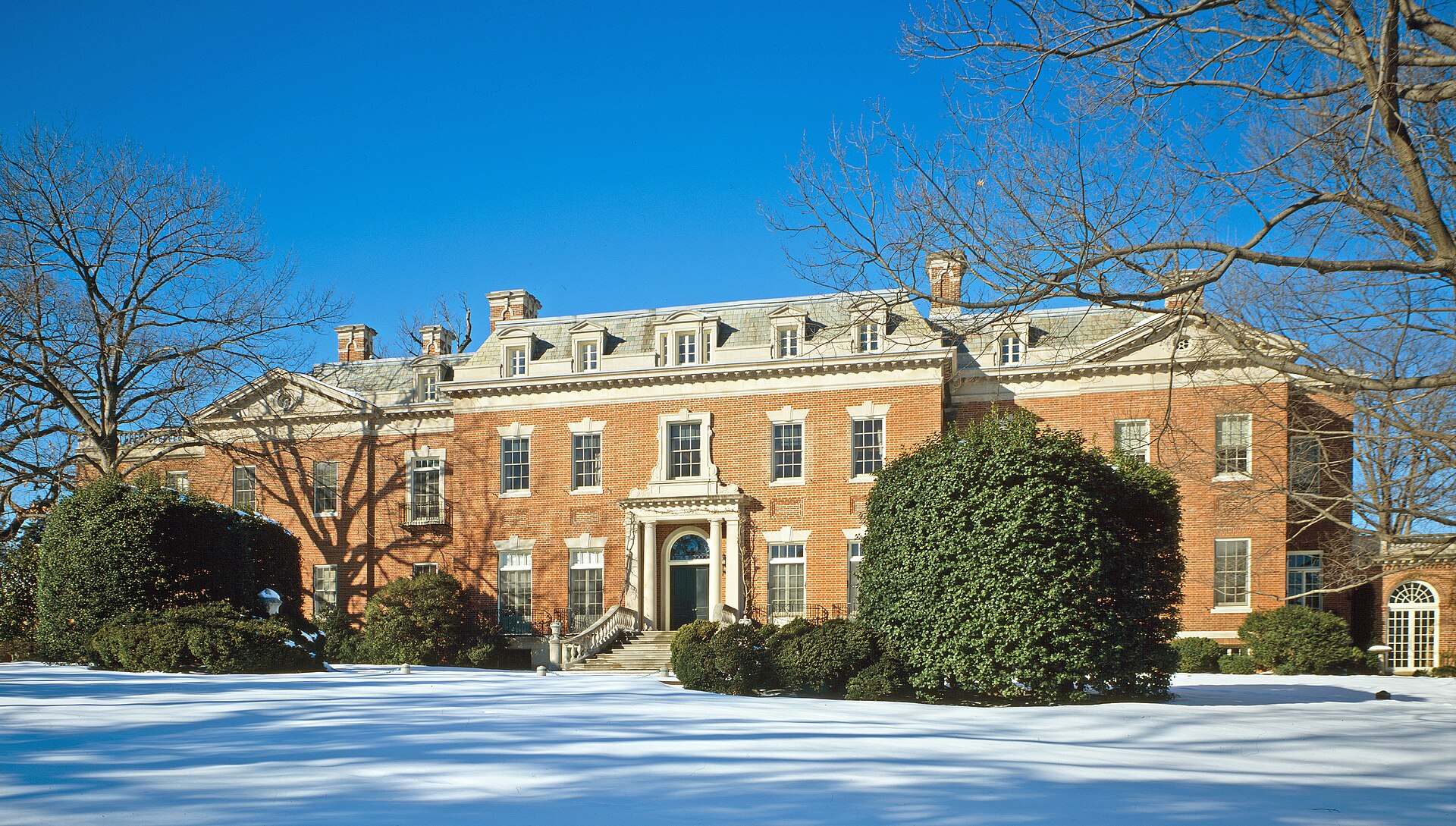
Dumbarton Oaks Research Library and Collection is a museum, research institute, and 16-acre garden estate in Georgetown, Washington, DC, built on a collection assembled by Robert Woods Bliss and Mildred Barnes Bliss, who purchased the property in 1920 and were introduced to Byzantine and Pre-Columbian art collecting by Royall Tyler. After retiring to the estate in 1933, the Blisses expanded their collection and library, added a Music Room in 1929 and a wing for the Byzantine Collection in 1940, and formally transferred the institution to Harvard University in 1940. The Pre-Columbian Gallery, designed by architect Philip Johnson to house Robert Bliss's collection, opened to the public in 1963, while a Research Library building designed by Venturi, Scott Brown was completed in 2005. The estate's terraced gardens were designed by landscape architect Beatrix Farrand, working with Mildred Bliss from 1921 onward, laid out as a sequence of garden "rooms" linked by paths and stairways descending into a wooded landscape at the edge of Georgetown.
Visitors move between two distinct registers: the Byzantine and Pre-Columbian collections housed in purpose-built galleries, and Farrand's landscaped gardens, which together give the institution its identity as both a scholarly research center and a public museum and park. The Philip Johnson-designed Pre-Columbian Gallery is itself a notable piece of modernist architecture built specifically to display that collection, making the building and the objects inseparable from one another. Art enthusiasts drawn to Byzantine art, Pre-Columbian art, or twentieth-century garden design have three distinct reasons to visit in one location — a combination not replicated elsewhere in Washington, DC.
詳細
場所
1703 32nd St NW, 20007-2934 Washington, US