Notes
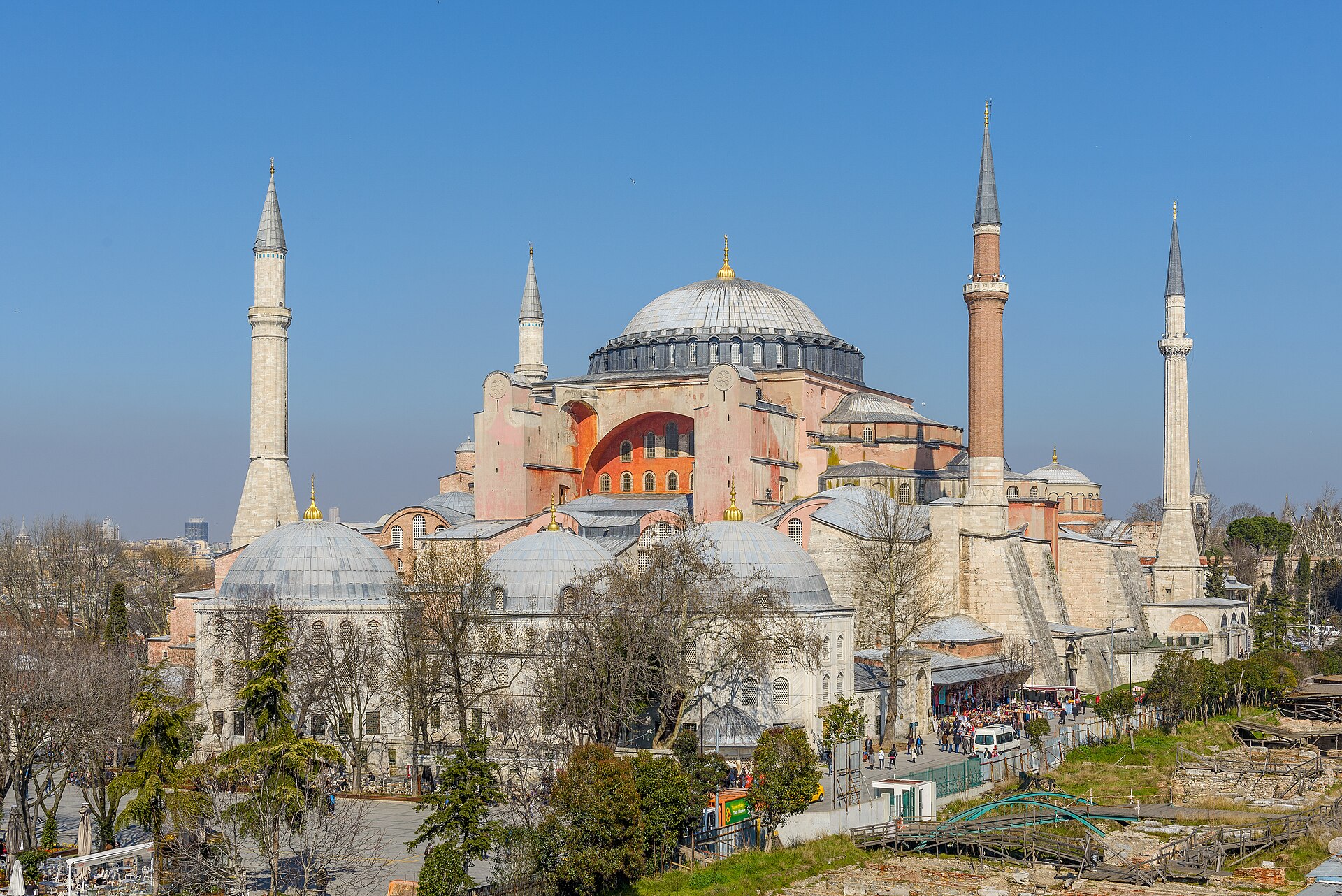
Hagia Sophia is a museum in Fatih, Istanbul, occupying the domed building erected between 532 and 537 CE under the Byzantine emperor Justinian I and designed by the mathematicians Anthemius of Tralles and Isidore of Miletus. Built first as Constantinople's cathedral, the structure was converted into a mosque after the Ottoman conquest of 1453, then established as a museum in 1935 under Mustafa Kemal Atatürk before being redesignated a mosque again in 2020. Its pendentive dome was among the earliest of its kind and gave the building the largest interior space in the world at the time of completion, a feat that made it a reference point for Byzantine architecture for centuries afterward.
Visitors encounter a structure that carries the physical record of all three phases of its life at once: the domed nave built for Christian liturgy, Ottoman-era additions from the mosque period, and figural mosaics — including the Deësis mosaic in the south gallery, installed under Michael VIII Palaiologos after the Byzantine recapture of Constantinople in 1261 — that survived Iconoclasm and the 1204 sack of the city by the Fourth Crusade before being plastered over under Ottoman rule and later revealed. For anyone interested in art history, the building itself functions as the primary exhibit: an engineering and decorative record spanning Byzantine mosaic work and Ottoman architectural intervention layered into a single, continuously used monument in Fatih.
詳細
場所
Istanbul