Notes
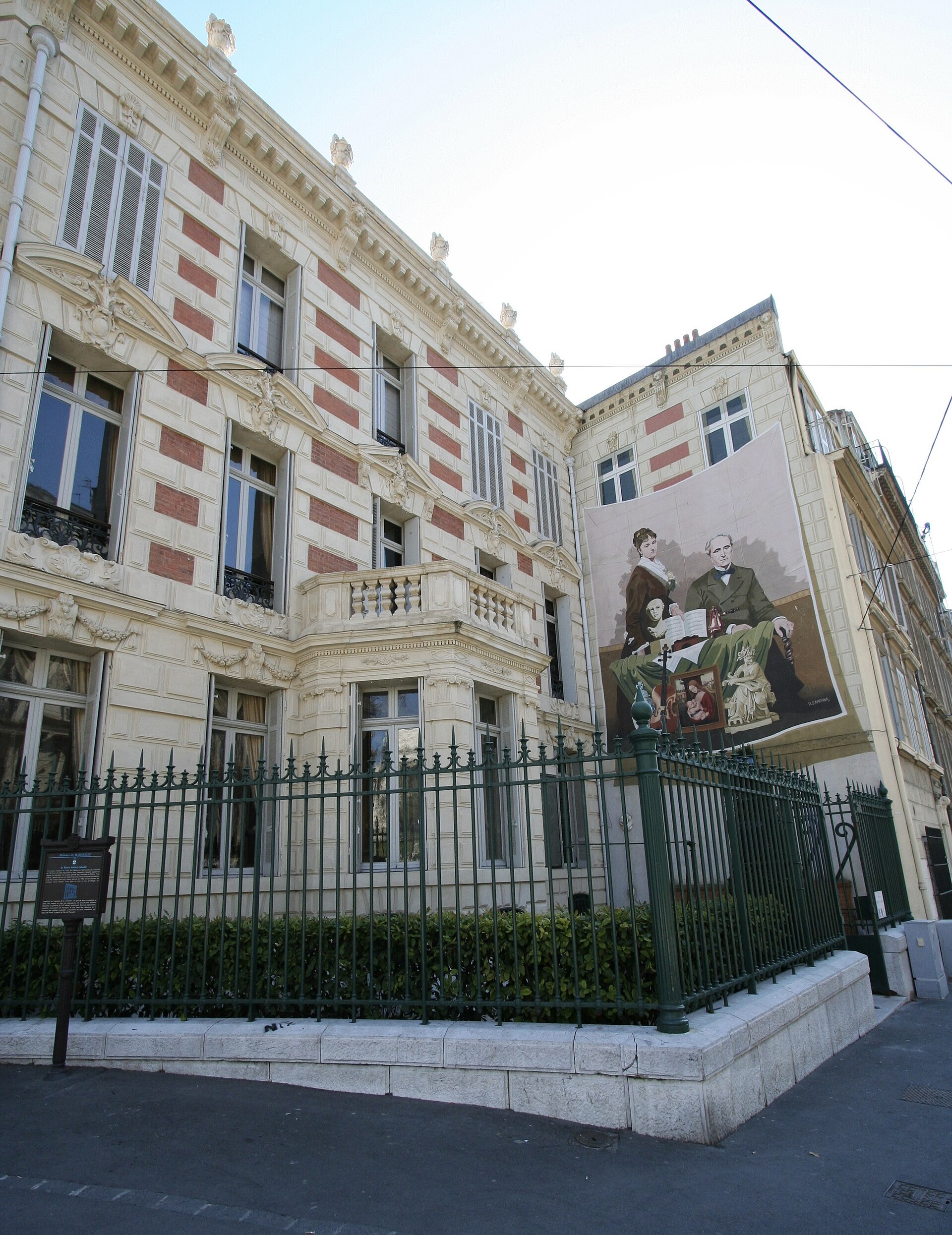
Musée Grobet-Labadié is a museum in Marseille housed in a private mansion built in 1873 by architect Gabriel Clauzel for Alexandre Labadié, an industrialist, prefect of Bouches-du-Rhône, and politician. The building stands facing the Palais Longchamp at 140 Boulevard Longchamp, and was listed as a historic monument in 2022. After Labadié's death the house passed to his daughter Marie, who — first through her marriage to Bruno Vayson and then to painter and musician Louis Grobet — travelled across Europe assembling more than 7,000 works of art and decorative objects. Following Louis Grobet's death in 1917, Marie bequeathed the mansion and its entire collection to the city of Marseille in 1919; the museum was inaugurated on November 3, 1925, and opened to the public in January 1926.
The collection reflects the taste of a Marseille merchant bourgeois family at its height after 1848, spanning furniture, tapestries, faience, paintings, and musical instruments. Visitors can see Aubusson tapestries alongside a Brussels tapestry depicting David and Bathsheba, Moustiers faience, Régency-style gilt furniture and consoles, a lute-shaped vielle among the musical instruments, a medieval cross-inscribed pyxis among the liturgical objects, and a cabinet of curiosities. Paintings attributed to Delacroix and Monticelli hang alongside Antoine Raspal's Arlésienne portraits and a Carrier-Belleuse statuette titled L'Harmonie. Because the collection was formed by a single family's private acquisitions rather than assembled by curators, the museum offers a period-mansion experience where paintings, tapestries, furniture, and objets d'art are still arranged as domestic decor — appealing to visitors interested in 19th-century bourgeois taste and decorative arts as much as to those seeking individual masterworks.
The museum is currently closed indefinitely; when previously open, admission was free for visitors under 18, school groups, and on the first Sunday of each month.
Dettagli
Luogo
140 Bd Longchamp, 13001 Marseille, FR