30 opere che hanno sfumato il confine tra arte e cultura popolare
CE
Caleido Editorial Team9 giugno 202622 min di lettura0 visualizzazioni
La Pop Art esplose sulla scena tra la fine degli anni '50 e gli anni '60 come una sfida sfacciata e colorata alla serietà dell'Espressionismo Astratto. Gli artisti pop trassero le loro immagini dalla pubblicità, dai fumetti, dai prodotti di consumo e dalla cultura delle celebrità.
Dalle Marilyn serigrafate di Warhol ai dipinti di fumetti di Lichtenstein, dalle piscine californiane di Hockney alle sculture morbide giganti di Oldenburg, la Pop Art ha trasformato il mondo dell'arte.
Usa la checklist per tenere traccia delle icone della Pop Art che hai visto di persona.
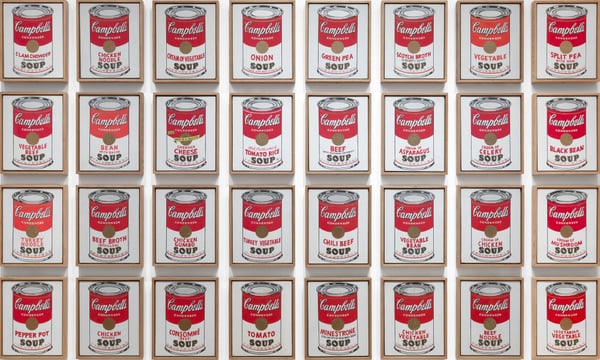
Campbell's Soup Cans, anche conosciuta come 32 Campbell's Soup Cans, è un'opera d'arte realizzata nel 1962 da Andy Warhol. Consiste in trentadue tele in polimero sintetico su tela, ciascuna grande 51 cm × 41 cm, raffiguranti tutte le varietà dei barattoli di zuppa Campbell allora in commercio. I singoli dipinti sono stati prodotti con una tecnica di stampa serigrafica semi-meccanizzato. L'impor...
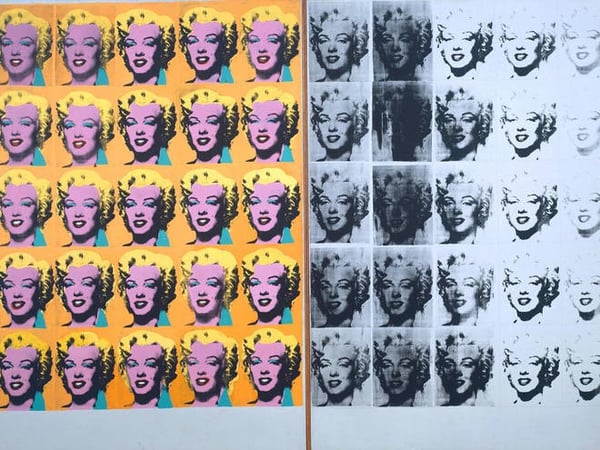
Marilyn Diptych is a 1962 silkscreen print by American pop artist Andy Warhol depicting Marilyn Monroe. The monumental work is one of the artist's most noted of the movie star.
Shot Sage Blue Marilyn is a screenprint by Andy Warhol depicting Marilyn Monroe in shades of sage blue.
04
Eight Elvises
Andy WarholOpera
Andy Warhol
Eight Elvises is a 1963 silkscreen painting by American pop artist Andy Warhol of Elvis Presley. In 2008, it was sold by Annibale Berlingieri for $100 million to a private buyer, which at the time was the most valuable work by Andy Warhol. The current owner and location of the painting, which has not been seen publicly since the 1960s, are unknown.
Silver Car Crash (Double Disaster) is a 1963 serigraph by the American artist Andy Warhol. In November 2013, it sold for $105 million (£65.5m) at NYC auction, setting a new highest price for a work by Warhol.
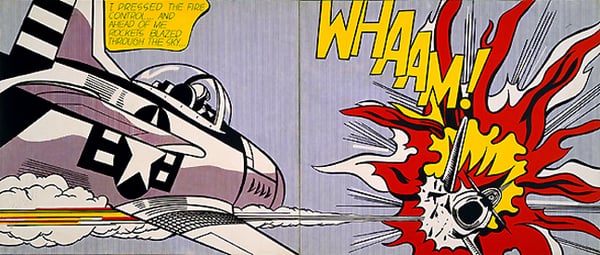
[i]Whaam![/i] (1963) is a two-canvas painting based on an image from the comic book strip [i]All-American Men of War[/i], published by DC Comics in February 1962. The left canvas depicts an American fighter plane firing a missile that hits an approaching enemy plane seen on the right canvas. The bright yellow letters ‘WHAAM!’ blaze out of the exploding airplane, describing the impact of the att...
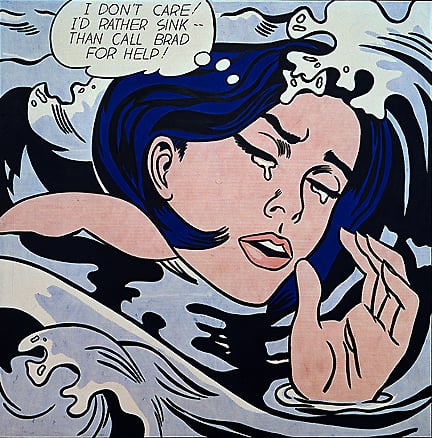
Drowning Girl is a 1963 American painting in oil and synthetic polymer paint on canvas by Roy Lichtenstein, based on original art by Tony Abruzzo. The painting is considered among Lichtenstein's most significant works, perhaps on a par with his acclaimed 1963 diptych Whaam!. One of the most representative paintings of the pop art movement, Drowning Girl was acquired by the Museum of Modern Art ...
Roy Lichtenstein's Oh, Jeff...I Love You, Too...But... uses the artist's characteristic comic-strip aesthetic, featuring bold outlined figures and dialogue rendered in speech balloons.
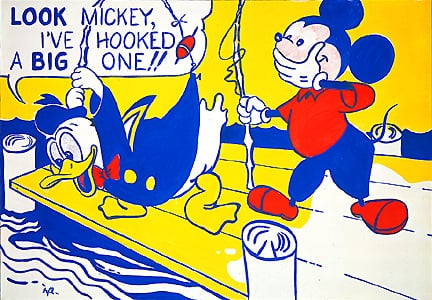
Look Mickey è un dipinto a olio su tela del 1961 di Roy Lichtenstein. Ampiamente considerato il ponte tra l'espressionismo astratto e le opere della pop art, è notevole per il suo umorismo ironico e il suo valore estetico, oltre a essere il primo esempio dell'impiego da parte dell'artista di punti Ben-Day, fumetti e immagini comiche come fonte per un dipinto. Alla morte di Lichtenstein, il dipi...
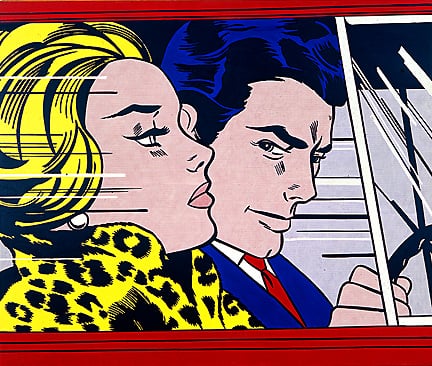
In the Car is a 1963 pop art painting by Roy Lichtenstein. The smaller, older of the two versions of this painting formerly held the record for highest auction price for a Lichtenstein painting. The larger version has been in the collection of the Scottish National Gallery of Modern Art in Edinburgh since 1980.
A Bigger Splash was painted in Califomia in the early summer of 1967. It is a record of a typical warm, sunny, cloudless day; from the position of the shadows cast by the eaves of the building and the chair, it appears to be midday when the sun is highest in the sky and the heat is most intense. The solitary figure, who has just dived into the pool, has been deliberately overwhelmed by the stre...
This painting depicts the fashion designer Ossie Clark and the textile designer Celia Birtwell shortly after their wedding at which Hockney was Clark's best man. Hockney and Clark had been friends since the early 1960s. The painting featured in the final 10 of the Greatest Painting in Britain Vote in 2005, the only work by a living artist to do so. Hockney drew on both The Arnolfini Portrait by...
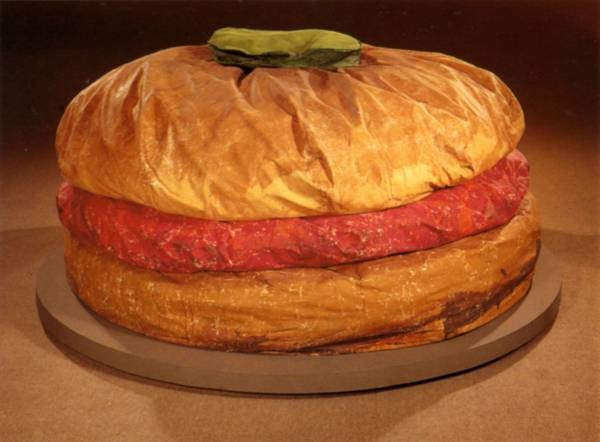
Floor Burger is a soft sculpture by Claes Oldenburg, constructed from canvas, foam, and other materials. The work renders a hamburger at an enormous scale, transforming a commonplace food object into a monumental form that occupies floor space.
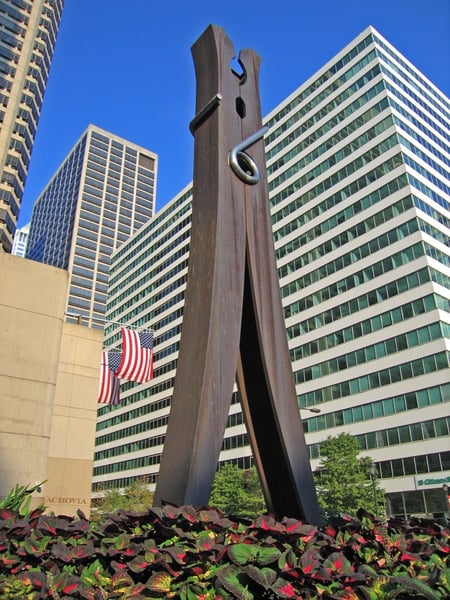
Clothespin is a monumental sculpture by Claes Oldenburg from 1976, depicting a clothespin at a colossal scale. The work translates a utilitarian domestic object into a large-scale public sculpture through exaggeration and displacement.
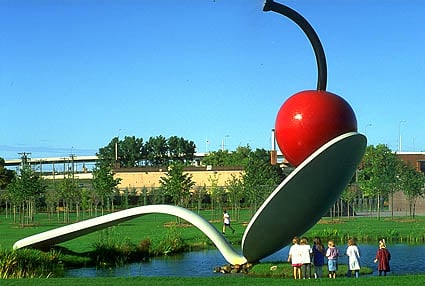
Spoonbridge and Cherry is a sculptural fountain designed by Claes Oldenburg and Coosje van Bruggen. It was funded by a $500,000 donation from art collector Frederick R. Weisman and is permanently located in the Minneapolis Sculpture Garden. The piece was completed and installed in 1988 for the Sculpture Garden's opening and consists of a large cherry resting atop a large spoon partially straddl...
Great American Nude #57 is a work by Tom Wesselmann. Without additional facts about the composition, medium, dimensions, date, or other specifications, I can only confirm that it belongs to Wesselmann's "Great American Nude" series.
30
Still Life #30
Tom WesselmannOpera
Tom Wesselmann
La natura morta è una raffigurazione pittorica di oggetti inanimati. Si rappresentano soprattutto frutta e fiori, ma anche oggetti di vario tipo, come strumenti musicali, bottiglie o animali morti.
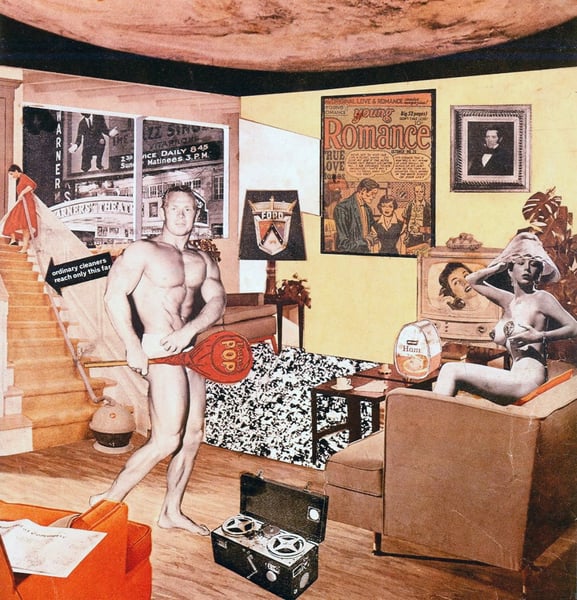
Che cosa rende le case di oggi così diverse, così attraenti? è un'opera del pittore inglese Richard Hamilton, realizzata nel 1956. Viene spesso citata fra le testimonianze più rappresentative della pop art ed è divenuta un manifesto per gli artisti di quella corrente.
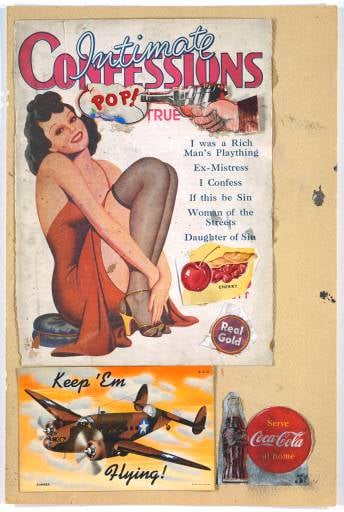
I Was a Rich Man's Plaything is a 1947 work by Eduardo Paolozzi in the Pop Art style. The title names the work's subject as a figure or object positioned as a plaything belonging to a wealthy person.
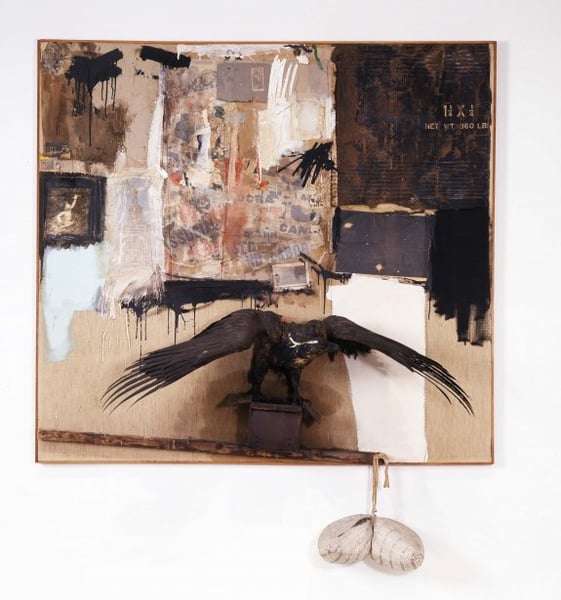
Retroactive II, created by Robert Rauschenberg in 1963, is a Pop Art work that incorporates figurative elements within the artist's characteristic mixed-media approach of the period.
In geografia, una gola è una valle profonda, spesso ad andamento meandriforme, risultato di fenomeni erosivi che si verificano quando un corso d'acqua, come un fiume o un torrente, incide vigorosamente il proprio letto in rocce coerenti e molto resistenti, generando valli strette, profondamente incassate nelle formazioni erose e con pendii o pareti molto ripide, talora anche strapiombanti. Una ...
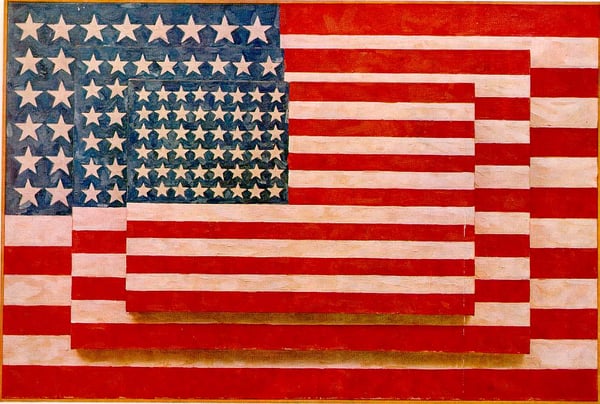
Three Flags is a painting by American artist Jasper Johns, from 1958. Held in the permanent collection of the Whitney Museum of American Art in New York since 1980, Three Flags has been described as a "landmark of 20th-century art".
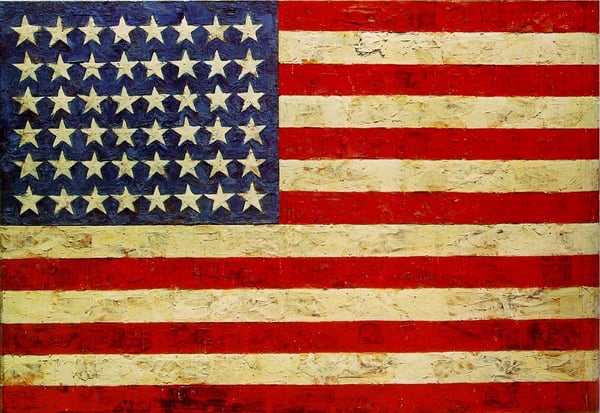
Flag is a symbolic painting by Jasper Johns from 1955, executed in the Pop Art style. The work presents the subject named in its title as a direct, literal image rather than a representational scene.
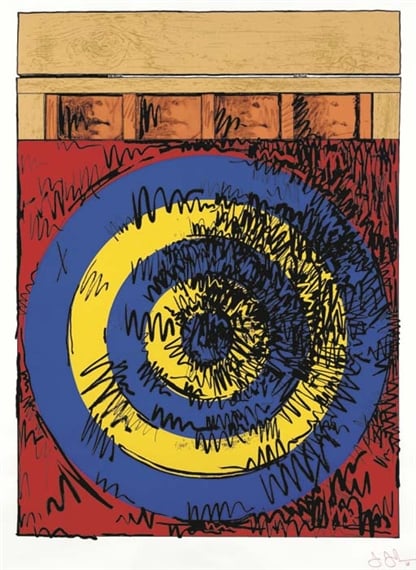
Target with Four Faces is a mixed-media work by Jasper Johns that combines a painted target motif with four three-dimensional plaster casts of a face mounted above it.
Con la parola amore si può intendere un'ampia varietà di sentimenti ed atteggiamenti differenti, che possono spaziare da una forma più generale di affetto sino a riferirsi ad un forte sentimento che si esprime in attrazione interpersonale ed attaccamento, una dedizione appassionata tra persone oppure, nel suo significato esteso, l'inclinazione profonda nei confronti di qualche cosa.
Il General Dynamics F-111 Aardvark è un cacciabombardiere supersonico bimotore con ali a geometria variabile, prodotto dall'azienda statunitense General Dynamics dalla fine degli anni sessanta al 1985 e ritirato dal servizio nel 1998.
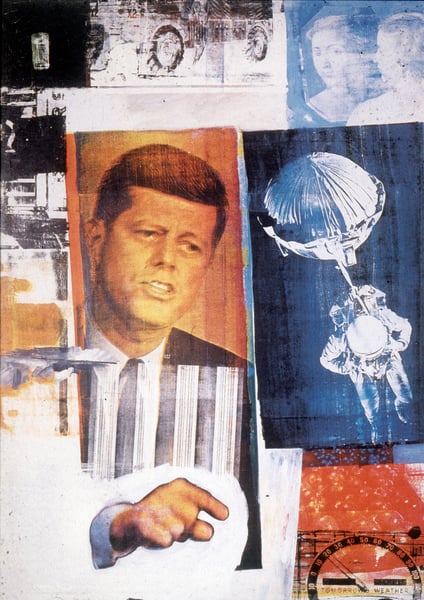
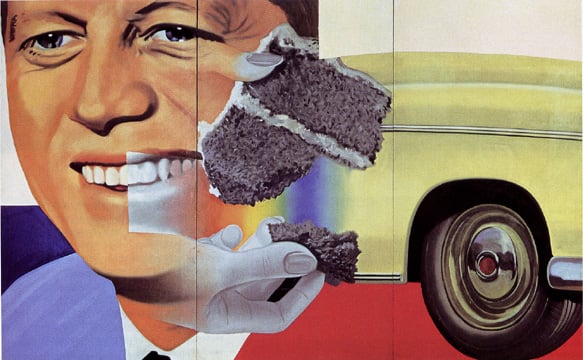
President Elect is a 1964 Pop Art work by James Rosenquist depicting a figurative subject through the lens of the movement's characteristic visual idiom.



Ancora nessun commento — scrivi il primo.