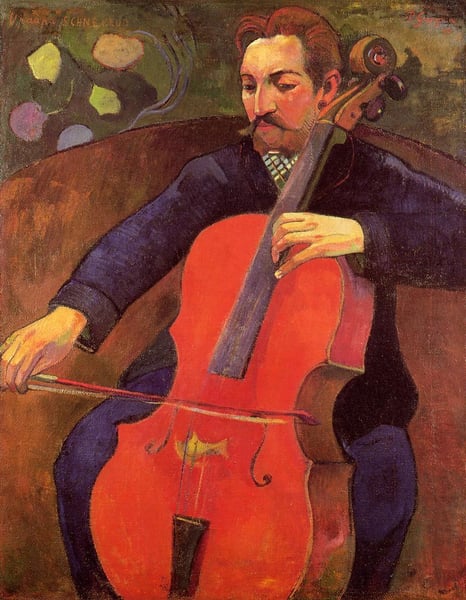
The Cellist (Portrait of Upaupa Scheklud)
Dettagli
Analisi esperta di The Cellist (Portrait of Upaupa Scheklud) di Paul Gauguin
Stile: Post-Impressionism · Genere: portrait
This expert analysis of "The Cellist (Portrait of Upaupa Scheklud)" by Paul Gauguin is based solely on the provided structured facts: Style – Post-Impressionism; Genre – portrait; Period – Paris period.
Artwork: The Cellist (Portrait of Upaupa Scheklud)
Artist: Paul Gauguin
Style: Post-Impressionism
Genre: Portrait
Period: Paris period
Analysis of Significance
Within the context of Gauguin's Paris period, The Cellist (Portrait of Upaupa Scheklud) stands as a vital document of the artist’s evolution from Impressionism toward the more symbolic, expressive, and synthetist approach that would define his mature Post-Impressionist work. Although Gauguin is best known for his Tahitian masterpieces, during his time in Paris he was actively developing the stylistic hallmarks that would later mark his escape from naturalism: bold color choices, simplified forms, and a flattening of pictorial space.
As a portrait genre piece from this period, the work captures not only the likeness of the musician Upaupa Scheklud (a figure whose exotic name hints at Gauguin’s growing fascination with the “primitive” and the non-Western) but also the psychological and social world of avant-garde Paris. The inclusion of a cellist—an instrument associated with deep, resonant emotion—suggests Gauguin’s interest in synaesthetic correspondences between music and visual art, a theme later central to Symbolism. The portrait likely reduces modeling and perspective, favoring strong outlines and color areas that flatten depth, a hallmark of Post-Impressionist departure from impressionist transient effects.
Significantly, this painting exemplifies Post-Impressionism’s shift from objective representation to subjective expression. By focusing on a musician in an informal, possibly interior setting, Gauguin elevates the sitter’s inner life and the mood of the scene over mere visual accuracy. The work’s significance within the Paris period lies in its demonstration of Gauguin’s early rejection of Impressionist light and atmosphere in favor of a more structured, symbolic approach—one that would soon lead him to Brittany and eventually the South Seas. Thus, The Cellist is a key transitional piece, showing the artist forging a new visual language that prioritizes emotion, rhythm, and the artist’s inner vision over external reality.
Museum / Gallery
Visivamente simili
20 opere con composizione e palette affini
Berény Róbert , Csellozó Nő 1928
Berény Róbert
Portrait Of Vera Poppe Playing The Cello
Irma Stern
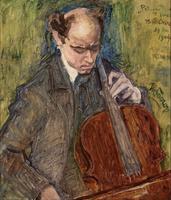
Pablo Casals Playing Cello
Jan Toorop
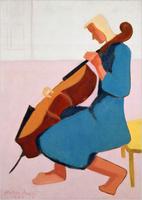
Cello Player
Milton Avery
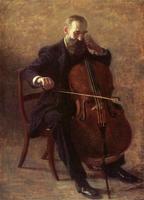
The Cello Player
Thomas Eakins
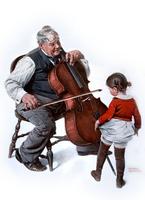
Chello OldMan LittleGirl
Norman Rockwell
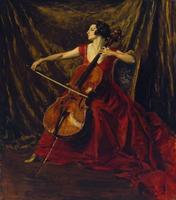
Madame Suggia
Augustus John
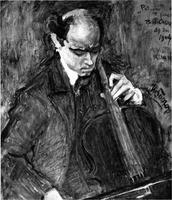
Pablo Casals
Jan Toorop
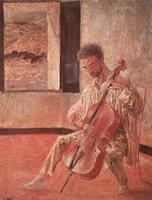
Portrait of the Cellist Ricard Pichot
Salvador Dali
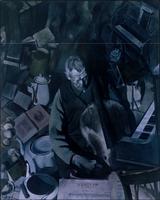
The Cello Player
Edwin Dickinson
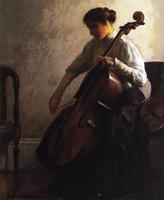
The Cellist
Joseph DeCamp
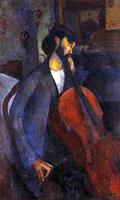
The Cellist
Amedeo Modigliani
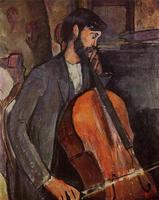
Study for The Cellist
Amedeo Modigliani
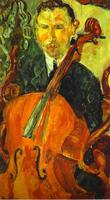
The Cellist (Serevitsch)
Chaim Soutine
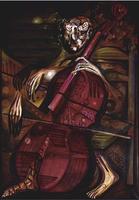
Homenaje a Paul Casals
Joan Ponc
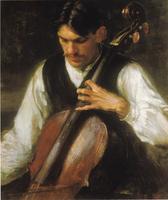
Portrait of Latino Barilli
Amedeo Bocchi
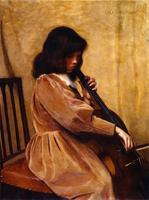
Girl Playing a Cello
Lilla Cabot Perry
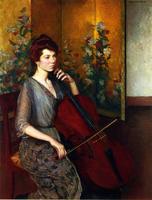
The Cellist
Lilla Cabot Perry
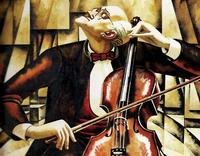
Portrait of Mstislav Rostropovich
Tahir Salahov
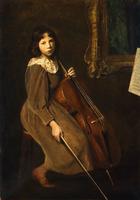
A Young Violoncellist
Lilla Cabot Perry