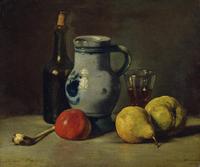
Expert Analysis: "Dishes and Fruit on a Red and Black Carpet" by Henri Matisse
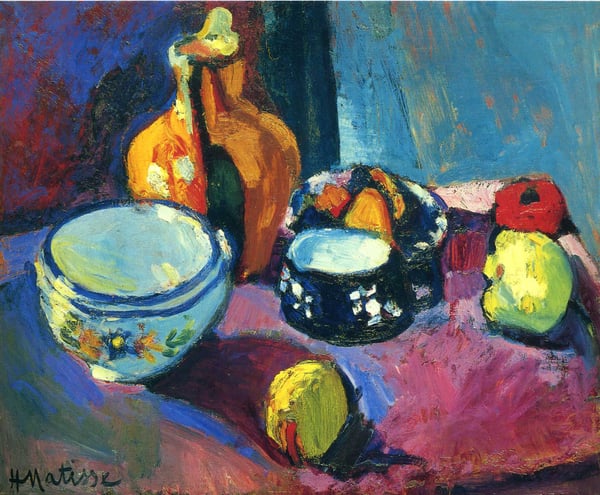
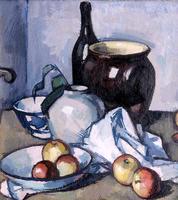
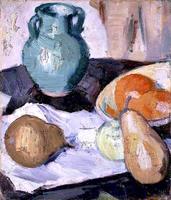
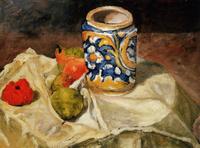
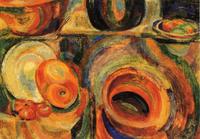
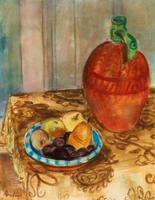
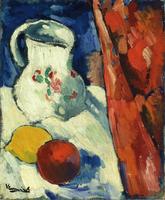
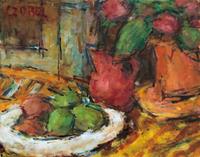
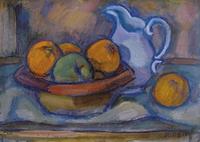
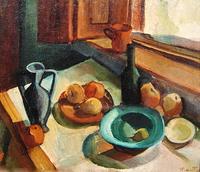
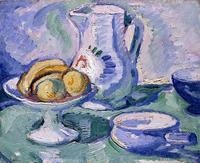
Within the context of Post-Impressionism, this still life exemplifies a pivotal shift away from naturalistic representation toward expressive color and decorative composition. The work’s significance lies in Matisse’s radical handling of the ordinary subject—dishes and fruit—by anchoring the scene in a vibrant red and black carpet. This choice transforms the background into an active, pattern-driven plane, flattening space and prioritizing color harmony over illusionistic depth.
The red and black scheme generates intense chromatic contrast, a hallmark of Post-Impressionist innovation that Matisse would later push into Fauvism. The carpet’s rhythmic pattern integrates the objects into a unified design, prefiguring the artist’s lifelong interest in decoration as a structural tool. By merging genre (still life) with bold, non-naturalistic color, Matisse demonstrates how Post-Impressionism liberated painting from perceptual accuracy, using color and pattern to evoke sensory pleasure and emotional resonance. This work stands as a crucial step in his progression from the influence of Cézanne and Gauguin toward the flat, radiant compositions that define his mature style.