Analisi esperta di Overhanging bushes in a ditch di Rembrandt
Stile: Baroque · Genere: sketch and study
Expert Analysis of "Overhanging bushes in a ditch" by Rembrandt
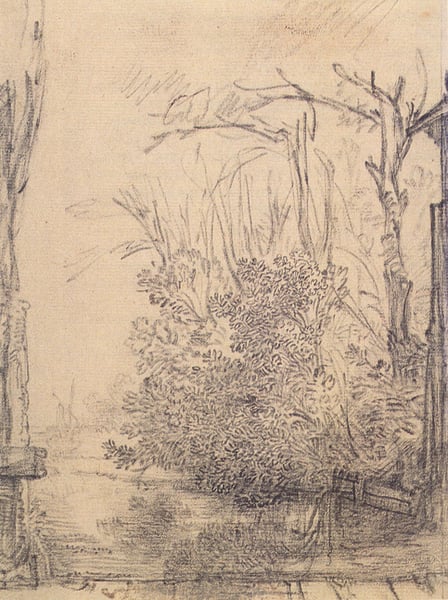
Rembrandt’s Overhanging bushes in a ditch stands as a remarkable testament to the Baroque artist’s mastery of observation and spontaneity, yet it diverges from the grand historical and religious dramas often associated with the period. Executed as a sketch and study, this work captures a secluded, almost anonymous corner of nature—a ditch overhung with tangled foliage—with the same intensity Rembrandt reserved for human faces and biblical narratives.
Significance within the Baroque Context
While Baroque art is typically defined by dramatic chiaroscuro, emotional exuberance, and monumental scale, this sketch reveals a quieter, more intimate side of the movement. Rembrandt applies the same acute sensitivity to light and texture that he used in his portraits, but here the subject is pure landscape: the dense, irregular mass of bushes, the shadowy hollow of the ditch, and the few strokes that suggest reflected light on water. The work’s significance lies in its radical departure from idealized landscape conventions of the time. Instead of composing a heroic or picturesque vista, Rembrandt focuses on a humble, overlooked detail—elevating the ordinary to the sublime through sheer virtuosity of mark-making.
Sketch as Finished Statement
The genre itself—a sketch and study—is crucial. For Rembrandt, the sketch was not merely a preparatory step but a finished expression of perception. Here, rapid pen strokes and subtle washes (likely reed pen and brown ink) evoke the chaotic growth of bushes without over-rendering. The viewer is drawn into the dense, unruly tangle, feeling the humidity and the slight menace of the overgrown ditch. This directness anticipates the later landscape sketches of the Romantic and Impressionist movements, where the artist’s hand and immediate response to nature become the subject itself.
Legacy and Influence
Overhanging bushes in a ditch exemplifies Rembrandt’s role as a precursor to modern landscape art. By focusing on a “non-monumental” natural feature, he demonstrates that the most profound beauty can be found in the margins—a ditch, a thicket, a shadow. This work challenges the Baroque canon’s emphasis on order and grandeur, offering instead a raw, honest glimpse of the natural world as seen through the artist’s eye. It remains a vital study of how Baroque sensitivity to light, atmosphere, and texture can be distilled into a single, unassuming scene.
Visivamente simili
20 opere con composizione e palette affini
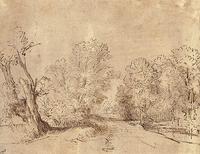
A Wooded Road
Rembrandt
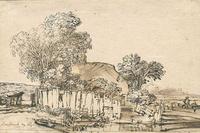
Cottage with wooden fence amid trees
Rembrandt
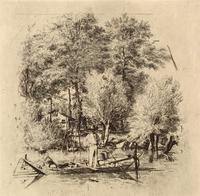
Anglers (Fisherman at the line)
Ernest Meissonier
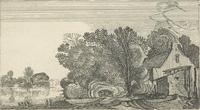
Farm on a river between trees
Esaias van de Velde
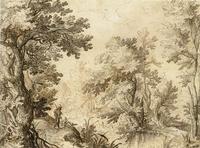
A Forest Pool
Paul Bril
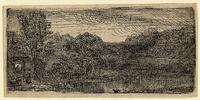
Small gray landscape, a house and trees beside a pool
Rembrandt
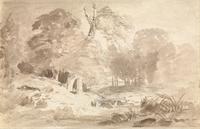
Rural Landscape in the Mark Brandenburg
Carl Blechen
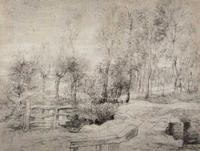
Landscape with a trees
Peter Paul Rubens
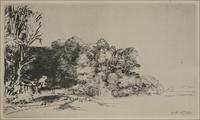
The Vista
Rembrandt
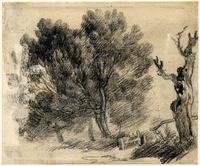
Study of willows
Thomas Gainsborough
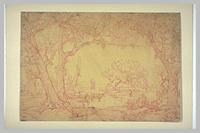
Out of the forest of Fontainebleau
Theodore Rousseau
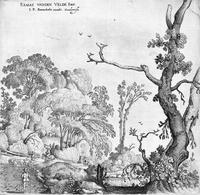
Landscape
Esaias van de Velde
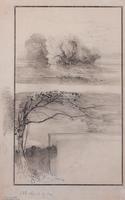
Trees near the water. Branches of trees
Aleksey Savrasov
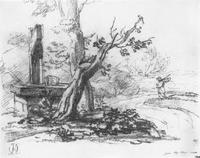
Landscape with a well
Orest Kiprensky
Farm near frozen river with skaters on the ice
Esaias van de Velde
Mountainous landscape with travellers Sun__Mountainous-landscape-with-travellers
Jacob van Strij
Landscape with a shepherd and three cows
Karel Dujardin
A Towering Tree with Travelers
Joseph-Marie Vien
Landscape
Theodore Rousseau
The Boathouse called a Grotto with a Brook
Rembrandt