Analisi esperta di Last Supper di Andy Warhol
Stile: Pop Art · Genere: religious painting
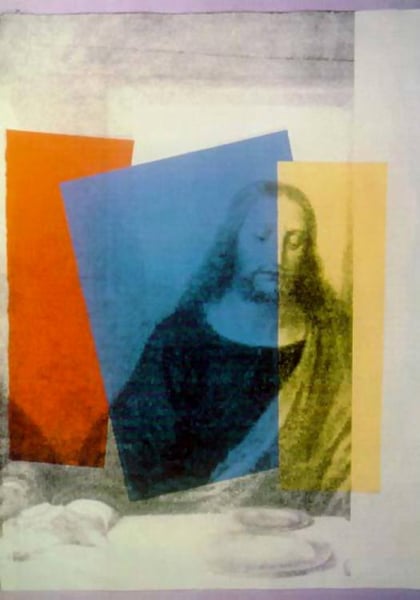
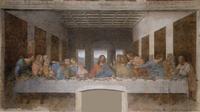
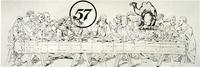
Andy Warhol’s "Last Supper" (1986) is a striking example of Pop Art’s ability to subvert and recontextualize sacred imagery. While the subject is a classic religious painting—directly referencing Leonardo da Vinci’s Renaissance masterpiece—Warhol transforms it through the signature Pop Art lens of mass production, commercial repetition, and bold color.
Significance within Pop Art and its period:
- Appropriation of the religious icon: Warhol takes a universally recognized religious narrative and treats it like a consumer product. By silk-screening Leonardo’s composition onto canvas (often in series or with altered colors), he challenges the distinction between high art and commercial reproduction, a core Pop Art tenet.
- Commentary on commercialization of faith: The “Last Supper” has been endlessly reproduced in calendars, posters, and kitsch. Warhol’s version highlights how even the most sacred image has become a commodity, flattening its spiritual weight into a graphic icon.
- Late-career pivot: Created in the year of his death, this series marks a deeper engagement with mortality and tradition. Unlike his earlier soup cans and celebrities, here he tackles a centuries-old masterpiece, blending his signature slickness with a somber, almost elegiac undertone.
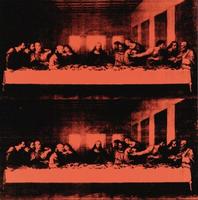
- Formal innovation: Warhol often used stark black-and-white or garish fluorescent colors (e.g., pink, turquoise) to isolate and exaggerate details. The silkscreen process—with its visible registration marks and imperfect transfers—emphasizes mechanical reproduction, making the sacred feel distant and mediated.
In religious painting genre: Warhol’s “Last Supper” is a postmodern deconstruction. It does not seek to inspire devotion but to question how we see and consume religious imagery in a secular, media-saturated age. Its significance lies in its refusal to venerate: it treats Christ and his disciples as celebrities on a print run, forcing viewers to confront the tension between faith and marketing. This work remains a landmark for how Pop Art can critique both artistic tradition and the nature of belief itself.
Visivamente simili
20 opere con composizione e palette affini
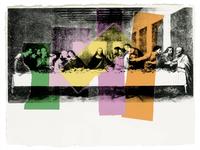
The Last Supper
Andy Warhol
The Last Supper
Hans Holbein the Younger
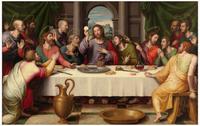
The Last Supper
Vicente Juan Masip
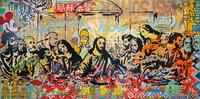
Happy Supper
Tadas Sokolovas
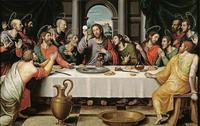
The Last Supper
Vicente Juan Masip
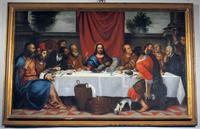
Last Supper
Palma il Giovane
The Last Supper
Leonardo da Vinci
The Last Supper (detail)
Andrea del Sarto
The Last Supper
Andy Warhol
The Last Supper
Adam van Noort
The Last Supper (Camel-57)
Andy Warhol
Supper at Emmaus
Titian
Interno assoluto
Nicola Samorì
The Last Supper
Carl Bloch
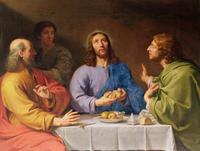
The Supper at Emmaus
Philippe de Champaigne
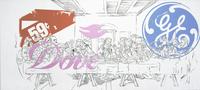
The Last Supper
Andy Warhol
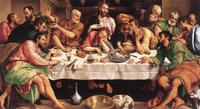
The Last Supper
Jacopo Bassano
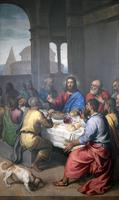
Last Supper
Titian
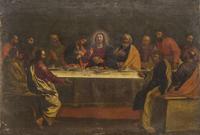
Ultima cena
Giovanni Francesco Romanelli
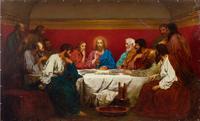
The Last Supper
Henryk Siemiradzki