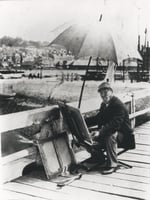
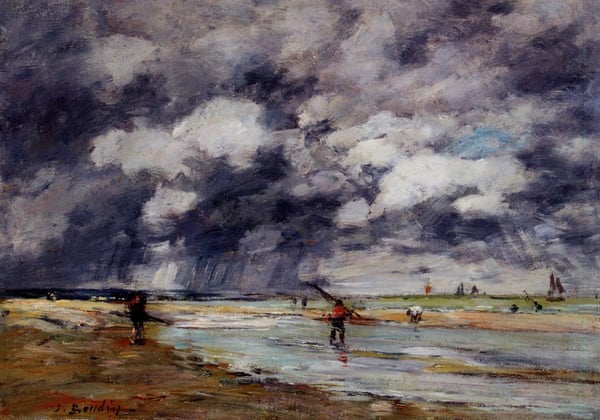
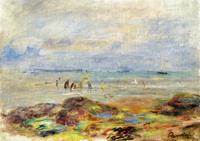
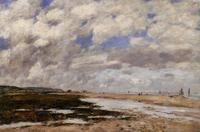
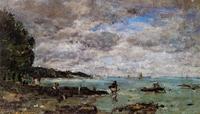
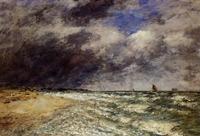
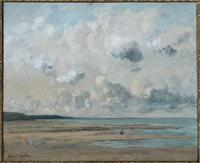
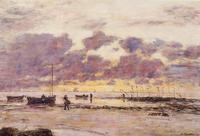
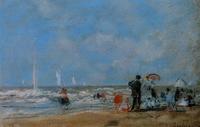
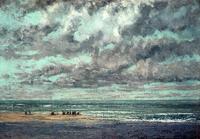
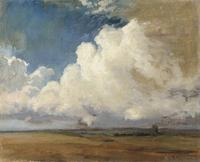
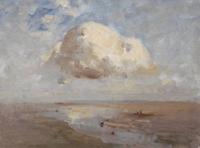
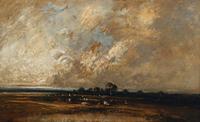
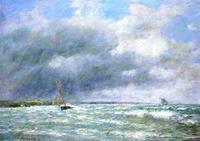
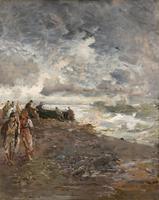
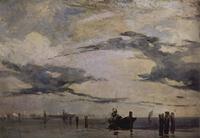
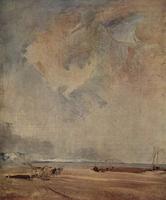
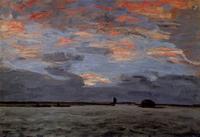
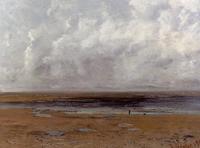
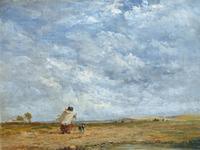
"Shore at Low Tide, Rainy Weather, near Trouville" by Eugène Boudin exemplifies the artist’s pioneering role in the development of Impressionism, particularly through its dedication to the cloudscape genre. Boudin was among the first to treat the sky not merely as a backdrop but as the primary subject—a living, ever-changing entity. Here, the low tide and rainy weather near the coastal town of Trouville provide a perfect setting for his focus on transient atmospheric effects. The muted palette, soft transitions of gray and blue, and the nuanced handling of light filtering through rain clouds demonstrate Boudin’s direct observation of nature en plein air. This work is significant because it encapsulates the essence of early Impressionist preoccupation with capturing a specific moment’s weather and light, directly influencing his protégé Claude Monet. Boudin’s cloudscapes, like this one, broke from academic conventions by elevating the mundane sky to a subject of serious artistic study, thus paving the way for the Impressionist revolution in landscape painting.