Notes
Kupferstichkabinett Berlin is a museum of prints and drawings on Matthäikirchplatz in Berlin's Kulturforum, tracing its holdings back to 1652, when the Great Elector Friedrich Wilhelm of Brandenburg acquired some 2,500 drawings and watercolors for the royal court library; the institution itself was formally established in 1831 as the third department of the Royal Prussian Museums, first housed in the Altes Museum and later the Neues Museum. Today it holds around 650,000 objects, making it Germany's largest collection of works on paper — prints, drawings, oil sketches, and watercolors alongside illuminated medieval and Renaissance manuscripts, sketchbooks, artists' print books, and printing plates. Its Netherlandish holdings are a particular strength, with sixteenth- and seventeenth-century Dutch drawings represented in depth through artists including Goltzius, Jacques de Gheyn, Jan and Esaias van de Velde, Cuyp, and Ruisdael.
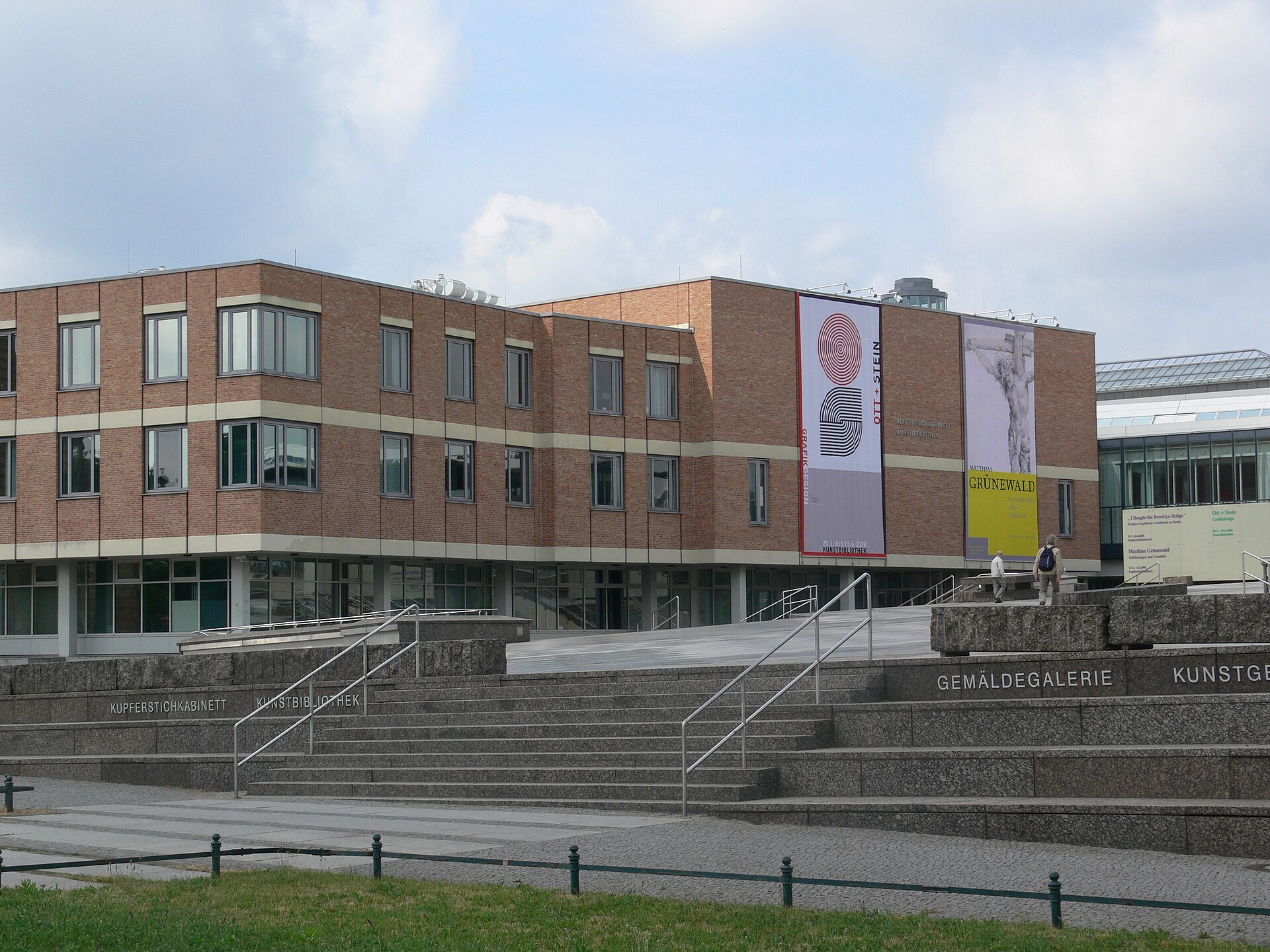
The present building at Matthäikirchplatz 8 opened in 1994, designed by Munich architects Heinz Hilmer and Christoph Sattler, who revised an earlier Rolf Gutbrod plan and gave the structure its reserved concrete-and-clinker-brick façade. That 1994 opening also reunited collection holdings that had been divided between East and West Berlin during the Cold War. Because prints and drawings are light-sensitive, the collection is shown in changing exhibitions rather than a fixed permanent display, drawing visitors especially interested in works on paper, connoisseurship, and the history of graphic art rather than large-scale painting galleries.
Dettagli
Luogo
Matthäikirchplatz, 10785 Berlin, DE