Notes
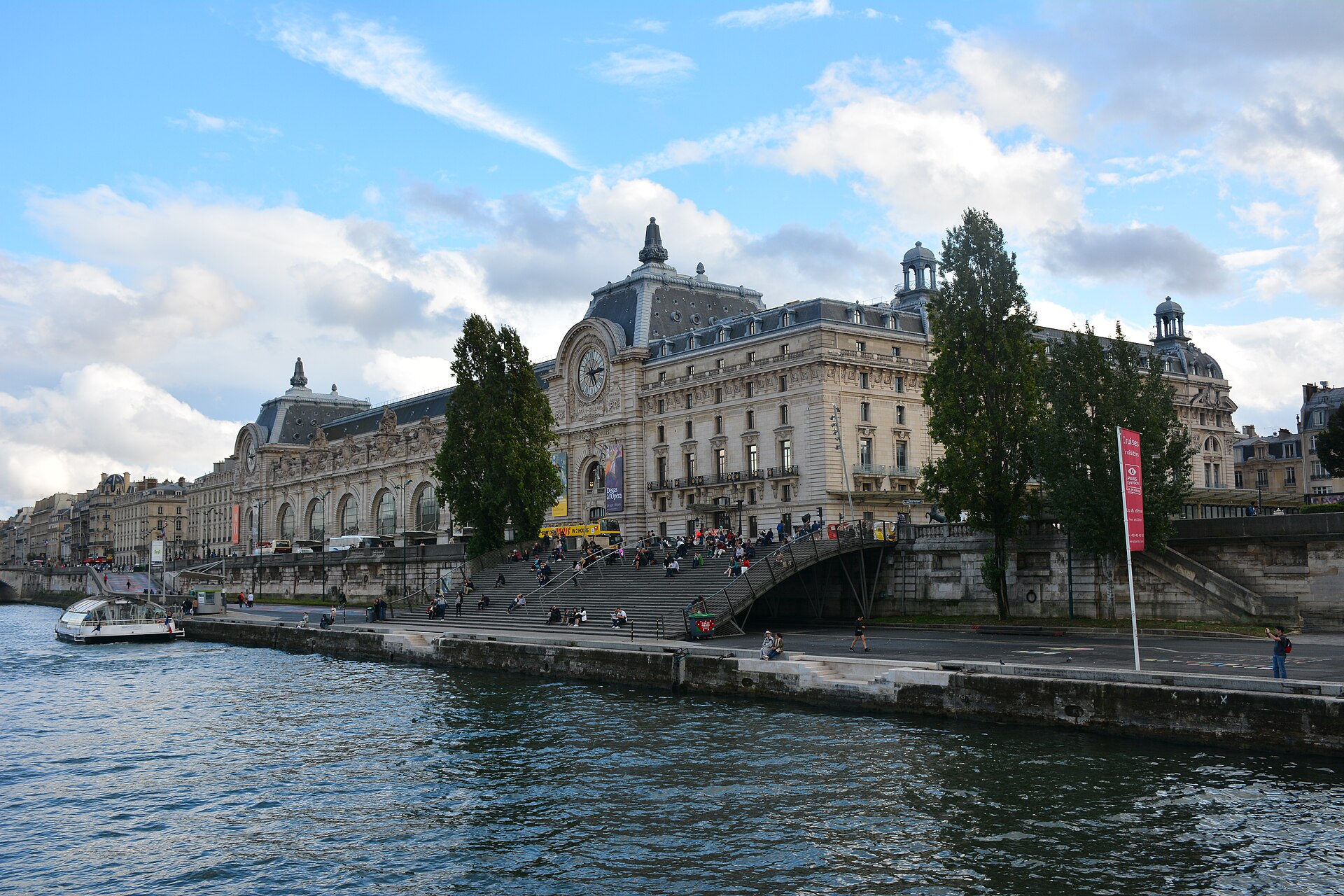
Musée d'Orsay is a museum in Paris, France, housed on the Esplanade Valéry Giscard d'Estaing along the Left Bank of the Seine, occupying the former Gare d'Orsay railway station built between 1898 and 1900 by architects Lucien Magne, Émile Bénard, and Victor Laloux. Saved from demolition in the 1970s, the station was converted into a museum by ACT Architecture, with interiors designed by Italian architect Gae Aulenti, and opened to the public in December 1986. The building's great vaulted glass-and-iron nave, a legacy of its railway origins, now serves as the museum's central sculpture gallery, lined with over 2,200 sculptures on display.
The collection covers French art from 1848 to 1914 across painting, sculpture, furniture, and photography, and holds what is recognized as the world's largest collection of Impressionist and post-Impressionist paintings, with more than 1,000 Impressionist canvases among roughly 2,000 paintings in total. Visitors encounter 86 works by Claude Monet, including Poppy Field and The Saint-Lazare Station, alongside 24 canvases by Vincent van Gogh, among them The Bedroom in Arles, Starry Night Over the Rhône, and a late self-portrait. The holdings extend to Renoir, Cézanne, Degas, and Gauguin, and include the Marlene and Spencer Hays Collection of post-Impressionist works, giving the museum depth beyond its headline names.
As the second-most visited art museum in France after the Louvre, Musée d'Orsay bridges the Louvre's pre-1848 holdings and the Centre Pompidou's post-1914 modern collections, making it the essential stop for tracing the emergence of Impressionism and its aftermath within a single, purpose-repurposed building. Its ongoing "Orsay Grand Ouvert" expansion, targeted for completion in 2026, points to a museum still actively growing its exhibition space around this core collection.
詳細
場所
1 Rue de la Légion d'Honneur, 75007 Paris, FR