30 meesterwerken van de Japanse houtsnede uit de drijvende wereld
CE
Caleido Editorial Team9 juni 202625 min lezen0 weergaven
Ukiyo-e, wat 'afbeeldingen van de drijvende wereld' betekent, is een van Japans meest invloedrijke kunstvormen. Bloeiend tijdens de Edo-periode (1603-1868) legden deze houtsneden de levendige wereld vast van kabuki-acteurs, courtisanes, sumoworstelaars, legendarische landschappen en scènes uit het dagelijks leven. De technische meesterschap die nodig was om deze meerkleurige afbeeldingen te snijden, te inkten en te drukken, blijft een van de grote prestaties van de prentkunst.
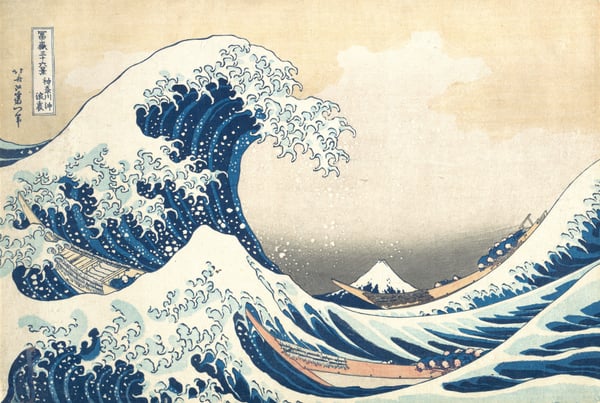
Hokusai's Grote Golf bij Kanagawa behoort tot de meest herkenbare beelden in de wereldkunst, terwijl Hiroshige's sfeervolle landschappen Van Gogh, Monet en Whistler direct inspireerden. Utamaro's sensuele vrouwenportretten en Sharaku's dramatische acteurportretten completeren een traditie die het westerse impressionisme en de Art Nouveau diepgaand vormgaf.
Gebruik de checklist om bij te houden welke ukiyo-e meesterwerken je in het echt hebt gezien.
Onder de golf voor de kust van Kanagawa, meestal kortweg De grote golf genoemd, is een houtsnede (ukiyo-e) van de Japanse kunstenaar Katsushika Hokusai uit circa 1830-1831. Het is het eerste stuk van de Zesendertig gezichten op de berg Fuji en het bekendste werk van Hokusai.
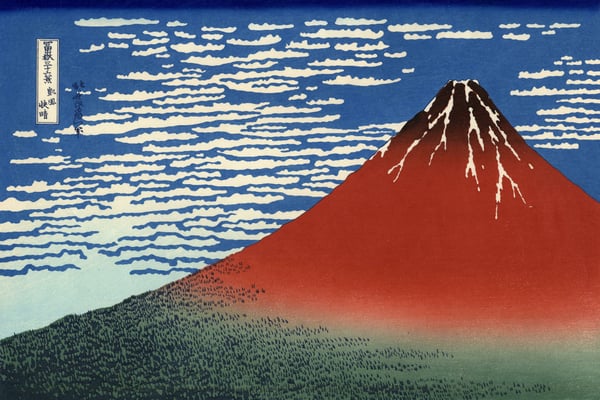
Fine Wind, Clear Morning , also known as Red Fuji , is a woodblock print by Japanese artist Hokusai (1760–1849), part of his Thirty-six Views of Mount Fuji series, dating from c. 1830 to 1832. The work has been described as "one of the simplest and at the same time one of the most outstanding of all Japanese prints".
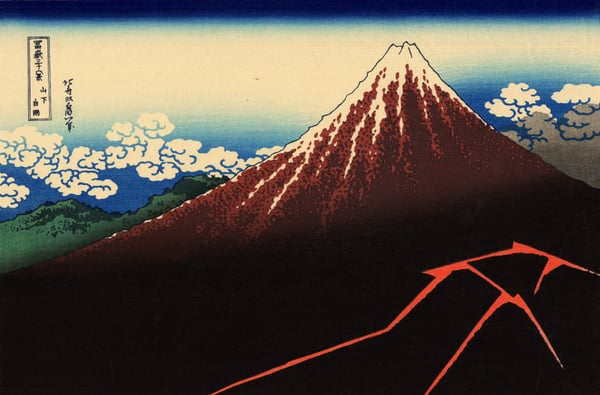
Thunderstorm Beneath the Summit , also known as Rainstorm Beneath the Summit, or sometimes Black Fuji is a woodcut print by the Japanese ukiyo-e master Hokusai (1760–1849). It is one of the most famous prints from his celebrated Thirty-six Views of Mount Fuji series, published c. 1830–1832.
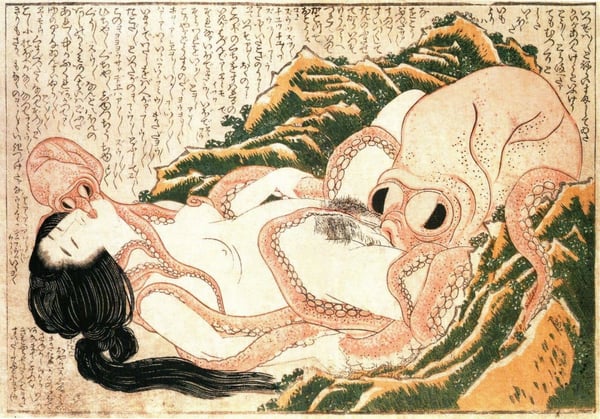
The Dream of the Fisherman's Wife , also known as Girl Diver and Octopi, Diver and Two Octopi, etc., is a woodblock-printed design by the Japanese artist Hokusai. It is included in Kinoe no Komatsu, a three-volume book of shunga erotica first published in 1814, and has become Hokusai's most famous shunga design. Playing with themes popular in Japanese art, it depicts a young ama diver entwined ...
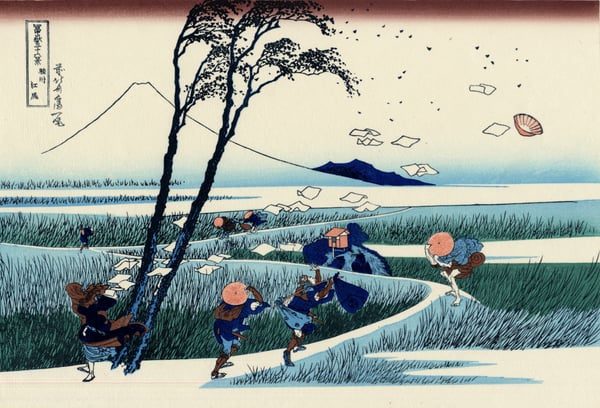
Travellers Caught in a Sudden Breeze at Ejiri is a woodblock print by Katsushika Hokusai depicting the moment its title names—figures overtaken by wind at the location of Ejiri. The work belongs to Hokusai's series of landscape prints and demonstrates the characteristic formal conventions of that tradition.
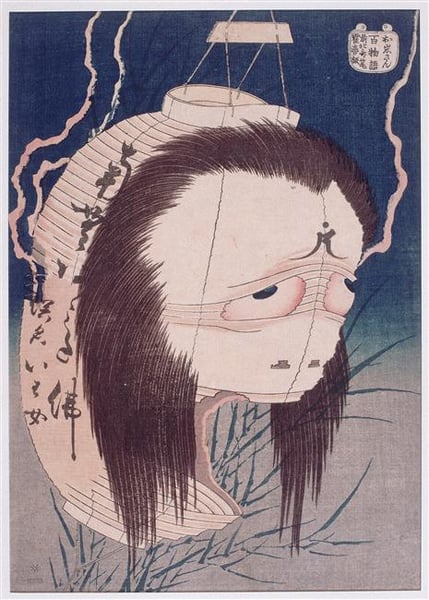
Katsushika Hokusai's The Ghost of Oiwa is a work by the artist known for his woodblock prints and landscape compositions of the Edo and early Meiji periods.
Sudden Shower over Shin-Ōhashi bridge and Atake is a woodblock print in the ukiyo-e genre by the Japanese artist Hiroshige. It was published in 1857 as part of the series One Hundred Famous Views of Edo and is one of his best known prints.
09
Plum Park in Kameido
Utagawa HiroshigeKunstwerk
Utagawa Hiroshige
Utagawa Hiroshige's Plum Park in Kameido depicts the plum park at Kameido, a subject rendered in the woodblock print tradition of Edo-period Japan.
10
Night Snow at Kambara
Utagawa HiroshigeKunstwerk
Utagawa Hiroshige
Night Snow at Kambara depicts a snow-covered landscape in the style of Japanese woodblock printing. The work is part of Hiroshige's documented body of art.
11
Hōeidō Edition: Nihonbashi
Utagawa HiroshigeKunstwerk
Utagawa Hiroshige
Hōeidō Edition: Nihonbashi is a woodblock print by Utagawa Hiroshige from his series depicting Japanese locations. The work belongs to the ukiyo-e tradition of Japanese printmaking.
12
Moon over the Sumida River
Utagawa HiroshigeKunstwerk
Utagawa Hiroshige
Moon over the Sumida River by Utagawa Hiroshige depicts a nocturnal landscape featuring the Sumida River under moonlight. The work belongs to the ukiyo-e tradition of Japanese woodblock printing.
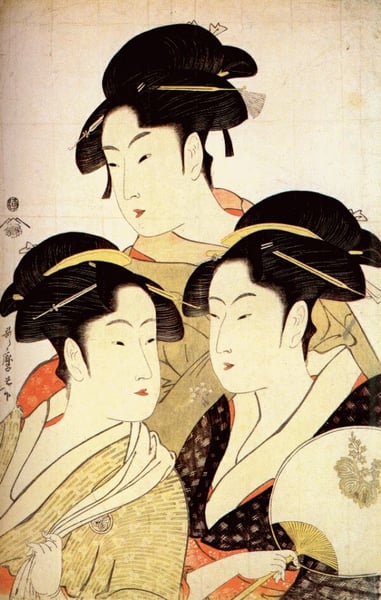
Three Beauties of the Present Day is a nishiki-e colour woodblock print from c. 1792–93 by Japanese ukiyo-e artist Kitagawa Utamaro. The triangular composition depicts the profiles of three celebrity beauties of the time: geisha Tomimoto Toyohina, and teahouse waitresses Naniwaya Kita and Takashima Hisa. The print is also known under the titles Three Beauties of the Kansei Era and Three Famou...
Woman Reading a Letter is a Baroque genre painting by Gabriel Metsu from 1666. The work depicts a woman engaged in the act of reading a letter, a subject characteristic of Dutch Golden Age painting's interest in domestic interiors and everyday moments.
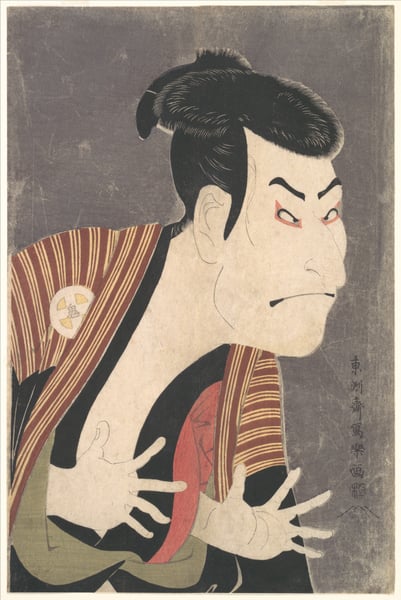
Tōshūsai Sharaku's Ōtani Oniji III as Yakko Edobei is a woodblock print depicting the actor Ōtani Oniji III in the role of Yakko Edobei. The work belongs to the ukiyo-e tradition of Japanese printmaking.
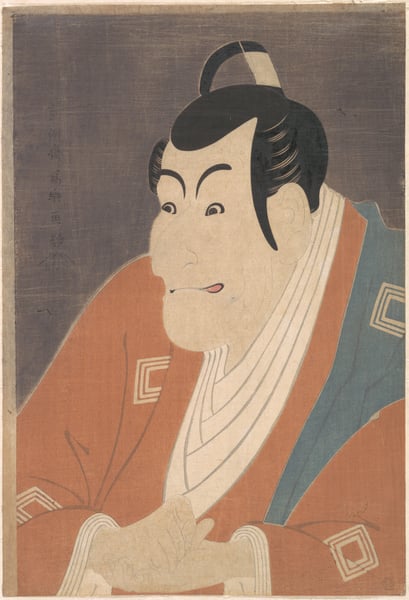
Ichikawa Ebizō as Takemura Sadanoshin is a woodblock print by Tōshūsai Sharaku depicting the actor Ichikawa Ebizō in the role of Takemura Sadanoshin. Sharaku's work belongs to the ukiyo-e tradition of Japanese prints, which specialized in portraying kabuki actors and theatrical scenes.
Beauty Looking Back by Hishikawa Moronobu depicts a female figure turning to glance over her shoulder. The work exemplifies the ukiyo-e tradition of bijin-ga, or pictures of beautiful women, a genre in which Moronobu was a pioneering figure during Japan's Edo period.
19
Fuji from Gotenyama
Utagawa KuniyoshiKunstwerk
Utagawa Kuniyoshi
Fuji from Gotenyama is a work by Utagawa Kuniyoshi.
20
The Courtesan Hinazuru
Suzuki HarunobuKunstwerk
Suzuki Harunobu
The Courtesan Hinazuru is a woodblock print by Suzuki Harunobu depicting a courtesan identified by that name.
21
Crow and the Moon
Suzuki HarunobuKunstwerk
Suzuki Harunobu
Crow and the Moon is a woodblock print by Suzuki Harunobu, a Japanese artist of the Edo period. The work depicts a crow and the moon, rendered in the ukiyo-e tradition that Harunobu helped pioneer as one of the first practitioners of full-color woodblock printing.
22
Tōshōgū Shrine at Ueno
Utagawa KunisadaKunstwerk
Utagawa Kunisada
Tōshōgū Shrine at Ueno is a woodblock print by Utagawa Kunisada depicting the shrine located at Ueno. The work belongs to the ukiyo-e tradition of Japanese printmaking.
23
Night Attack on the Faithful Samurai
Utagawa KuniyoshiKunstwerk
Utagawa Kuniyoshi
Night Attack on the Faithful Samurai is a woodblock print by Utagawa Kuniyoshi.
24
The Actor Ichikawa Danjūrō
Torii KiyomasuKunstwerk
Torii Kiyomasu
The Actor Ichikawa Danjūrō is a work by Torii Kiyomasu depicting a kabuki performer. The print belongs to the ukiyo-e tradition of Japanese woodblock art, in which Kiyomasu was a pioneering figure during the early 18th century.
25
Geisha and Attendant in Snow
Suzuki HarunobuKunstwerk
Suzuki Harunobu
Suzuki Harunobu's Geisha and Attendant in Snow depicts two figures in a snowy setting. The work belongs to the ukiyo-e tradition, a genre of Japanese woodblock prints that flourished during the Edo period.
26
Views of Edo: Nihonbashi
Utagawa HiroshigeKunstwerk
Utagawa Hiroshige
Views of Edo: Nihonbashi is a woodblock print by Utagawa Hiroshige depicting the Nihonbashi (Japan Bridge) in Edo. The work belongs to Hiroshige's series documenting views of the city, rendered in the ukiyo-e tradition of Japanese printmaking.
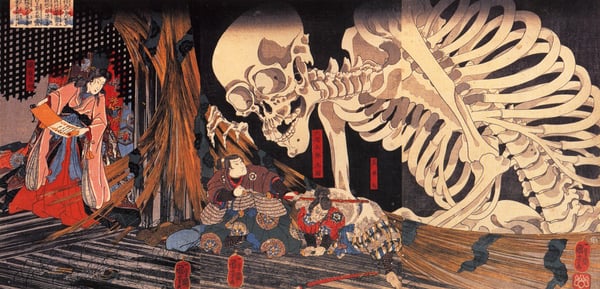
Skeleton Spectre is a work by Utagawa Kuniyoshi, the nineteenth-century Japanese woodblock printmaker known for his dynamic compositions and supernatural subjects. The title identifies the subject as a skeletal apparition, consistent with Kuniyoshi's interest in the dramatic and otherworldly themes that distinguished his career in the ukiyo-e tradition.
Nog geen reacties — wees de eerste.