Notes
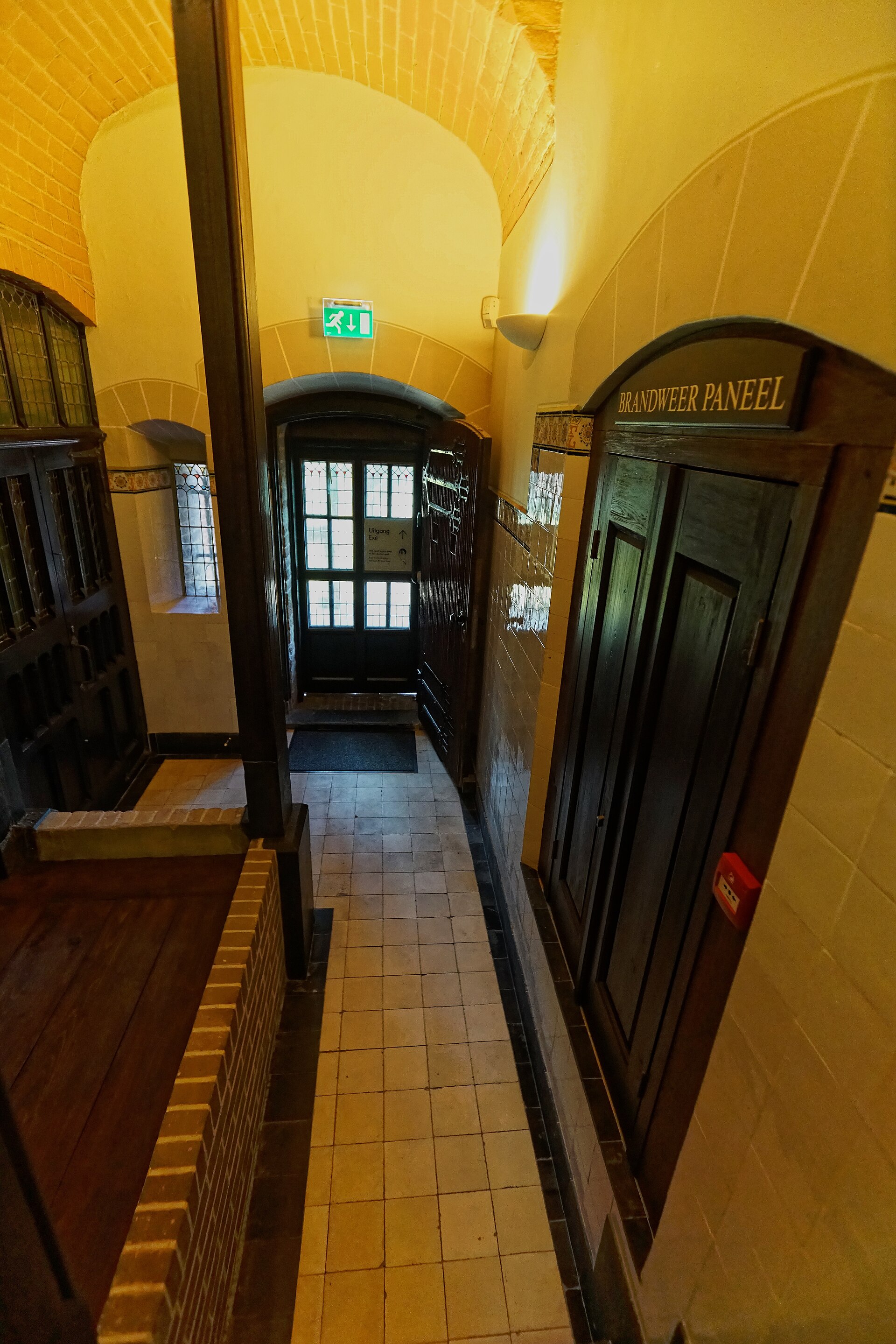
De Haar Castle is a neo-Gothic castle at Kasteellaan 1 in Utrecht province, rebuilt between 1892 and roughly 1912 by architect Pierre Cuypers for Etienne Gustave Frédéric Baron van Zuylen van Nyevelt van de Haar after he inherited the long-ruined estate in 1890. The site's documented history reaches back to 1391, when the De Haar family received it as a fiefdom, passing to the Van Zuylen family in 1440 before falling into ruin after 1641. Cuypers' reconstruction, financed by the fortune of the baron's wife Baroness Hélène de Rothschild, whom he married in 1887, followed the castle's original footprint while completing Cuypers' own vision of an ideal medieval stronghold, and it embedded then-cutting-edge technology — steel beams, prefabricated concrete, private electricity generation, steam-based central heating, and an elevator — behind its towers and moat. The surrounding gardens, designed by landscape architect Hendrik Copijn on formal, Versailles-inspired lines and planted with some 7,000 mature trees, extend across an estate of more than 400 hectares, part of which has been managed by Natuurmonumenten since the Van Zuylen family transferred ownership to the Foundation Kasteel de Haar in 2000 (the family retains the right to stay in the castle one month a year).
Visitors move through interiors furnished with the Rothschild family's own acquisitions: old Chinese and Japanese porcelain, Flemish tapestries, and paintings, alongside a Japanese shōgun consort's ceremonial carrier coach, said to be one of only two such coaches in existence. For art and decorative-arts enthusiasts, the appeal lies less in a single curated collection than in the whole as an assembled Rothschild-era interior — porcelain, textiles, and paintings displayed within a purpose-rebuilt Gothic-Revival monument — paired with Copijn's period garden design outside, and the castle's landscaped grounds continue to host fairs and events today.
Details
Locatie
Utrecht