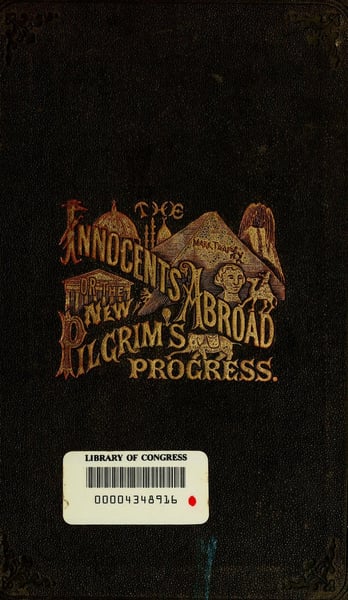
Mark Twain · Description and travel, Voyages and travels, Americans
Twain's comic travelogue based on his 1867 steamship voyage to Europe and the Holy Land, satirizing both the Old World's pretensions and the American tourist abroad.
10 essential works from America's greatest humorist and social critic
Mark Twain (1835-1910), born Samuel Langhorne Clemens, was the voice of America in its most transformative century. Riverboat pilot, gold prospector, travel writer, novelist, and the most quoted American author in history, Twain wielded humor as a weapon against hypocrisy, racism, and the pretensions of civilized society. William Faulkner called him 'the father of American literature,' and Ernest Hemingway declared that 'all modern American literature comes from one book by Mark Twain called Huckleberry Finn.'
Hidden Gems & Little-Known Facts
Beyond Tom Sawyer and Huckleberry Finn, Twain produced remarkable works that reveal the full range of his genius. The Tragedy of Pudd'nhead Wilson (1894) is a razor-sharp critique of race in America, using a baby-switching plot to expose the absurdity of racial classification — it remains devastatingly relevant today. Personal Recollections of Joan of Arc (1896) was Twain's own favorite among his books, a deeply researched historical novel he spent twelve years writing — a surprising choice for a humorist, and one that reveals his serious literary ambitions. A Connecticut Yankee in King Arthur's Court (1889) is proto-science fiction: a time-travel satire that skewers both medieval superstition and modern industrial capitalism with equal ferocity.
Twain was born on November 30, 1835, exactly two weeks after Halley's Comet appeared — and he predicted he would die when the comet returned. He was right: he died on April 21, 1910, one day after the comet's closest approach to Earth. His pen name 'Mark Twain' comes from his days as a Mississippi riverboat pilot — it was the leadsman's call meaning 'two fathoms deep' (safe water). He was one of the earliest major authors to use a typewriter, submitting Life on the Mississippi as the first typewritten manuscript delivered to a publisher. He invested and lost a fortune on a failed mechanical typesetting machine, and paid off his resulting debts through a grueling worldwide lecture tour.
References & Further Reading
Use the checklist below to track your reading of Twain's essential works.
Mark Twain · Description and travel, Voyages and travels, Americans
Twain's comic travelogue based on his 1867 steamship voyage to Europe and the Holy Land, satirizing both the Old World's pretensions and the American tourist abroad.

Mark Twain · Adventure stories, Boys, Mississippi River
A boyhood adventure set along the Mississippi in the 1840s, following mischievous Tom Sawyer through episodes like whitewashing a fence, treasure hunting, and a brush with the murderer Injun Joe.
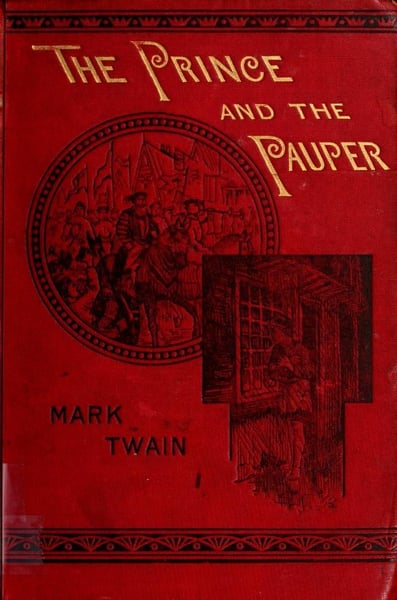
Mark Twain · Historical fiction, Princes, Mistaken identity
Set in Tudor England, two identical boys—Prince Edward and pauper Tom Canty—trade places, exposing the injustices of social class as each experiences the other's world.
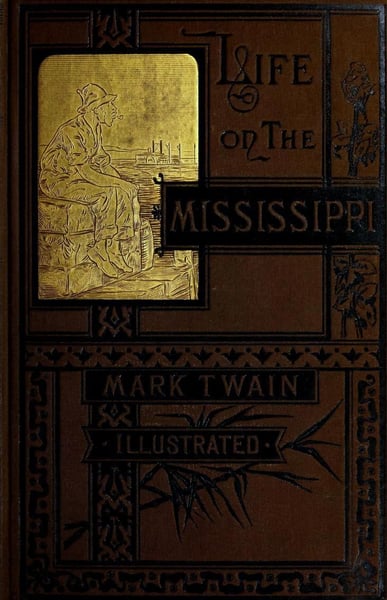
Mark Twain · Autobiography, Steamboats, Mississippi River
A memoir and history blending Twain's apprenticeship as a steamboat pilot with reflections on the river and the changing American South.
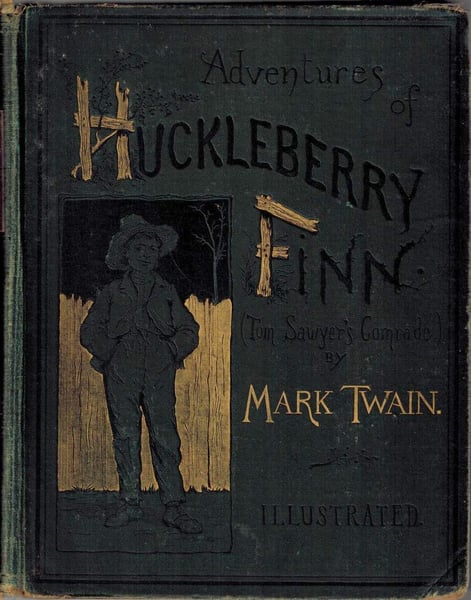
Mark Twain · American fiction, Mississippi River, Slavery
Narrated in vernacular by Huck Finn, who flees down the Mississippi on a raft with the escaped slave Jim, the novel confronts slavery and conscience and is foundational to American literature.
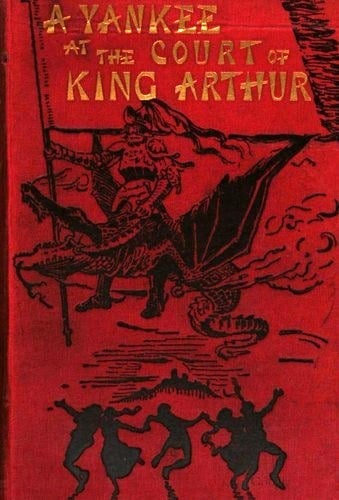
Mark Twain · Time travel, Arthurian romances, Satire
A 19th-century Yankee is transported to Arthurian England and tries to industrialize Camelot, in a satire targeting feudalism, monarchy, and romanticized notions of chivalry.
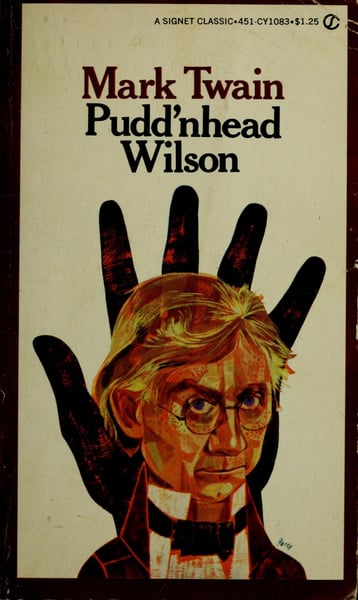
Mark Twain · Slavery, Race relations, Passing (Identity)
When a slave switches her light-skinned infant with the master's son, the resulting lives expose the arbitrariness of racial identity and the cruelty of slavery in antebellum Missouri.
Mark Twain · Historical fiction, Christian saints, France
A fictionalized biography of Joan of Arc presented through a devoted companion's eyes; Twain regarded this reverent historical work as his finest book.

Mark Twain · Description and travel, Voyages around the world, Travel
A travel account of Twain's worldwide lecture tour through Australia, India, and southern Africa, mixing observation with sharp criticism of imperialism and colonial racism.
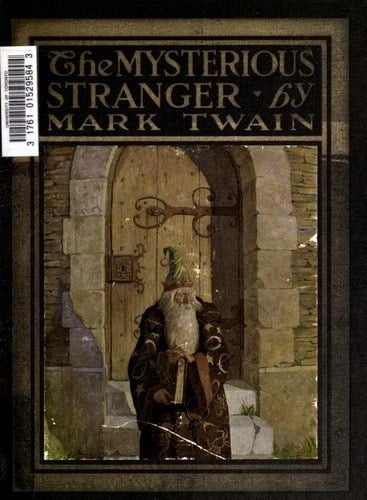
Mark Twain · Fantasy, Devil, Social life and customs
Published posthumously, this dark fable depicts a supernatural visitor named Satan in medieval Austria, voicing Twain's bleak late-life meditations on humanity, morality, and free will.
Пока нет комментариев — будьте первым.