Claude Monet sanatçısının Edge of the Cliff at Pourville eseri hakkında uzman analizi
Tarz: Impressionism · Tür: landscape
Expert Analysis of "Edge of the Cliff at Pourville" (1882) by Claude Monet
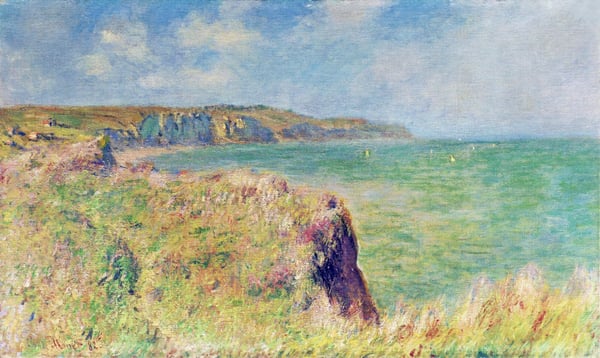
As a landmark of Impressionist landscape painting, Edge of the Cliff at Pourville exemplifies Monet’s revolutionary approach to capturing transient light, atmospheric effects, and the sheer sensory experience of the natural world. Created during a period of intense exploration along the Normandy coast, this work distills the core tenets of Impressionism: plein-air immediacy, broken color, and an emphasis on the fleeting moment rather than topographical precision.
Significance within Impressionism:
Monet’s composition deliberately destabilizes the traditional hierarchy of land, sea, and sky. The cliff edge, rendered in vigorous, short brushstrokes of ochre, green, and white, thrusts diagonally into the frame—a radical, almost abstract device that pulls the viewer’s eye toward the shimmering expanse of the English Channel. The sky is not a static backdrop but a vibrant field of pale blues, pinks, and grays, modulated by the same rapid touch that defines the water below. This equal treatment of all pictorial elements—color and light overriding form—marks a decisive break from academic landscape conventions.
The painting’s true subject is not the cliff itself but the quality of light at a specific moment. Monet captures the glancing gleam of afternoon sun on choppy waves, the cool shadow beneath the overhang, and the hazy atmosphere that softens the horizon. By applying paint in separate, unblended dabs, he allows the viewer’s eye to optically mix the colors, recreating the vibrant, flickering sensation of seeing the scene in real time.
Context and Lasting Impact:
Painted during Monet’s second stay at Pourville in the early 1880s, this work belongs to a series of studies that pushed Impressionism toward a more abstract, immersive engagement with nature. The cliff’s edge becomes a threshold—both a physical viewpoint and a metaphor for the artist’s desire to dissolve boundaries between subject, technique, and perception. Later generations would recognize in such canvases the seeds of modernism: the flattening of pictorial space, the primacy of the artist’s sensory response, and the elevation of process over finished representation.
In Edge of the Cliff at Pourville, Monet achieves what all great Impressionist landscapes strive for: not a record of a place, but a record of seeing itself. The painting remains a quintessential example of how this movement transformed landscape art into a vibrant, subjective encounter with light and atmosphere.
Görsel olarak benzer
İlişkili kompozisyon ve renk paletine sahip 20 eser
Cliff near Pourville
Claude Monet
Alley near Pourville
Claude Monet
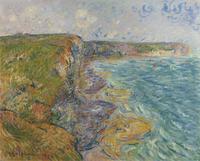
Sailboats near the Cliffs at Yport
Gustave Loiseau
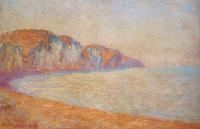
Cliff at Pourville in the Morning
Claude Monet
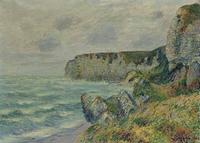
Cliffs at Saint Jouin
Gustave Loiseau
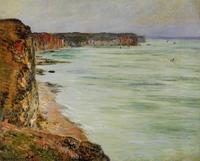
Calm Weather, Fecamp
Claude Monet
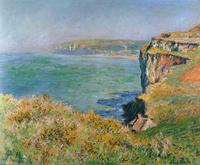
Cliff at Grainval
Claude Monet
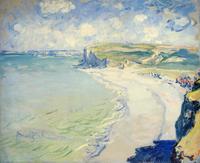
The Beach at Pourville
Claude Monet
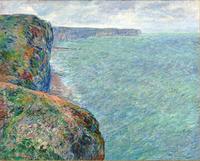
The Sea Seen from the Cliffs of Fecamp
Claude Monet
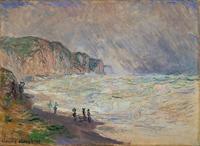
Heavy Sea at Pourville
Claude Monet
Cliffs at Yport
Gustave Loiseau
Cliff at Dieppe
Claude Monet
Cliff near Dieppe
Paul Gauguin
Cliffs at Fecamp in Normandy
Gustave Loiseau
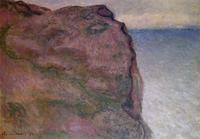
Cliff at Petit Ailly, at Varengeville
Claude Monet
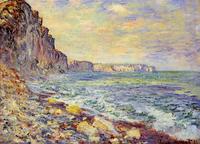
Morning by the Sea
Claude Monet
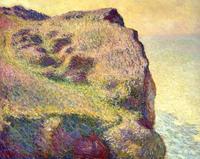
The Pointe du Petit Ailly
Claude Monet
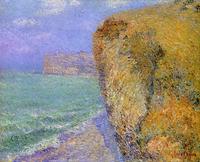
Cliffs at Grainval
Gustave Loiseau
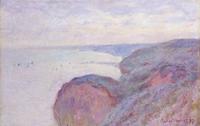
Cliff near Dieppe, Overcast Skies
Claude Monet
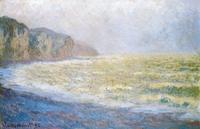
Cliff at Pourville
Claude Monet