Notes
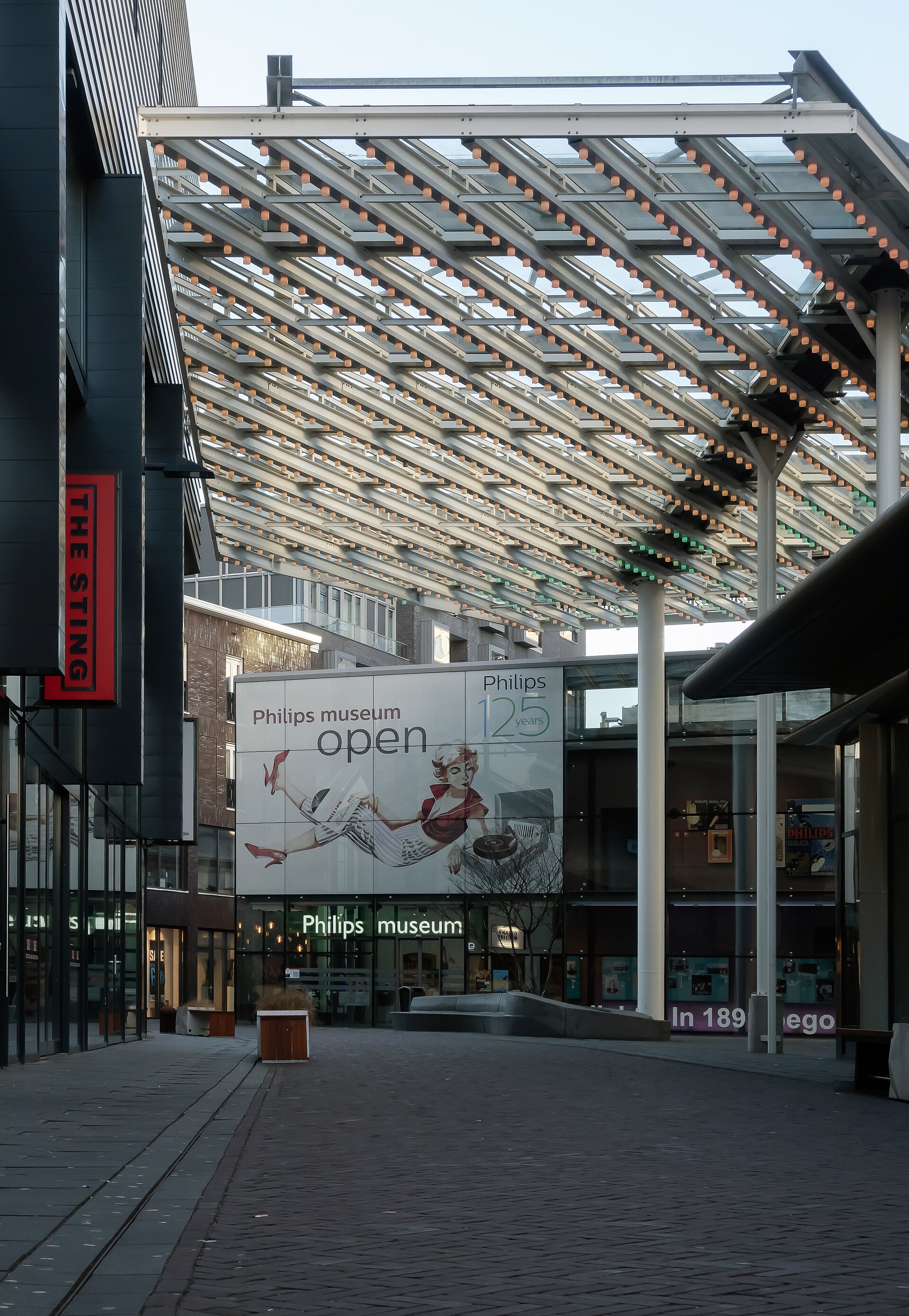
Philips Museum is a company heritage museum in Eindhoven, Netherlands, occupying the Eerste Gloeilampenfabriek — Philips' first light bulb factory, built in 1888 and now a listed national monument — at Emmasingel 31. It traces its lineage to a light demonstration center opened on the site in 1951 and a small factory museum opened to the public in 1997, but the institution in its present form dates from a 2011–2013 renovation by architecture firm GSG, reopened by Queen Beatrix on 5 April 2013. The museum covers more than 130 years of the company founded there by Gerard and Frederik Philips in 1891, moving from the manufacture of carbon-filament and later incandescent, fluorescent, sodium and LED lamps through to X-ray and MRI medical equipment, radios, televisions, shavers and other consumer electronics.
Visitors move through a reconstruction of the 1891 lamp-making process and a recreated 1920s factory workspace, alongside design work by Louis Kalff, Philips' longtime chief designer, and the wartime story of Jan Zwartendijk. For anyone interested in industrial design, the history of technology, or Dutch corporate heritage rather than fine art, the appeal lies in seeing product design evolve inside the actual building where the company began, with the 2018 visitor count recorded at roughly 80,897. It suits design historians, technology enthusiasts and families more than traditional art gallery visitors, offering a concentrated, single-company narrative rather than a broad collection of artworks.
详情
位置
Emmasingel 31, 5611 AZ Eindhoven, NL