
Notable Work: Stances et Poèmes | Motivation: in special recognition of his poetic composition, which gives evidence of lofty idealism, artistic perfection and a rare combination of the qualities of both heart and intellect
Over a century of the world's finest literary voices, honored since 1901
The Nobel Prize in Literature has been awarded by the Swedish Academy since 1901, recognizing outstanding contributions to the field of literature worldwide. Over more than a century, it has honored novelists, poets, playwrights, essayists, and short story writers from diverse cultural and literary traditions.
From Rabindranath Tagore, the first non-European laureate in 1913, to the genre-defying selections of recent decades, the prize has celebrated voices from every continent. The laureates include towering figures such as Gabriel Garcia Marquez, Toni Morrison, Albert Camus, Ernest Hemingway, and many others who have shaped the landscape of modern literature.
The list spans realism and magical realism, existentialism and postmodernism, lyric poetry and epic drama. Each laureate brought a unique vision and voice to the world stage, enriching our collective understanding of the human experience.
Use the checklist below to track the Nobel laureates you have read. How many of these literary giants have you explored?
Notable Work: Stances et Poèmes | Motivation: in special recognition of his poetic composition, which gives evidence of lofty idealism, artistic perfection and a rare combination of the qualities of both heart and intellect
Notable Work: The History of Rome | Motivation: the greatest living master of the art of historical writing, with special reference to his monumental work, <I>A history of Rome</I>
Notable Work: Synnøve Solbakken | Motivation: as a tribute to his noble, magnificent and versatile poetry, which has always been distinguished by both the freshness of its inspiration and the rare purity of its spirit
Synnøve Solbakken is a Norwegian peasant novel by Bjørnstjerne Bjørnson published in 1857. The story was first published in the newspaper Illustreret Folkeblad in 1857, and it was then issued in book form by Johan Fjeldsted Dahl that same year.
Notable Work: Mirèio | Motivation: in recognition of the fresh originality and true inspiration of his poetic production, which faithfully reflects the natural scenery and native spirit of his people, and, in addition, his significa...
Mirèio is a poem in Occitan (Provençal) by French writer Frédéric Mistral, written in 1859 after eight years of effort. Mirèio, a long poem consisting of twelve songs, tells of the thwarted love of Vincent and Mireille, two young Provençal people of different social backgrounds. The name Mireille/Mirèio was coined by Mistral as a doublet of the word meraviho 'wonder'.
Notable Work: The Great Galeoto | Motivation: in recognition of the numerous and brilliant compositions which, in an individual and original manner, have revived the great traditions of the Spanish drama
The Great Galeoto is a 1951 Spanish drama film directed by Rafael Gil and starring Ana Mariscal and Rafael Durán.
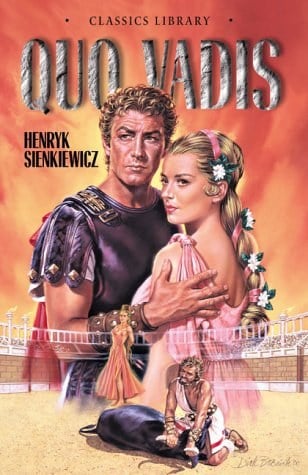
Notable Work: Quo Vadis | Motivation: because of his outstanding merits as an epic writer
Quo vadis? is a Latin phrase meaning "Where are you going?". It is commonly translated, quoting the KJV translation of John 13:36, as "Whither goest thou?".
Notable Work: Odi barbare | Motivation: not only in consideration of his deep learning and critical research, but above all as a tribute to the creative energy, freshness of style, and lyrical force which characterize his poetic masterpi...
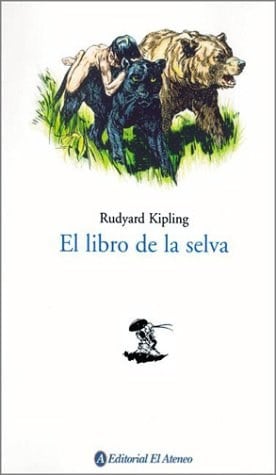
Notable Work: The Jungle Book | Motivation: in consideration of the power of observation, originality of imagination, virility of ideas and remarkable talent for narration which characterize the creations of this world-famous author
The Jungle Book is an 1894 collection of stories by the English author Rudyard Kipling. Most of the characters are animals such as Shere Khan the tiger and Baloo the bear, though a principal character is the boy or "man-cub" Mowgli, who is raised in the jungle by wolves. Most stories are set in a forest in India; one place mentioned repeatedly is "Seeonee" (Seoni), in the central state of Madhya Pradesh.
Notable Work: The Meaning and Value of Life | Motivation: in recognition of his earnest search for truth, his penetrating power of thought, his wide range of vision, and the warmth and strength in presentation with which in his numerous works he has vindi...

Notable Work: The Wonderful Adventures of Nils | Motivation: in appreciation of the lofty idealism, vivid imagination and spiritual perception that characterize her writings
The Wonderful Adventures of Nils is a work of fiction by the Swedish writer Selma Lagerlöf, the first woman to receive the Nobel Prize in Literature. It was originally published in two books, 1906 and 1907, and was first published in English as The Wonderful Adventures of Nils (1907) and The Further Adventures of Nils (1911). The two parts are later usually published together, in English as The Wonderful Adventures of Nils, but that name may also refer to the first part alone.
Notable Work: L'Arrabbiata | Motivation: as a tribute to the consummate artistry, permeated with idealism, which he has demonstrated during his long productive career as a lyric poet, dramatist, novelist and writer of world-renowned short...
Notable Work: The Blue Bird | Motivation: in appreciation of his many-sided literary activities, and especially of his dramatic works, which are distinguished by a wealth of imagination and by a poetic fancy, which reveals, sometimes in th...

Notable Work: The Weavers | Motivation: primarily in recognition of his fruitful, varied and outstanding production in the realm of dramatic art
The Weavers were an American folk music quartet based in the Greenwich Village area of New York City originally consisting of Lee Hays, Pete Seeger, Ronnie Gilbert, and Fred Hellerman. Founded in 1948, the group sang traditional folk songs from around the world, as well as blues, gospel music, children's songs, labor songs, and American ballads. The group sold millions of records at the height of their popularity, including the first folk song to reach No. 1 on popular music charts, their rec...
Notable Work: Gitanjali | Motivation: because of his profoundly sensitive, fresh and beautiful verse, by which, with consummate skill, he has made his poetic thought, expressed in his own English words, a part of the literature of the ...
Gitanjali is a collection of poems by the Bengali poet Rabindranath Tagore. Tagore received the Nobel Prize for Literature in 1913, for its English translation, Song Offerings, making him the first non-European and the first Asian and the only Indian to receive this honour.
Notable Work: Jean-Christophe | Motivation: as a tribute to the lofty idealism of his literary production and to the sympathy and love of truth with which he has described different types of human beings
Jean-Christophe (1904‒1912) is the novel in 10 volumes by Romain Rolland for which he received the Prix Femina in 1905 and which contributed to his receiving the Nobel Prize for Literature in 1915. It was translated into English by Gilbert Cannan.

Notable Work: The Charles Men | Motivation: in recognition of his significance as the leading representative of a new era in our literature
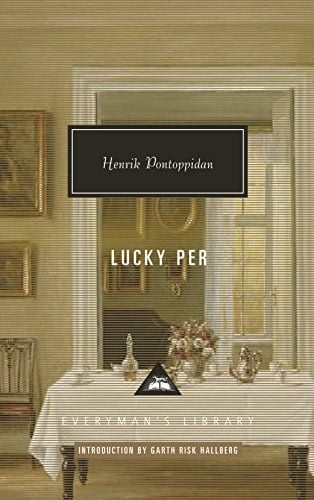
Notable Work: Lucky Per | Motivation: for his authentic descriptions of present-day life in Denmark
Lucky Per is a novel by Danish Nobel Prize–winning author Henrik Pontoppidan published in eight volumes between 1898 and 1904. It is considered one of the major Danish novels, and in 2004 it was made part of the Danish Culture Canon.

Notable Work: Growth of the Soil | Motivation: for his monumental work, <I>Growth of the Soil</I>
Growth of the Soil is a novel by Knut Hamsun which won him the Nobel Prize in Literature in 1920. It follows the story of a man who settles and lives in rural Norway. First published in 1917, it has since been translated from Norwegian into many languages including English. The novel was written in the popular style of Norwegian new realism, a movement dominating the early 20th century. The novel exemplified Hamsun's aversion to modernity and inclination towards primitivism and the agrarian l...
Notable Work: The Crime of Sylvestre Bonnard | Motivation: in recognition of his brilliant literary achievements, characterized as they are by a nobility of style, a profound human sympathy, grace, and a true Gallic temperament
The Crime of Sylvestre Bonnard is the first novel by Anatole France, published in 1881. With this, one of his first prose works, he made himself known as a novelist; he had been primarily known as a poet affiliated with Parnassianism because of his Poèmes dorés, which imitated that verse style. The novel received the Académie française prize.

Notable Work: The Bonds of Interest | Motivation: for the happy manner in which he has continued the illustrious traditions of the Spanish drama
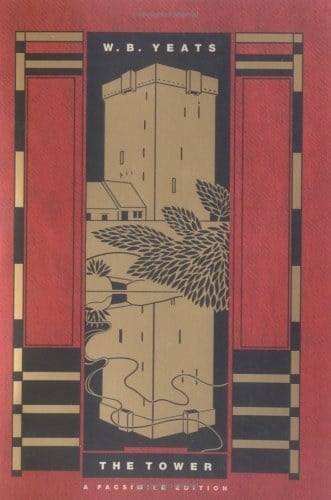
Notable Work: The Tower | Motivation: for his always inspired poetry, which in a highly artistic form gives expression to the spirit of a whole nation
Notable Work: The Peasants | Motivation: for his great national epic, <I>The Peasants</I>
The Peasants is a novel written by the Polish author Władysław Reymont in four parts between 1904 and 1909. He started writing it in 1897, but because of a railway accident and health problems, it took seven years to complete. The first parts of the story were published in the weekly magazine Tygodnik Illustrowany. The novel has been translated into at least 27 languages. Władysław Reymont received the 1924 Nobel Prize in Literature for this work.
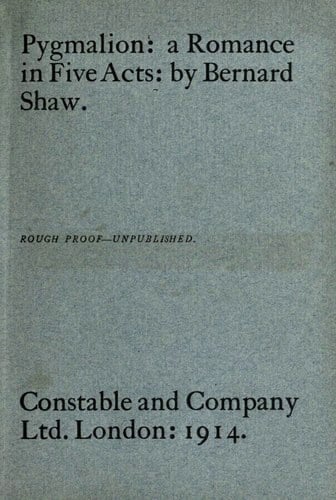
Notable Work: Pygmalion | Motivation: for his work which is marked by both idealism and humanity, its stimulating satire often being infused with a singular poetic beauty

Notable Work: Reeds in the Wind | Motivation: for her idealistically inspired writings which with plastic clarity picture the life on her native island and with depth and sympathy deal with human problems in general
Canne al vento is a novel by the Italian author and Nobel Prize winner Grazia Deledda. As with her other works it centres on the theme of "unwise passion".

Notable Work: Creative Evolution | Motivation: in recognition of his rich and vitalizing ideas and the brilliant skill with which they have been presented
Creative Evolution is a 1907 book by French philosopher Henri Bergson. Its English translation appeared in 1911. The book proposed a version of orthogenesis in place of Darwin's mechanism of natural selection, suggesting that evolution is motivated by the élan vital, a "vital impetus" that can also be understood as humanity's natural creative impulse. The book was very popular in the early decades of the twentieth century.
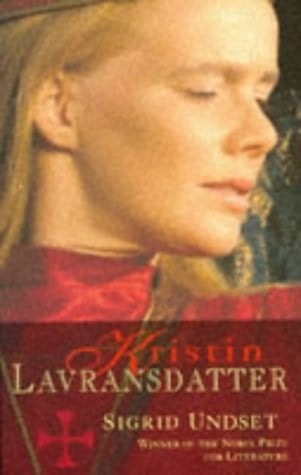
Notable Work: Kristin Lavransdatter | Motivation: principally for her powerful descriptions of Northern life during the Middle Ages
Kristin Lavransdatter is a trilogy of historical novels written by Sigrid Undset. The individual novels are Kransen, first published in 1920, Husfrue, published in 1921, and Korset, published in 1922. Kransen and Husfrue were translated from the original Norwegian as The Bridal Wreath and The Mistress of Husaby, respectively, in the first English translation by Charles Archer and J. S. Scott.
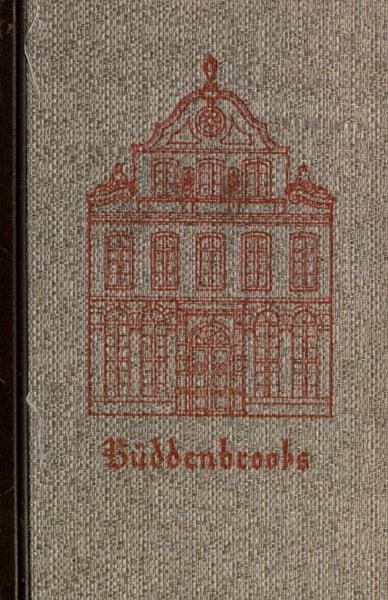
Notable Work: Buddenbrooks | Motivation: principally for his great novel, <I>Buddenbrooks</I>, which has won steadily increased recognition as one of the classic works of contemporary literature
Buddenbrooks is a 1901 novel by Thomas Mann, chronicling the decline of a wealthy north German merchant family over the course of four generations, incidentally portraying the manner of life and mores of the Hanseatic bourgeoisie in the years from 1835 to 1877. Mann drew deeply from the history of his own family, the Mann family of Lübeck, and their milieu.
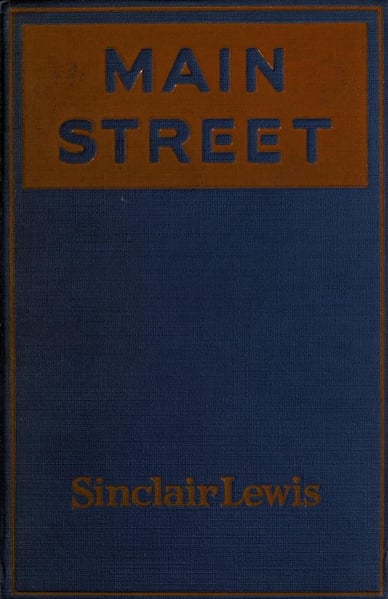
Notable Work: Main Street | Motivation: for his vigorous and graphic art of description and his ability to create, with wit and humour, new types of characters
Main Street is a metonym used to denote a primary retail street of a village, town or small city in many parts of the world. It is usually a focal point for shops and retailers in the central business district, and is most often used in reference to retailing, socializing, and the place to go to find "common" concerns.

Notable Work: Fridolins lustgård | Motivation: The poetry of Erik Axel Karlfeldt

Notable Work: The Forsyte Saga | Motivation: for his distinguished art of narration which takes its highest form in <I>The Forsyte Saga</I>
The Forsyte Saga, first published under that title in 1922, is a series of three novels and two interludes published between 1906 and 1921 by the English author John Galsworthy, who won the 1932 Nobel Prize in Literature. They chronicle the vicissitudes of the leading members of a large upper-middle-class English family that is similar to Galsworthy's. Only a few generations removed from their farmer ancestors, its members are keenly aware of their status as "new money". The main character, t...
Notable Work: The Life of Arseniev | Motivation: for the strict artistry with which he has carried on the classical Russian traditions in prose writing
The Life of Arseniev: Youth is an autobiographical novel by Nobel Prize-winning Russian author Ivan Bunin seen by many as his most important work written in emigration. It is Bunin's only full-length novel.
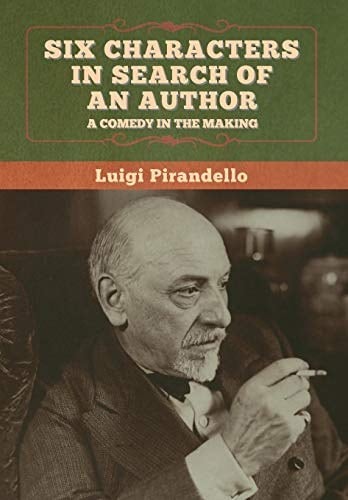
Notable Work: Six Characters in Search of an Author | Motivation: for his bold and ingenious revival of dramatic and scenic art
Six Characters in Search of an Author is an Italian play by Luigi Pirandello, written and first performed in 1921. An absurdist metatheatric play about the relationship among authors, their characters, and theatre practitioners, it premiered at the Teatro Valle in Rome to a mixed reception, with shouts from the audience of "Manicomio!" ("Madhouse!") and "Incommensurabile!", a reaction to the play's illogical progression. Reception improved at subsequent performances, especially after Pirandel...
Notable Work: Long Day's Journey into Night | Motivation: for the power, honesty and deep-felt emotions of his dramatic works, which embody an original concept of tragedy
Long Day's Journey into Night is a play in four acts written by American playwright Eugene O'Neill in 1939–1941 and first published posthumously in 1956. It is widely regarded as his magnum opus and one of the great American plays of the 20th century. It premiered in Sweden in February 1956 and then opened on Broadway in November 1956, winning the Tony Award for Best Play. O'Neill received the 1957 Pulitzer Prize for Drama posthumously for Long Day's Journey into Night. The work is openly aut...

Notable Work: The Thibaults | Motivation: for the artistic power and truth with which he has depicted human conflict as well as some fundamental aspects of contemporary life in his novel-cycle <I>Les Thibault</I>
The Thibaults is a multi-volume roman-fleuve by Roger Martin du Gard, which follows the fortunes of two brothers, Antoine and Jacques Thibault, from their upbringing in a prosperous Catholic bourgeois family to the end of the First World War. The author was awarded the 1937 Nobel Prize in Literature largely on the basis of this novel sequence.
Notable Work: The Good Earth | Motivation: for her rich and truly epic descriptions of peasant life in China and for her biographical masterpieces
The Good Earth is a historical fiction novel by Pearl S. Buck published in 1931 that dramatizes family life in an early 20th-century Chinese village in Anhwei. It is the first book in her House of Earth trilogy, continued in Sons (1932) and A House Divided (1935). It was the best-selling novel in the United States in both 1931 and 1932, won the Pulitzer Prize for Fiction in 1932, and was influential in Buck's winning the Nobel Prize for Literature in 1938. Buck, who grew up in China as the da...

Notable Work: The Maid Silja | Motivation: for his deep understanding of his country's peasantry and the exquisite art with which he has portrayed their way of life and their relationship with Nature

Notable Work: The Long Journey | Motivation: for the rare strength and fertility of his poetic imagination with which is combined an intellectual curiosity of wide scope and a bold, freshly creative style
The Long Journey is a series of six novels by Danish author and poet Johannes V. Jensen, appearing between 1908 and 1922. The books deal with the author's theories on evolution, backdropped against a description of humanity from before the Last Glacial Period up to the voyage of Christopher Columbus. The work is fictional, weaving in Jensen's stylistic mythic prose with his personal views on Darwinian evolutionary theory. It was primarily for this work that Jensen received the Nobel Prize in ...
Notable Work: Desolación | Motivation: for her lyric poetry which, inspired by powerful emotions, has made her name a symbol of the idealistic aspirations of the entire Latin American world
Desolación Island is an island at the western end of the Strait of Magellan in the Magallanes y la Antártica Chilena Region, Chile.
Notable Work: Steppenwolf | Motivation: for his inspired writings which, while growing in boldness and penetration, exemplify the classical humanitarian ideals and high qualities of style
Steppenwolf is the tenth novel by German-Swiss author Hermann Hesse.

Notable Work: The Immoralist | Motivation: for his comprehensive and artistically significant writings, in which human problems and conditions have been presented with a fearless love of truth and keen psychological insight
The Immoralist is a novel by André Gide, published in France in 1902.
Notable Work: The Waste Land | Motivation: for his outstanding, pioneer contribution to present-day poetry
The Waste Land is a poem by T. S. Eliot, widely regarded as one of the most important English-language poems of the 20th century and a central work of modernist poetry. Published in 1922, the 434-line poem first appeared in the United Kingdom in the October issue of Eliot's magazine The Criterion and in the United States in the November issue of The Dial. Among its famous phrases are "April is the cruellest month", "I will show you fear in a handful of dust", and "These fragments I have shore...
Notable Work: The Sound and the Fury | Motivation: for his powerful and artistically unique contribution to the modern American novel
The Sound and the Fury is a novel by the American author William Faulkner, published in 1929. Faulkner's fourth novel, it is the second to be set in Yoknapatawpha County and the first featuring the Compson family, both of which would reappear in his later fiction. The novel's highly experimental style, including its use of stream of consciousness and multiple different unreliable narrators, are hallmarks of modernist literature. Its bleak and candid portrait of Southern life in the early 20th...
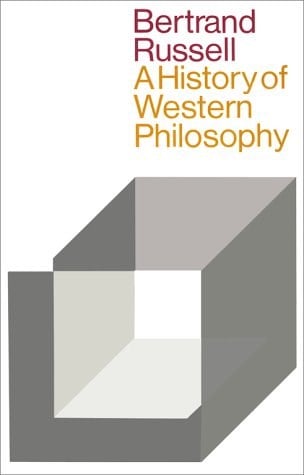
Notable Work: A History of Western Philosophy | Motivation: in recognition of his varied and significant writings in which he champions humanitarian ideals and freedom of thought
History of Western Philosophy is a 1945 book by British philosopher Bertrand Russell (1872–1970). A survey of Western philosophy from the pre-Socratic philosophers to the early 20th century, each major division of the book is prefaced by an account of the historical background necessary to understand the currents of thought it describes. When Russell was awarded the Nobel Prize in Literature in 1950, A History of Western Philosophy was cited as one of the books that won him the award. Its suc...
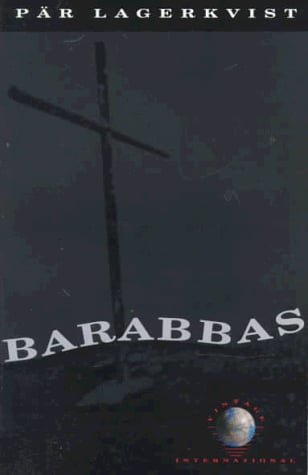
Notable Work: Barabbas | Motivation: for the artistic vigour and true independence of mind with which he endeavours in his poetry to find answers to the eternal questions confronting mankind
According to the New Testament, Barabbas was a Jewish bandit and rabble-rouser who was imprisoned by the Roman occupation in Jerusalem, only to be chosen over Jesus by a crowd to be pardoned by Roman governor Pontius Pilate at the Passover feast.
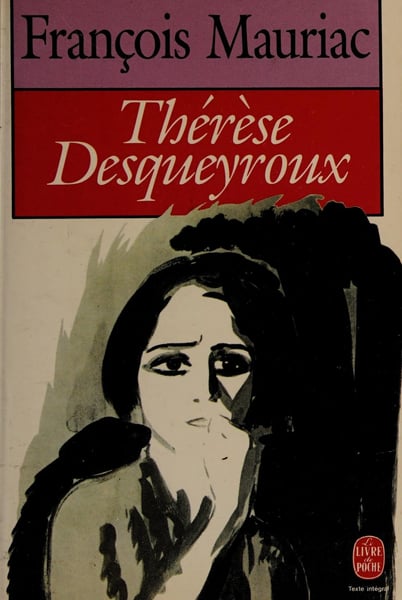
Notable Work: Thérèse Desqueyroux | Motivation: for the deep spiritual insight and the artistic intensity with which he has in his novels penetrated the drama of human life
Thérèse Desqueyroux is a 1927 French novel by François Mauriac.
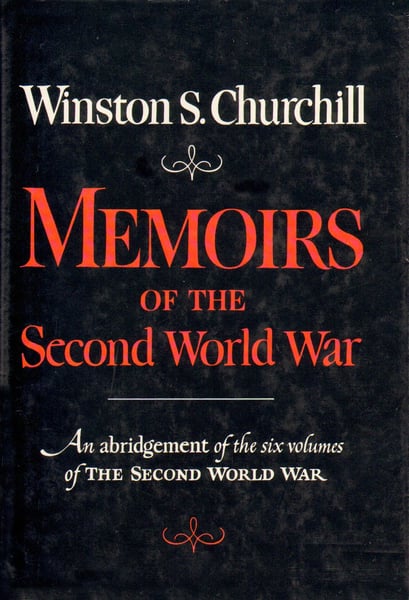
Notable Work: The Second World War | Motivation: for his mastery of historical and biographical description as well as for brilliant oratory in defending exalted human values
World War II or the Second World War was a global conflict between two coalitions: the Allies and the Axis powers. Nearly all of the world's countries participated, with many nations mobilising their resources in pursuit of total war. Tanks and aircraft played major roles, enabling the strategic bombing of cities and delivery of the first and only nuclear weapons ever used in war. World War II is the deadliest conflict in history, causing the death of over 60 million people. Millions died in ...
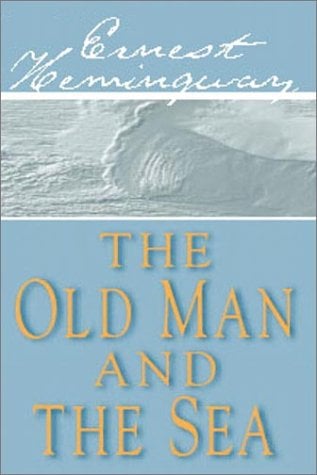
Notable Work: The Old Man and the Sea | Motivation: for his mastery of the art of narrative, most recently demonstrated in <I>The Old Man and the Sea,</I> and for the influence that he has exerted on contemporary style
The Old Man and the Sea is a 1952 novella by the American author Ernest Hemingway. Written between December 1950 and February 1951, it was the last major fictional work Hemingway published during his lifetime. It tells the story of Santiago, an aging fisherman, and his long struggle to catch a giant marlin.

Notable Work: Independent People | Motivation: for his vivid epic power which has renewed the great narrative art of Iceland
Independent People: An Epic is a novel by Nobel laureate Halldór Laxness, originally published in two volumes in 1934 and 1935. It deals with the struggle of poor Icelandic farmers in the early 20th century, only freed from debt bondage in the last generation, and surviving on isolated crofts in an inhospitable landscape.
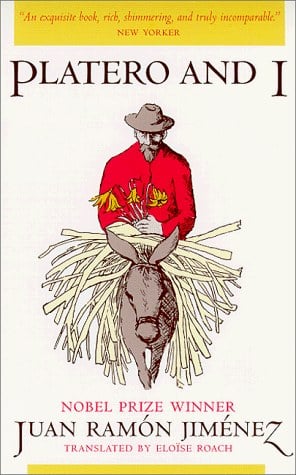
Notable Work: Platero and I | Motivation: for his lyrical poetry, which in Spanish language constitutes an example of high spirit and artistical purity
Platero and I, also translated as Platero and Me, is a 1914 Spanish prose poem by Juan Ramón Jiménez. The book is one of the most popular works by Jiménez, and unfolds around a writer and his eponymous donkey, Platero ("silvery"). Platero is a "small donkey, a soft, hairy donkey: so soft to the touch that he might be said to be made of cotton, with no bones. Only the jet mirrors of his eyes are hard like two black crystal scarabs." Platero remains a symbol of tenderness, purity and naiveté, a...

Notable Work: The Stranger | Motivation: for his important literary production, which with clear-sighted earnestness illuminates the problems of the human conscience in our times
The Stranger, also published in English as The Outsider, is a 1942 novella written by Algerian-French author Albert Camus. The first of Camus' novels to be published, the story follows Meursault, an indifferent settler in French Algeria, who, weeks after his mother's funeral, kills an unnamed Arab man in Algiers. The story is divided into two parts, presenting Meursault's first-person narrative before and after the killing.
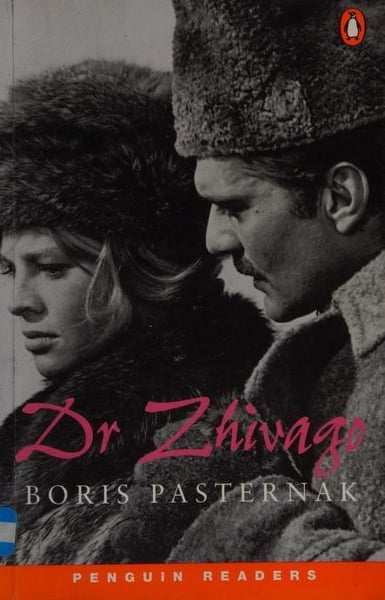
Notable Work: Doctor Zhivago | Motivation: for his important achievement both in contemporary lyrical poetry and in the field of the great Russian epic tradition
Doctor Zhivago is a novel by Russian poet, author and composer Boris Pasternak, first published in 1957 in Italy. The novel is named after its protagonist, Yuri Zhivago, a physician and poet, and takes place between the Russian Revolution of 1905 and World War II.

Notable Work: And It's Suddenly Evening | Motivation: for his lyrical poetry, which with classical fire expresses the tragic experience of life in our own times

Notable Work: Anabasis | Motivation: for the soaring flight and the evocative imagery of his poetry which in a visionary fashion reflects the conditions of our time

Notable Work: The Bridge on the Drina | Motivation: for the epic force with which he has traced themes and depicted human destinies drawn from the history of his country
The Bridge on the Drina is a historical novel by the Yugoslav writer Ivo Andrić. It revolves around the Mehmed Paša Sokolović Bridge in Višegrad, which spans the Drina River and stands as a silent witness to history from its construction by the Ottomans in the mid-16th century until its partial destruction during World War I. The story spans about four centuries and covers the Ottoman and Austro-Hungarian occupations of the region, with a particular emphasis on the lives, destinies, and relat...
Notable Work: The Grapes of Wrath | Motivation: for his realistic and imaginative writings, combining as they do sympathetic humour and keen social perception
The Grapes of Wrath is an American realist novel written by John Steinbeck and published in 1939. The book won the National Book Award and Pulitzer Prize for fiction, and it was cited prominently when Steinbeck was awarded the Nobel Prize in Literature in 1962.

Notable Work: Collected Poems | Motivation: for his eminent lyrical writing, inspired by a deep feeling for the Hellenic world of culture

Notable Work: Nausea | Motivation: for his work which, rich in ideas and filled with the spirit of freedom and the quest for truth, has exerted a far-reaching influence on our age
Nausea is a philosophical novel by the existentialist philosopher Jean-Paul Sartre, published in 1938. It is Sartre's first novel.
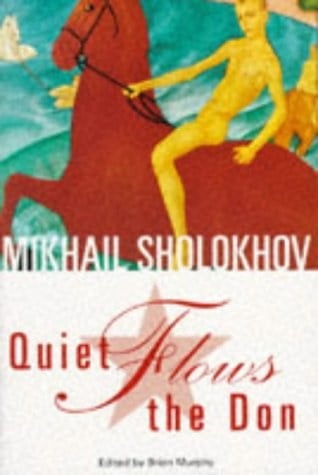
Notable Work: And Quiet Flows the Don | Motivation: for the artistic power and integrity with which, in his epic of the Don, he has given expression to a historic phase in the life of the Russian people
And Quiet Flows the Don is a novel in four volumes by Russian writer Mikhail Sholokhov. The first three volumes were written from 1925 to 1932 and published in the Soviet magazine Oktyabr in 1928–1932, and the fourth volume was finished in 1940.

Notable Work: O the Chimneys | Motivation: for her outstanding lyrical and dramatic writing, which interprets Israel's destiny with touching strength
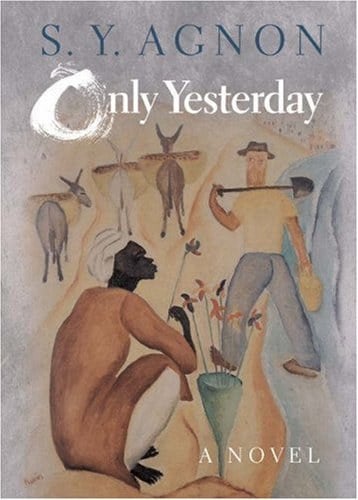
Notable Work: Only Yesterday | Motivation: for his profoundly characteristic narrative art with motifs from the life of the Jewish people
Only Yesterday is a 1945 Hebrew novel by the Israeli Nobel Prize laureate Shmuel Yosef Agnon, widely considered his masterpiece and one of the great works of modern Hebrew fiction. Through a blend of symbolism, intertextual allusions, and tragic comedy, it provides a nuanced perspective on the ideological and cultural tensions within the Jewish community in Palestine during the Second Aliyah period in the early 20th century.
Notable Work: El Señor Presidente | Motivation: for his vivid literary achievement, deep-rooted in the national traits and traditions of Indian peoples of Latin America
El Señor Presidente is a 1946 novel written in Spanish by Nobel Prize-winning Guatemalan writer and diplomat Miguel Ángel Asturias (1899–1974). A landmark text in Latin American literature, El Señor Presidente explores the nature of political dictatorship and its effects on society. Asturias makes early use of a literary technique now known as magic realism. One of the most notable works of the dictator novel genre, El Señor Presidente developed from an earlier Asturias short story, written t...

Notable Work: Snow Country | Motivation: for his narrative mastery, which with great sensibility expresses the essence of the Japanese mind
Notable Work: Waiting for Godot | Motivation: for his writing, which - in new forms for the novel and drama - in the destitution of modern man acquires its elevation
Waiting for Godot is a tragicomedy play by Irish playwright and writer Samuel Beckett, first published in 1952 by Les Éditions de Minuit. It is Beckett's reworking of his own original French-language play titled En attendant Godot, and is subtitled in English as "A tragicomedy in two acts." The play revolves around the mannerisms of the two main characters, Vladimir (Didi) and Estragon (Gogo), who engage in a variety of thoughts, dialogues and encounters while awaiting the titular Godot, who ...

Notable Work: The Gulag Archipelago | Motivation: for the ethical force with which he has pursued the indispensable traditions of Russian literature
The Gulag Archipelago: An Experiment in Literary Investigation is a three-volume nonfiction series written between 1958 and 1968 by Russian writer Aleksandr Solzhenitsyn, a Soviet dissident. It was first published in 1973 by the Parisian publisher YMCA-Press, and it was translated into English and French the following year. It explores a vision of life in what is often known as the Gulag, the Soviet labour camp system. Solzhenitsyn constructed his highly detailed narrative from various source...
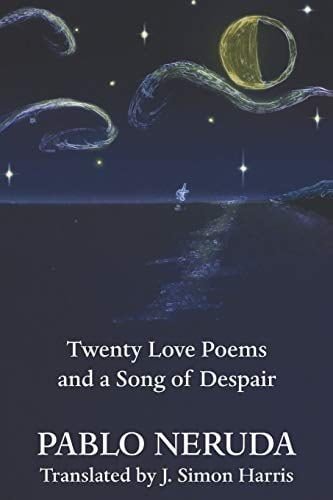
Notable Work: Twenty Love Poems and a Song of Despair | Motivation: for a poetry that with the action of an elemental force brings alive a continent's destiny and dreams
Twenty Love Poems and a Song of Despair is a poetry collection by the Chilean poet Pablo Neruda. Published in June 1924, the book launched Neruda to fame at the young age of 19 and is one of the most renowned literary works of the 20th century in the Spanish language. The book has been translated into many languages; in English, the translation was made by poet W. S. Merwin in 1969.
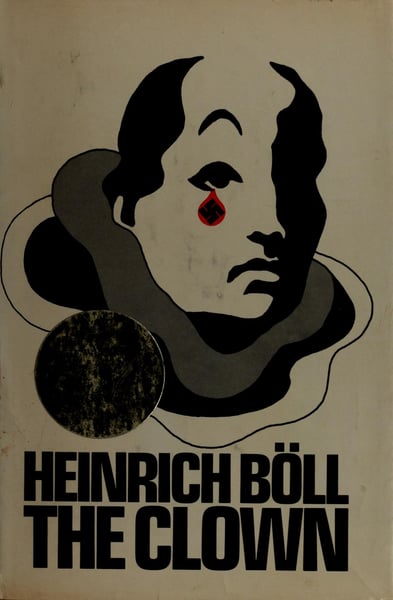
Notable Work: The Clown | Motivation: for his writing which through its combination of a broad perspective on his time and a sensitive skill in characterization has contributed to a renewal of German literature
The Clown is a 1963 novel by West German writer Heinrich Böll.
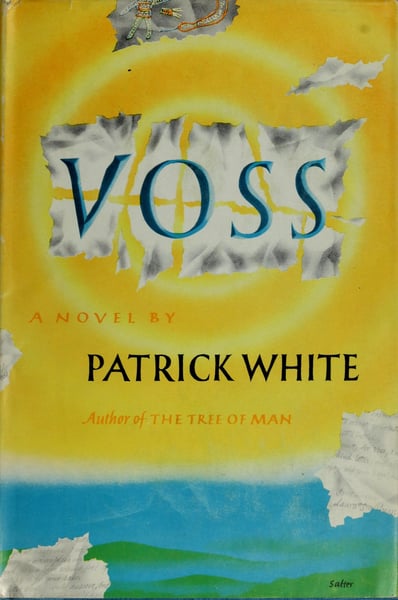
Notable Work: Voss | Motivation: for an epic and psychological narrative art which has introduced a new continent into literature
Voss (1957) is the fifth published novel by Patrick White. It is based upon the life of the 19th-century Prussian explorer and naturalist Ludwig Leichhardt, who disappeared while on an expedition into the Australian outback.

Notable Work: Return to Ithaca | Motivation: for a narrative art, far-seeing in lands and ages, in the service of freedom
Return to Ithaca is a 1946 novel by Swedish author Eyvind Johnson. It is based on the story of Odysseus as he returns home to Ithaca after the Trojan War.
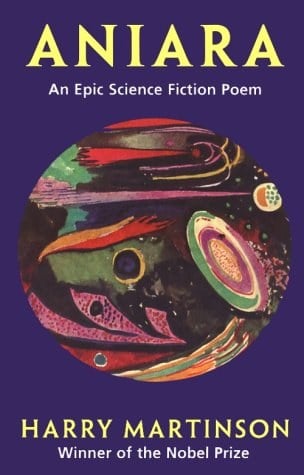
Notable Work: Aniara | Motivation: for writings that catch the dewdrop and reflect the cosmos
Aniara is a book-length epic science fiction poem written by Swedish Nobel laureate Harry Martinson from 1953 to 1956. It narrates the tragedy of a large passenger spacecraft carrying a cargo of colonists escaping destruction on Earth veering off course, leaving the Solar System and entering into an existential struggle. The style is symbolic, sweeping and innovative for its time, with creative use of neologisms to suggest the science fictional setting. It was published in its final form on ...
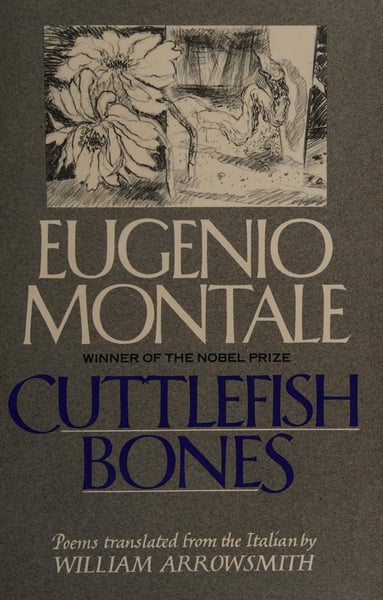
Notable Work: Cuttlefish Bones | Motivation: for his distinctive poetry which, with great artistic sensitivity, has interpreted human values under the sign of an outlook on life with no illusions
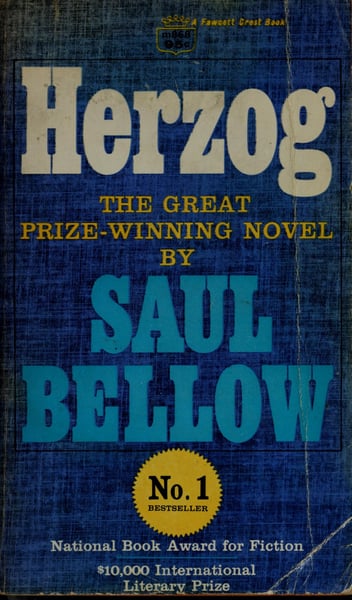
Notable Work: Herzog | Motivation: for the human understanding and subtle analysis of contemporary culture that are combined in his work
Herzog is a German hereditary title held by one who rules a territorial duchy, exercises feudal authority over an estate called a duchy, or possesses a right by law or tradition to be referred to by the ducal title. The word is usually translated by the English duke and the Latin dux. Generally, a Herzog ranks below a king and above a Graf ('count'). Whether the title is deemed higher or lower than titles translated into English as prince is dependent upon the language, country, and era in wh...
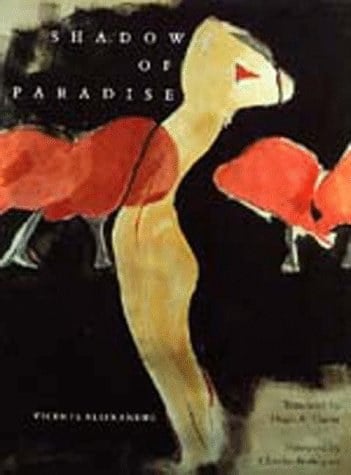
Notable Work: Shadow of Paradise | Motivation: for a creative poetic writing which illuminates man's condition in the cosmos and in present-day society, at the same time representing the great renewal of the traditions of Spanish poetry between...

Notable Work: The Slave | Motivation: for his impassioned narrative art which, with roots in a Polish-Jewish cultural tradition, brings universal human conditions to life
Notable Work: Axion Esti | Motivation: for his poetry, which, against the background of Greek tradition, depicts with sensuous strength and intellectual clear-sightedness modern man's struggle for freedom and creativeness
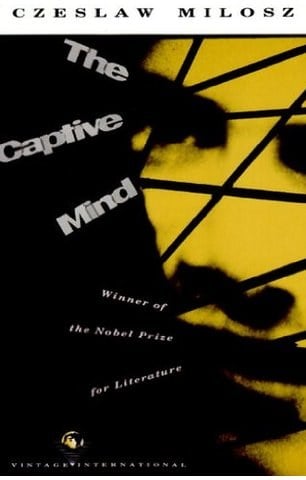
Notable Work: The Captive Mind | Motivation: who with uncompromising clear-sightedness voices man's exposed condition in a world of severe conflicts
The Captive Mind is a 1953 work of nonfiction by Polish writer, poet, academic and Nobel laureate Czesław Miłosz. It was first published in English in a translation by Jane Zielonko in 1953.

Notable Work: Crowds and Power | Motivation: for writings marked by a broad outlook, a wealth of ideas and artistic power
Crowds and Power is a 1960 book by Elias Canetti, dealing with the dynamics of crowds and "packs" and the question of how and why crowds obey power of rulers. Canetti draws a parallel between ruling and paranoia. The book analyzes the memoirs of Daniel Paul Schreber and Sigmund Freud's book on them, and Gustave Le Bon.
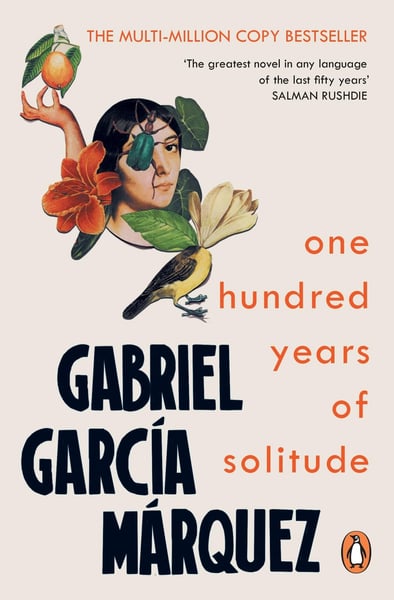
Notable Work: One Hundred Years of Solitude | Motivation: for his novels and short stories, in which the fantastic and the realistic are combined in a richly composed world of imagination, reflecting a continent's life and conflicts
One Hundred Years of Solitude is a 1967 novel by Colombian author Gabriel García Márquez that tells the multi-generational story of the Buendía family, whose patriarch, José Arcadio Buendía, founded the fictitious town of Macondo. The novel is often cited as one of the supreme achievements in world literature. It was recognized as one of the most important works of the Spanish language during the 4th International Conference of the Spanish Language held in Cartagena de Indias in March 2007.
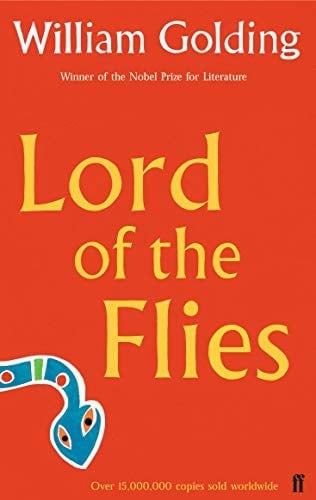
Notable Work: Lord of the Flies | Motivation: for his novels which, with the perspicuity of realistic narrative art and the diversity and universality of myth, illuminate the human condition in the world of today
Lord of the Flies is the 1954 debut novel of British author William Golding. The plot concerns a group of prepubescent British boys who are stranded on an uninhabited island and their disastrous attempts to govern themselves that lead to a descent into savagery. The novel's themes include morality, leadership, and the tension between civility and chaos.

Notable Work: All the Beauties of the World | Motivation: for his poetry which endowed with freshness, sensuality and rich inventiveness provides a liberating image of the indomitable spirit and versatility of man
Notable Work: The Flanders Road | Motivation: who in his novel combines the poet's and the painter's creativeness with a deepened awareness of time in the depiction of the human condition
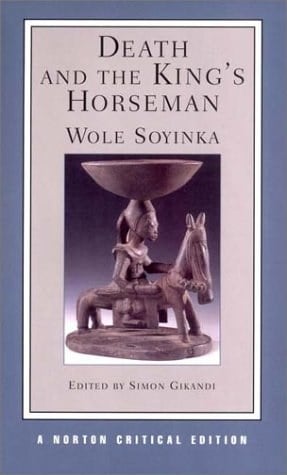
Notable Work: Death and the King's Horseman | Motivation: who in a wide cultural perspective and with poetic overtones fashions the drama of existence
Death and the King's Horseman is a play by Wole Soyinka based on a real incident that took place in Nigeria during the colonial era: the horseman of a Yoruba King was prevented from committing ritual suicide by the colonial authorities. In addition to the intervention of the colonial authorities, Soyinka calls the horseman's own conviction toward suicide into question, posing a problem that throws off the community's balance.
Notable Work: A Part of Speech | Motivation: for an all-embracing authorship, imbued with clarity of thought and poetic intensity

Notable Work: The Cairo Trilogy | Motivation: who, through works rich in nuance - now clear-sightedly realistic, now evocatively ambiguous - has formed an Arabian narrative art that applies to all mankind
The Cairo Trilogy is a trilogy of novels written by the Egyptian novelist and Nobel Prize in Literature winner Naguib Mahfouz, and one of the major works of his literary career.

Notable Work: The Family of Pascual Duarte | Motivation: for a rich and intensive prose, which with restrained compassion forms a challenging vision of man's vulnerability
The Family of Pascual Duarte is a 1942 novel written by Spanish Nobel laureate Camilo José Cela. The first two editions created an uproar and in less than a year it was banned. A new Spanish edition was revised in 1943 in December of that year.
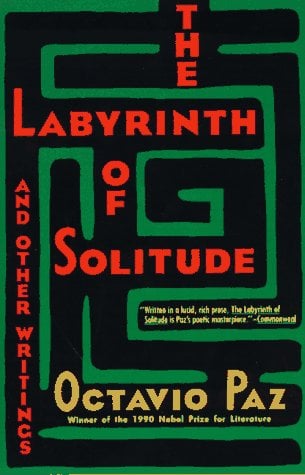
Notable Work: The Labyrinth of Solitude | Motivation: for impassioned writing with wide horizons, characterized by sensuous intelligence and humanistic integrity
The Labyrinth of Solitude is a 1950 book-length essay by the Mexican poet Octavio Paz. One of his most famous works, it consists of nine parts: "The Pachuco and other extremes", "Mexican Masks", "The Day of the Dead", "The Sons of La Malinche", "The Conquest and Colonialism", "From Independence to the Revolution", "The Mexican Intelligence", "The Present Day" and "The Dialectic of Solitude". After 1975 some editions included the three-part essay "Posdata", which discusses the massacre of hun...
Notable Work: July's People | Motivation: who through her magnificent epic writing has - in the words of Alfred Nobel - been of very great benefit to humanity
July's People is a 1981 novel by the South African writer Nadine Gordimer. It is set in a near-future version of South Africa where apartheid is ended through a civil war. Unlike Gordimer's earlier work, the novel was ignored by the apartheid government's censor, though the book's South African publisher was later raided by the Security Branch.
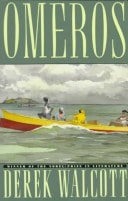
Notable Work: Omeros | Motivation: for a poetic oeuvre of great luminosity, sustained by a historical vision, the outcome of a multicultural commitment
Omeros is an epic poem by Saint Lucian writer Derek Walcott, first published in 1990. The work is divided into seven "books" containing a total of sixty-four chapters. Many critics view Omeros as Walcott's finest work.

Notable Work: Beloved | Motivation: who in novels characterized by visionary force and poetic import, gives life to an essential aspect of American reality
Beloved is a 1987 novel by American novelist Toni Morrison. Set in the period after the American Civil War, the novel tells the story of a dysfunctional family of formerly enslaved people whose Cincinnati home is haunted by a malevolent spirit. The narrative of Beloved derives from the life of Margaret Garner, a slave in the slave state of Kentucky who escaped and fled to the free state of Ohio in 1856.
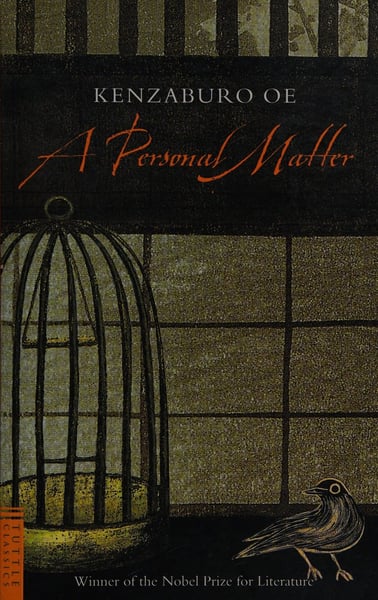
Notable Work: A Personal Matter | Motivation: who with poetic force creates an imagined world, where life and myth condense to form a disconcerting picture of the human predicament today
A Personal Matter is a 1964 semi-autobiographical novel by Japanese Nobel Prize laureate author Kenzaburō Ōe. It tells the story of a young father who must come to terms with the fact that his newborn son is severely mentally disabled.
Notable Work: North | Motivation: for works of lyrical beauty and ethical depth, which exalt everyday miracles and the living past
North is one of the four compass points or cardinal directions. It is the opposite of south and is perpendicular to east and west. North is a noun, adjective, or adverb indicating direction or geography.
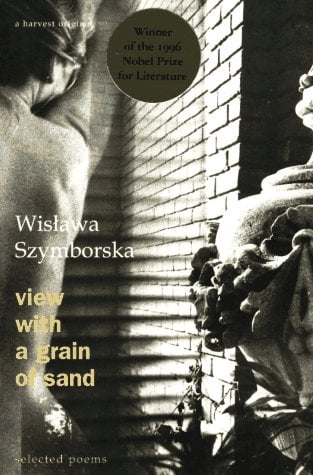
Notable Work: View with a Grain of Sand | Motivation: for poetry that with ironic precision allows the historical and biological context to come to light in fragments of human reality

Notable Work: Accidental Death of an Anarchist | Motivation: who emulates the jesters of the Middle Ages in scourging authority and upholding the dignity of the downtrodden
Accidental Death of an Anarchist is a play by Italian playwright Dario Fo that premiered in 1970. It has been performed across the world in more than forty countries. The play is based on the 1969 Piazza Fontana bombing and on the death of Giuseppe Pinelli, an Italian anarchist, during a police interrogation.

Notable Work: Blindness | Motivation: who with parables sustained by imagination, compassion and irony continually enables us once again to apprehend an elusory reality
Blindness is a 1995 novel by Portuguese author José Saramago. In 1998, Saramago received the Nobel Prize for Literature, and Blindness was one of his works noted by the committee when announcing the award.

Notable Work: The Tin Drum | Motivation: whose frolicsome black fables portray the forgotten face of history
The Tin Drum is a 1959 novel by Günter Grass, the first book of his Danzig Trilogy. It was adapted into a 1979 film, which won both the 1979 Palme d'Or and the Academy Award for Best Foreign Language Film in 1980.

Notable Work: Soul Mountain | Motivation: for an œuvre of universal validity, bitter insights and linguistic ingenuity, which has opened new paths for the Chinese novel and drama
Soul Mountain is a novel by Gao Xingjian. The novel is loosely based on the author's own journey into rural China, which was inspired by a false diagnosis of lung cancer. The novel is a part autobiographical, part fictional account of a man's journey to find the fabled mountain Lingshan. It is a combination of story fragments, travel accounts, unnamed characters, and folk poetry and legends. An English version translated by Mabel Lee was published in the United States on December 5, 2000.
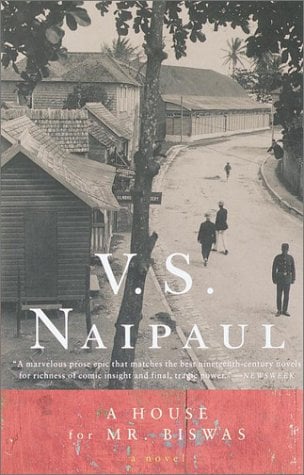
Notable Work: A House for Mr Biswas | Motivation: for having united perceptive narrative and incorruptible scrutiny in works that compel us to see the presence of suppressed histories
A House for Mr Biswas is a 1961 novel by V. S. Naipaul, significant as Naipaul's first work to achieve acclaim worldwide. It is the story of Mohun Biswas, a Hindu Indo-Trinidadian who continually strives for success and mostly fails, who marries into the influential Tulsi family only to find himself dominated by it, and who finally sets the goal of owning his own house. It relies on some biographical elements from the experience of the author's father.

Notable Work: Fatelessness | Motivation: for writing that upholds the fragile experience of the individual against the barbaric arbitrariness of history
Fateless or Fatelessness is a novel by Imre Kertész, winner of the 2002 Nobel Prize for literature, written between 1960 and 1973 and first published in 1975.

Notable Work: Disgrace | Motivation: who in innumerable guises portrays the surprising involvement of the outsider
Disgrace is a novel by J. M. Coetzee, published in 1999. It won the Booker Prize. The writer was also awarded the Nobel Prize in Literature four years after its publication.

Notable Work: The Piano Teacher | Motivation: for her musical flow of voices and counter-voices in novels and plays that with extraordinary linguistic zeal reveal the absurdity of society's clichés and their subjugating power
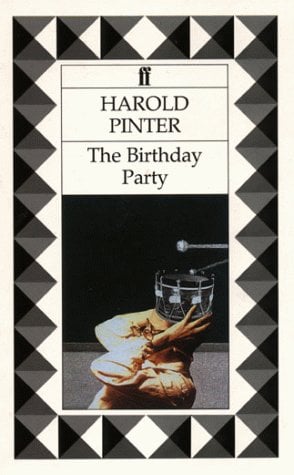
Notable Work: The Birthday Party | Motivation: who in his plays uncovers the precipice under everyday prattle and forces entry into oppression's closed rooms
The Birthday Party is a biographical novel by Panos Karnezis first published in 2007.

Notable Work: My Name Is Red | Motivation: who in the quest for the melancholic soul of his native city has discovered new symbols for the clash and interlacing of cultures
My Name Is Red is a 1998 Turkish novel by writer Orhan Pamuk translated into English by Erdağ Göknar in 2001. The novel, concerning miniaturists in the Ottoman Empire of 1591, established Pamuk's international reputation and contributed to his reception of the Nobel Prize in Literature in 2006.
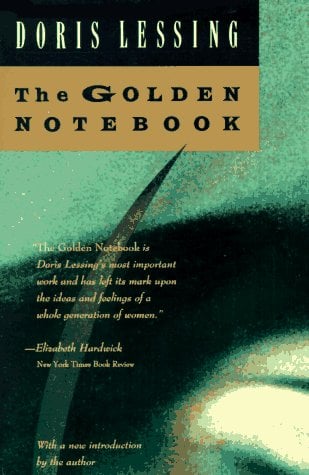
Notable Work: The Golden Notebook | Motivation: that epicist of the female experience, who with scepticism, fire and visionary power has subjected a divided civilisation to scrutiny
The Golden Notebook is a 1962 novel by the British writer Doris Lessing. Like her two books that followed, it enters the realm of what Margaret Drabble in The Oxford Companion to English Literature called Lessing's "inner space fiction"; her work that explores mental and societal breakdown. The novel contains anti-war and anti-Stalinist messages, an extended analysis of communism and the Communist Party in England from the 1930s to the 1950s, and an examination of the budding sexual revolutio...
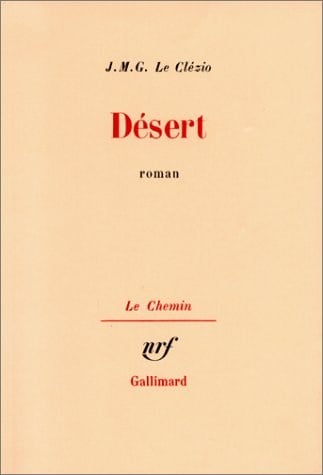
Notable Work: Desert | Motivation: author of new departures, poetic adventure and sensual ecstasy, explorer of a humanity beyond and below the reigning civilization
A desert is a landscape where little precipitation occurs and, consequently, living conditions create unique biomes and ecosystems. The lack of vegetation exposes the unprotected surface of the ground to denudation. About one-third of the land surface of the Earth is arid or semi-arid. This includes much of the polar regions, where little precipitation occurs, and which are sometimes called polar deserts or "cold deserts". Deserts can be classified by the amount of precipitation that falls, b...
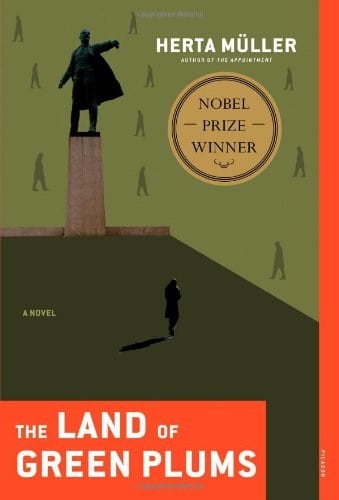
Notable Work: The Land of Green Plums | Motivation: who, with the concentration of poetry and the frankness of prose, depicts the landscape of the dispossessed
The Land of Green Plums is a novel by Herta Müller, published in 1994 by Rowohlt Verlag. The novel portrays four young people living in a totalitarian police state in Communist Romania, ending with their emigration to Germany. The narrator is an unidentified young woman belonging to the ethnic German minority. Müller said the novel was written "in memory of my Romanian friends who were killed under the Ceauşescu regime".

Notable Work: The War of the End of the World | Motivation: for his cartography of structures of power and his trenchant images of the individual's resistance, revolt, and defeat
The War of the End of the World is a 1981 novel written by Peruvian novelist Mario Vargas Llosa, who won the 2010 Nobel Prize in Literature. It is a fictionalized account of the War of Canudos conflict in late 19th-century Brazil.
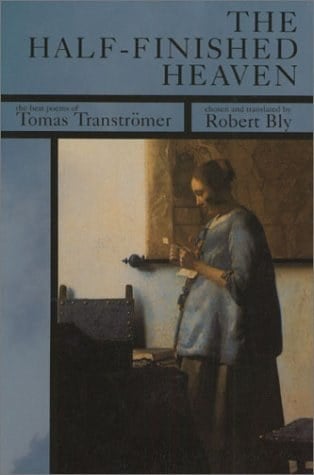
Notable Work: The Half-Finished Heaven | Motivation: because, through his condensed, translucent images, he gives us fresh access to reality
The Half-Finished Heaven is a 1962 poetry collection by the Swedish writer Tomas Tranströmer. In 2001, a collection of Tranströmer's poetry was translated into English by the poet Robert Bly. This collection, called The Half-Finished Heaven: The Best Poems of Tomas Tranströmer, includes pieces from the original 1962 book as well as the eponymous poem.
Notable Work: Red Sorghum | Motivation: who with hallucinatory realism merges folk tales, history and the contemporary
Red Sorghum: A Novel of China is a Chinese-language novel by Mo Yan. Its five parts were published serially in various magazines in 1986 and republished together as a single novel in 1987. It was Mo's first novel and remains one of his best-known works.
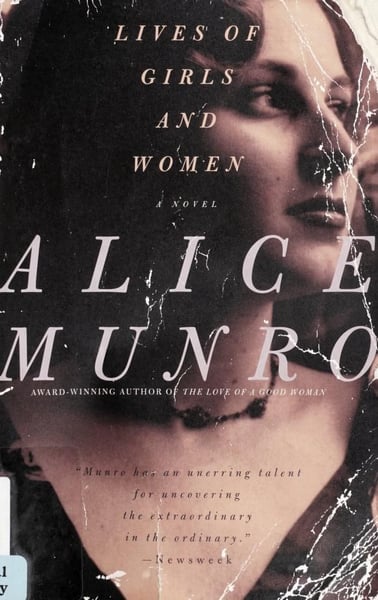
Notable Work: Lives of Girls and Women | Motivation: master of the contemporary short story
Lives of Girls and Women is a novel by Nobel Prize–winning Canadian author Alice Munro, published by McGraw-Hill Ryerson in 1971. Although described and marketed as a novel, in form it resembles a collection of interlinked short stories, with discrete chapters narrated by the main character, Del Jordan.
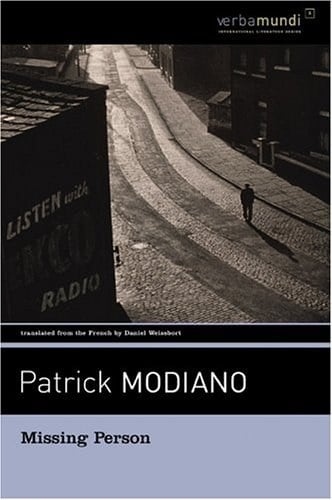
Notable Work: Missing Person | Motivation: for the art of memory with which he has evoked the most ungraspable human destinies and uncovered the life-world of the occupation
A missing person is a person who has disappeared and whose status as alive or dead cannot be confirmed as their location and condition are unknown. A person may go missing through a voluntary disappearance, or else due to an accident, crime, or death in a location where they cannot be found, or many other reasons. In most parts of the world, a missing person will usually be found quickly. Criminal abductions are some of the most widely reported missing person cases.

Notable Work: Voices from Chernobyl | Motivation: for her polyphonic writings, a monument to suffering and courage in our time
Voices from Chernobyl: The Oral History of a Nuclear Disaster, published as Chernobyl Prayer: A Chronicle of the Future in the United Kingdom, is a book about the Chernobyl disaster by the Belarusian Nobel Laureate Svetlana Alexievich. At the time of the disaster, Alexievich was a journalist living in Minsk, the capital of what was then the Byelorussian Soviet Socialist Republic. Alexievich interviewed more than 500 eyewitnesses, including firefighters, liquidators, politicians, physicians, p...

Notable Work: Lyrics: 1962-2001 | Motivation: for having created new poetic expressions within the great American song tradition
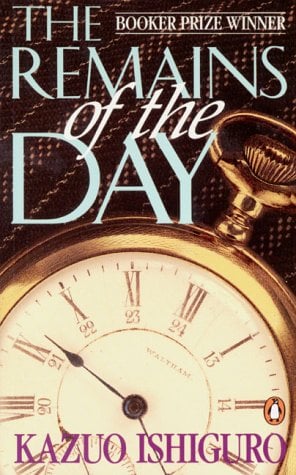
Notable Work: The Remains of the Day | Motivation: who, in novels of great emotional force, has uncovered the abyss beneath our illusory sense of connection with the world
The Remains of the Day is a 1989 novel by the Nobel Prize-winning British author Kazuo Ishiguro. The protagonist, Stevens, is a butler with a long record of service at Darlington Hall, a fictitious stately home near Oxford, England. In 1956, he takes a road trip to visit a former colleague, and reminisces about events at Darlington Hall in the 1920s and 1930s.
Notable Work: Flights | Motivation: for a narrative imagination that with encyclopedic passion represents the crossing of boundaries as a form of life
Flights is a 2007 fragmentary novel by the Polish author Olga Tokarczuk. The book was translated into English by Jennifer Croft. The original Polish title refers to runaways, a sect of Old Believers, who believe that being in constant motion is a trick to avoid evil.

Notable Work: A Sorrow Beyond Dreams | Motivation: for an influential work that with linguistic ingenuity has explored the periphery and the specificity of human experience
A Sorrow Beyond Dreams is a 1972 semi-autobiographical novella by the Austrian writer Peter Handke. It describes the life of Handke's mother Maria, who committed suicide on 19 November 1971.
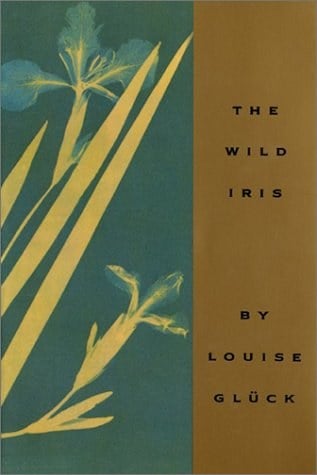
Notable Work: The Wild Iris | Motivation: for her unmistakable poetic voice that with austere beauty makes individual existence universal
The Wild Iris is a 1992 poetry book by Louise Glück for which she received the Pulitzer Prize for Poetry in 1993. The book also received the Poetry Society of America's William Carlos Williams Award.
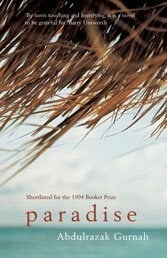
Notable Work: Paradise | Motivation: for his uncompromising and compassionate penetration of the effects of colonialism and the fate of the refugee in the gulf between cultures and continents
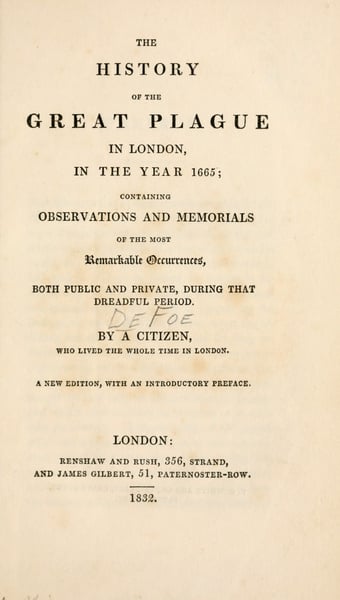
Notable Work: The Years | Motivation: for the courage and clinical acuity with which she uncovers the roots, estrangements and collective restraints of personal memory
The Years is a 2008 non-fiction book by Annie Ernaux. It has been described as a "hybrid" memoir, spanning the period of 1941 to 2006. Ernaux's English publisher, Seven Stories Press, described it as an autobiography that is "at once subjective and impersonal, private and collective."

Notable Work: Septology | Motivation: for his innovative plays and prose which give voice to the unsayable
Septology is a novel of seven parts by Norwegian author Jon Fosse, published between 2019 and 2021. The work is known for its minimal-punctuation narrative style and exploration of existential themes, contributing to Fosse's receipt of the Nobel Prize in Literature in 2023.

Notable Work: The Vegetarian | Motivation: for her intense poetic prose that confronts historical traumas and exposes the fragility of human life
The Vegetarian is a 2007 novel by South Korean author Han Kang, winner of the 2024 Nobel Prize in Literature. Based on Han's 1997 short story "The Fruit of My Woman", The Vegetarian is a three-part novel set in modern-day Seoul and tells the story of Yeong-hye, a part-time graphic artist and home-maker, whose decision to stop eating meat after a bloody nightmare about human cruelty leads to devastating consequences in her personal and familial life.
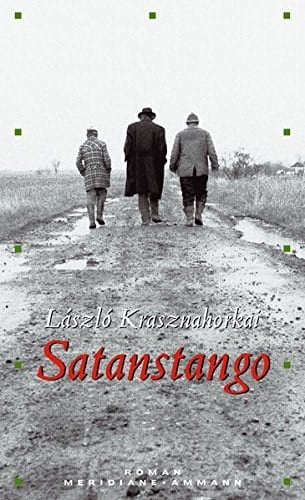
Notable Work: Satantango | Motivation: for his compelling and visionary oeuvre that, in the midst of apocalyptic terror, reaffirms the power of art
Sátántangó, also known in English as Satan's Tango, is a 1994 internationally co-produced epic drama film directed by Hungarian filmmaker Béla Tarr. Shot in black-and-white and running for more than seven hours, it is based on the 1985 novel of the same name by Hungarian novelist László Krasznahorkai, whose works Tarr has frequently adapted since his 1988 film Damnation. Tarr had hoped to make the film since 1985 but was unable to proceed with production due to the strict political environmen...
尚無留言 — 來搶頭香吧。