8 essential works from the conscience of a political generation
CE
Caleido Editorial Team2026年6月1日閱讀需 15 分鐘0 次瀏覽
George Orwell (1903-1950), born Eric Arthur Blair, was a British novelist, essayist, and journalist whose fierce commitment to truth and democratic socialism produced some of the most important political writing of the twentieth century. From his early experiences as an Imperial Police officer in Burma to his final masterwork written on a remote Scottish island while dying of tuberculosis, Orwell's life and work were inseparable — every book was forged in the crucible of lived experience.
Hidden Gems & Little-Known Facts
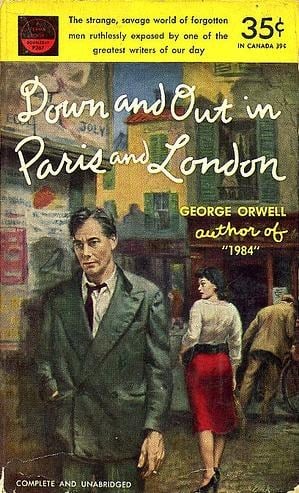
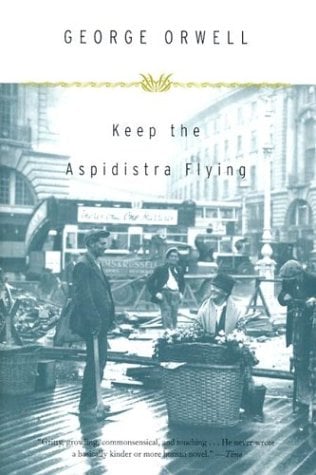
While Animal Farm and Nineteen Eighty-Four cast the longest shadow, Orwell's earlier works are essential for understanding how he became the writer who could produce those masterpieces. Homage to Catalonia (1938) is his eyewitness account of fighting in the Spanish Civil War, where he served with the POUM militia and was shot through the throat by a fascist sniper — an experience that crystallized his hatred of totalitarianism from both the right and the left, as he witnessed the Soviet-backed suppression of his own allies. Down and Out in Paris and London (1933), his first book, is a raw account of deliberate immersion in poverty — he lived as a dishwasher in Paris and a tramp in London to understand destitution from the inside, producing one of the great works of literary reportage. Keep the Aspidistra Flying (1936) is a semi-autobiographical novel about a young poet's doomed war against money and respectability — darkly comic and surprisingly personal, revealing the struggling writer Orwell was before finding his political voice.
Orwell's real name was Eric Arthur Blair; he chose the pen name George Orwell — George for the patron saint of England, Orwell after the River Orwell in Suffolk. He served in the Imperial Police in Burma from 1922 to 1927, an experience that turned him into a lifelong anti-imperialist and inspired both Burmese Days and the essay 'Shooting an Elephant.' He fought in the Spanish Civil War and was shot through the throat, barely surviving. He wrote Nineteen Eighty-Four on the remote island of Jura in the Scottish Hebrides while suffering from the tuberculosis that would kill him — finishing the manuscript just months before his death at age 46. The adjective 'Orwellian' entered the English language to describe totalitarian manipulation of truth, and concepts he coined — Big Brother, doublethink, thoughtcrime, Newspeak — have become part of the permanent political vocabulary.
George Orwell · Poverty, Homelessness, Social conditions
Orwell's first full-length book, a semi-autobiographical account of living in poverty in two cities, working as a plongeur in Paris kitchens and tramping among the destitute of London. It documents marginal life and indicts the social conditions that produce it.
George Orwell · Imperialism, Colonialism, British and Irish fiction
A novel drawn from Orwell's years in the Imperial Police, set in a small town in British-ruled Burma. It exposes the corruption, racism, and moral emptiness of colonial society through the disillusioned timber merchant John Flory.
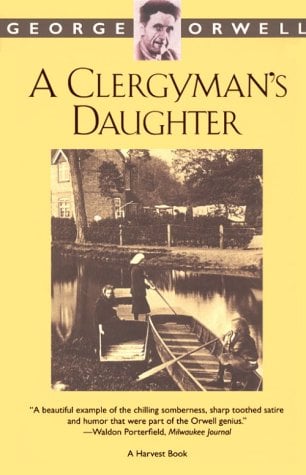
George Orwell · Fiction, Children of clergy, Amnesia
A novel following Dorothy Hare, a rector's daughter who loses her memory and faith and drifts through hop-picking, vagrancy, and teaching before returning home. It examines religious doubt and the constrained lives of women in 1930s England.
George Orwell · Fiction, Poverty, Booksellers and bookselling
A novel about Gordon Comstock, a bookshop assistant and would-be poet who wages a personal war against the worship of money, symbolized by the aspidistra of respectable middle-class life. It satirizes the pressures of commercialism and conventional ambition.
George Orwell · Working class, Social conditions, Unemployment
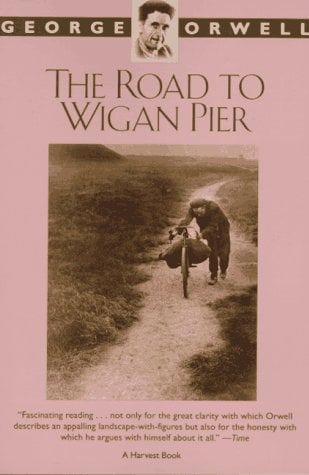
A documentary work commissioned by the Left Book Club, its first half reporting on the harsh living and working conditions of coal miners and the unemployed in northern England, the second a personal essay debating socialism and the English class system.
George Orwell · Spanish Civil War, Personal narratives, Communism
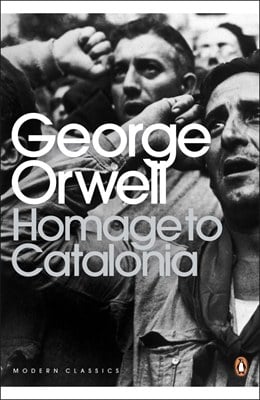
Orwell's firsthand account of fighting for a workers' militia in the Spanish Civil War, including his wounding and the suppression of the revolutionary left in Barcelona. It is a key statement of his anti-totalitarian politics and disillusionment with Stalinism.
George Orwell · Political satire, Allegory, Totalitarianism
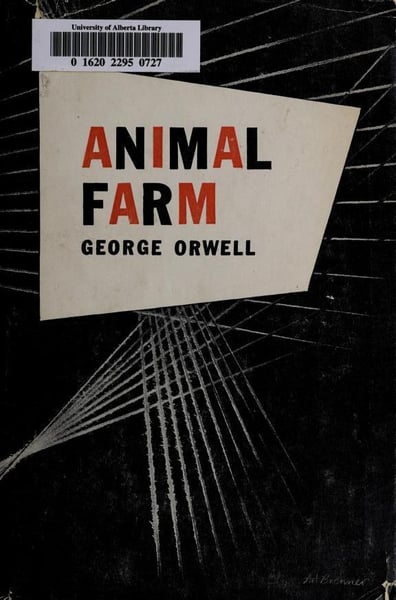
A satirical allegory in which farm animals overthrow their human owner only to see the revolution betrayed by the ruling pigs. It is widely read as a critique of the Russian Revolution and the corruption of egalitarian ideals under Stalinism.
George Orwell · Totalitarianism, Mass surveillance, Dystopias
A dystopian novel set in a totalitarian superstate where the Party, led by Big Brother, controls truth, language, and thought. Through Winston Smith's doomed rebellion it explores surveillance, propaganda, and the manipulation of reality, introducing concepts like Newspeak and doublethink.
尚無留言 — 來搶頭香吧。