Notes
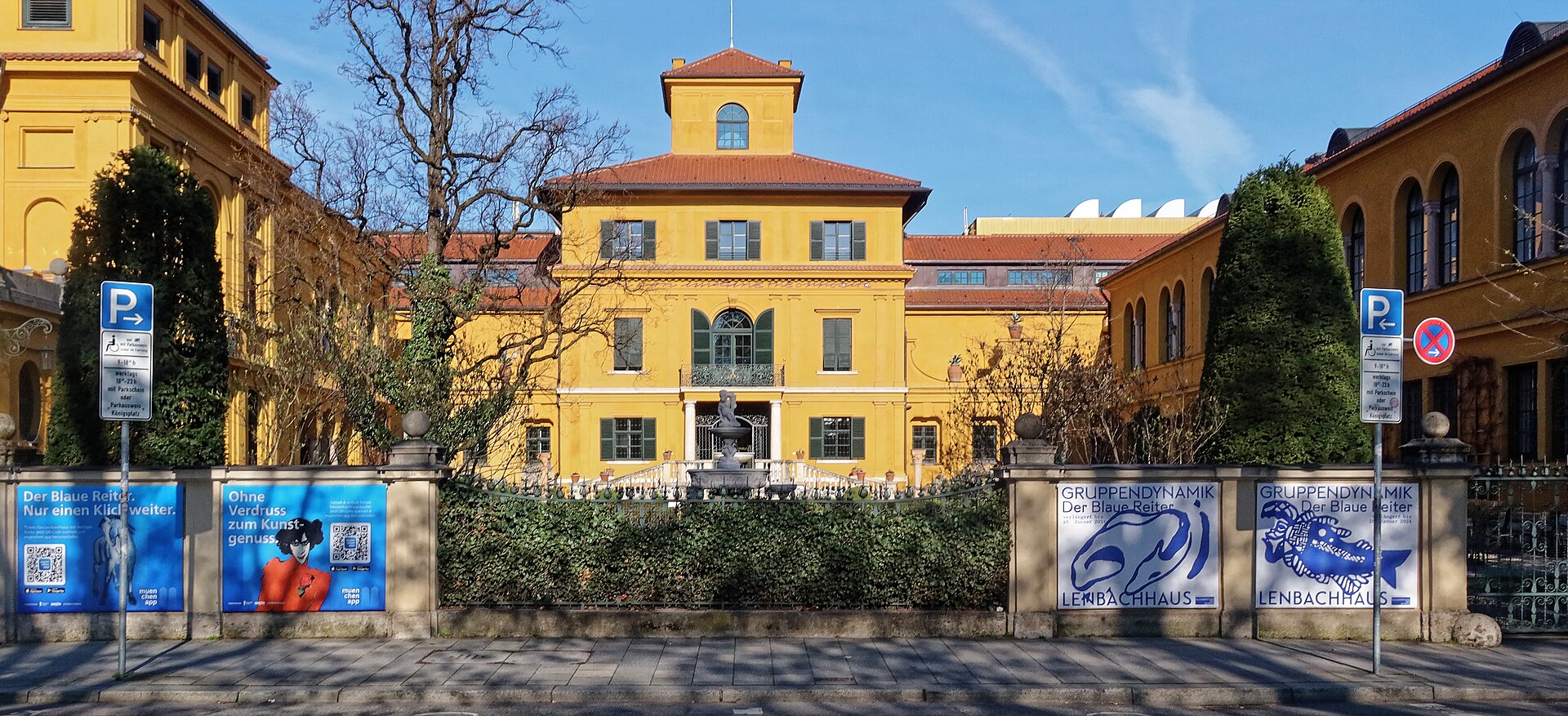
Lenbachhaus is a municipal art museum in Munich housed in the former villa and studio of the portraitist Franz von Lenbach, built between 1887 and 1890 in Tuscan-villa style by architect Gabriel von Seidl with a garden by Max Kolb. The City of Munich acquired the building and part of its holdings from Lenbach's widow in 1924, added a north wing designed by Hans Grässel in 1927, and opened the site to the public as the Städtische Galerie im Lenbachhaus in 1929. The museum holds the world's largest collection of work by Der Blaue Reiter (The Blue Rider), the avant-garde group founded by Wassily Kandinsky and Franz Marc, a holding transformed in 1957 when Gabriele Münter, on her eightieth birthday, donated a large body of Kandinsky's pre-1914 works along with her own paintings and pieces by fellow Blue Rider artists. In 2013, following the demolition of a 1972 extension, the museum reopened after a comprehensive renovation and expansion by Foster + Partners, whose three-storey wing branches from the villa's southern facade and is clad in gold-toned metal tubing made from a copper-aluminium alloy chosen to complement the original building's ochre facade.
Visitors move between Lenbach's restored nineteenth-century villa rooms and the Foster + Partners wing, encountering the Blue Rider paintings alongside the building's own layered architectural history spanning an 1890s artist's residence, a 1920s municipal extension, and a 2013 contemporary addition. As a Städtische Galerie (municipal gallery) with a collection rooted in a single artist's donated estate and expanded through Münter's landmark gift, Lenbachhaus offers a concentrated, single-site route into German Expressionism that is distinct among museums holding Blue Rider material elsewhere, making it a focal point for visitors specifically drawn to Kandinsky, Marc, and Münter's circle.
Sources
詳細資訊
地點
Luisenstraße 33, 80333 München, DE