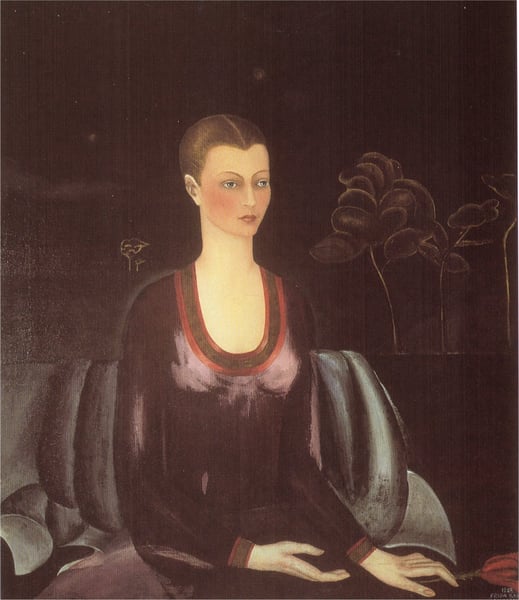
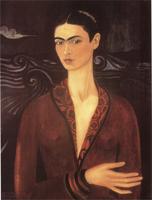
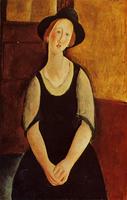
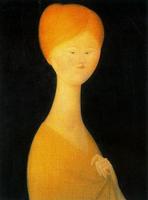
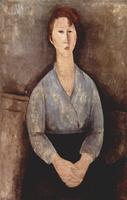
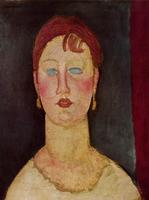
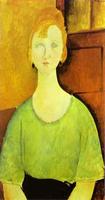
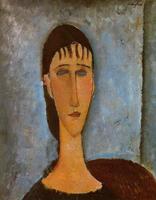
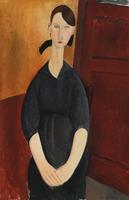
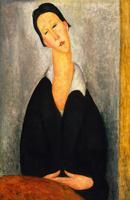
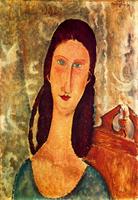
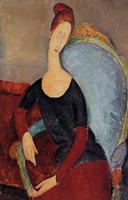
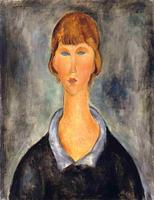
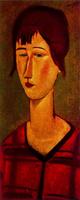
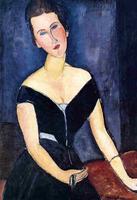
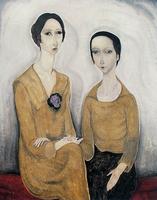
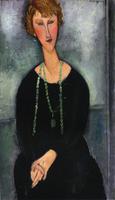
This portrait exemplifies the core principles of Naïve Art (Primitivism), a style defined by its deliberate rejection of academic conventions in favor of direct, emotionally vivid expression. The work’s significance lies in how it transforms the traditional genre of portraiture through:
- Flat, unmodulated color fields and a lack of linear perspective, which emphasize pattern and surface over spatial depth.
- Simplified, stylized forms (e.g., symmetrical composition, bold outlines) that prioritize iconic presence over anatomical accuracy.
- Untutored immediacy, a hallmark of Primitivism, which conveys a raw, intuitive sense of character rather than idealized likeness.
As a portrait by Frida Kahlo, the piece is notable for adapting these Naïve techniques to the intimate genre of portraiture, investing the subject with a timeless, almost folkloric quality. The result is an image that feels both personal and archetypal—a signature approach of Kahlo within the Primitivist mode.