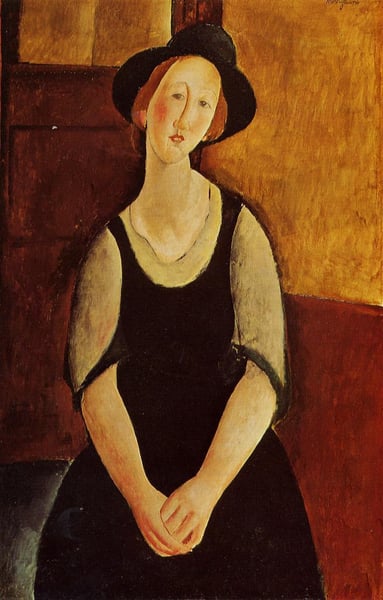
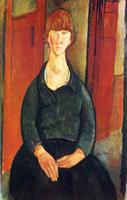
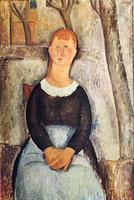
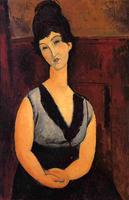
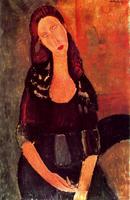
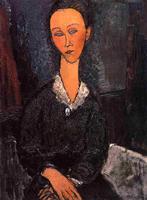
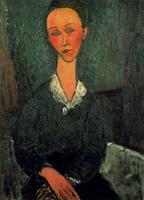
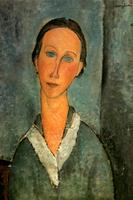
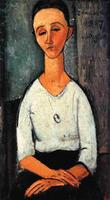
With only the structured facts provided—artist Amedeo Modigliani, style Expressionism, and genre portrait—the significance of Thora Klinckowstrom lies in how it epitomizes Modigliani’s radical departure from naturalistic portraiture within the Expressionist movement. Modigliani’s portraits are instantly recognizable for their elongated necks, almond-shaped eyes, and simplified, mask-like faces, which flatten perspective and prioritize emotional intensity over anatomical accuracy. In this work, those traits would align with Expressionism’s goal of conveying inner psychological states rather than external likeness. The genre of portraiture is thus transformed: the sitter becomes a timeless archetype, her features stylized to evoke a sense of melancholic refinement. Modigliani’s ability to merge African and archaic sculpture influences with European modernist painting makes this portrait significant as a bridge between primitivism and Expressionist emotionalism, offering a distilled, lyrical vision of the human form that remains influential to this day.