Expert Analysis: "Self Portrait with Monkeys" (Frida Kahlo)
Significance within Naïve Art (Primitivism) and the Self-Portrait Genre
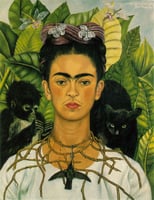
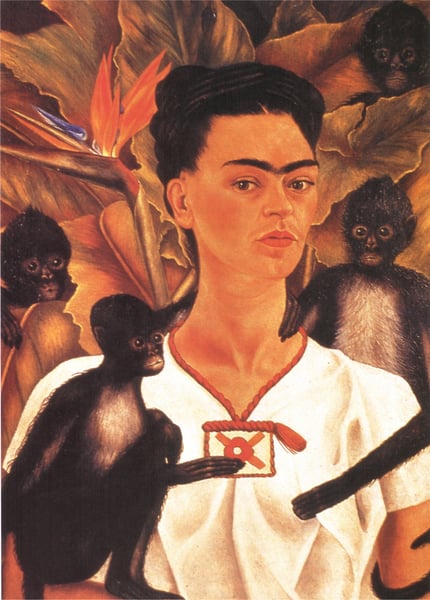
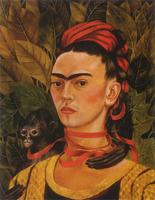
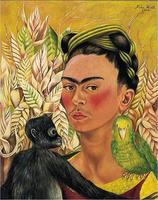
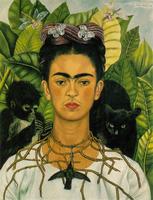
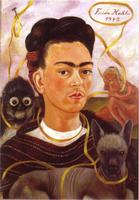
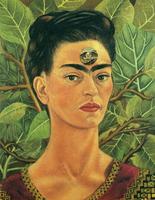
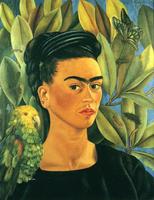
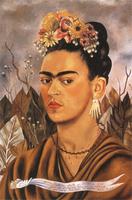
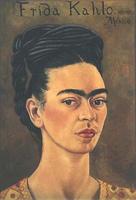
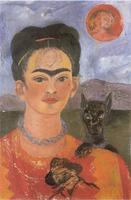
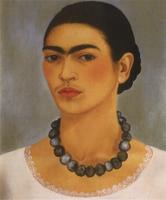
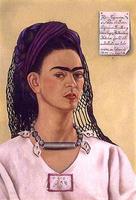
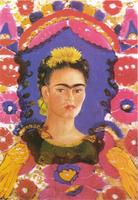
Frida Kahlo’s Self Portrait with Monkeys is a defining example of Naïve Art (Primitivism) applied to the intimate genre of the self-portrait. The work’s significance lies in how it merges the formal characteristics of naïve painting—flat perspective, bright, unmodulated color, and simplified, almost childlike rendering—with the deeply personal, introspective function of the self-portrait.
In keeping with the Primitivist tradition, Kahlo rejects academic naturalism in favor of a direct, emblematic composition. The monkeys, rendered with a folk-art quality, are not merely decorative but serve as symbolic companions, typical of the naïve artist’s tendency to fuse everyday observation with fantastical or mythic elements. This approach reframes the self-portrait not as a simple likeness but as a staged, allegorical tableau.
Within Kahlo’s broader oeuvre, this painting exemplifies how Naïve Art can elevate the self-portrait beyond pure representation, using flatness and color to convey emotional weight and cultural identity. The work is significant because it demonstrates that Primitivism, often associated with “outsider” or untrained artists, can be wielded by a trained painter to produce a powerful, authentic self-scrutiny—one that also challenges Western conventions of portraiture.