Expert Art Historical Analysis
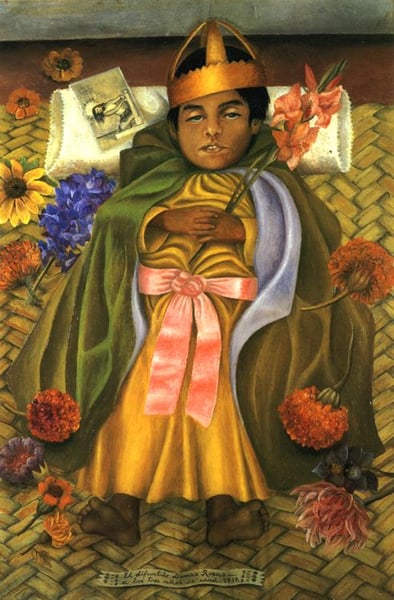
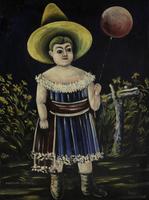
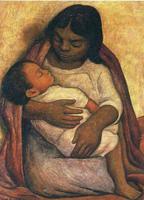
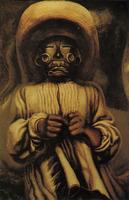
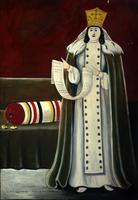
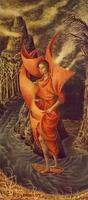
"The Deceased Dimas" by Frida Kahlo exemplifies the artist’s engagement with Naïve Art (Primitivism) through a subject that is both intimate and culturally rooted. As a portrait, it draws on the flat, unmodulated forms, bold outlines, and direct emotional intensity characteristic of folk and naïve traditions—a vocabulary Kahlo deliberately adopted to distance herself from academic realism and European modernism.
Within her oeuvre, works like this underscore Kahlo’s use of retablo and ex-voto conventions, where death is confronted with stark, unembellished honesty. The significance here lies in how Kahlo transforms a traditional memorial portrait into a vehicle for personal and collective Mexican identity. By treating a deceased child with the same raw, symbolic clarity as her self-portraits, she elevates mundane mortality to the realm of the archetypal. The naïve style’s apparent simplicity amplifies the work’s emotional weight, making it a poignant bridge between indigenous folk art and modern painting—a hallmark of Kahlo’s contribution to Primitivism.