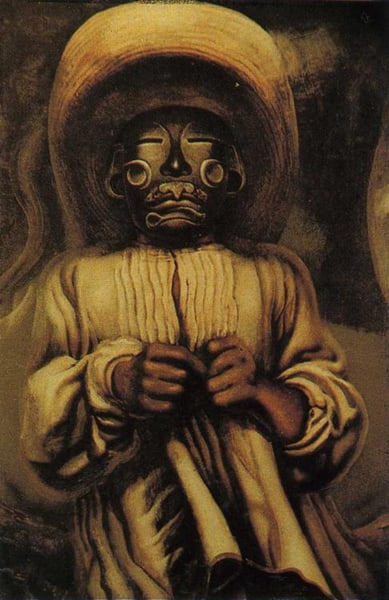
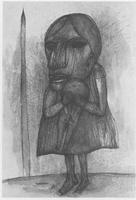
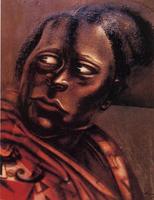
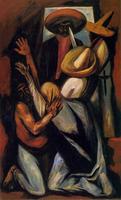
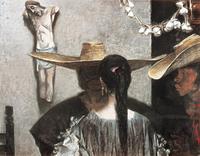
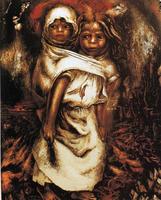
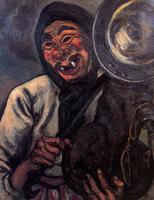
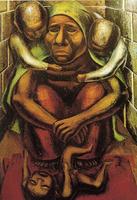
As an expert art historian, I can provide a focused analysis based on the structured facts supplied. "Ethnography" by David Alfaro Siqueiros is classified under the Surrealism style and portrait genre. Its significance lies in how it bridges the radical, politically charged muralism for which Siqueiros is renowned with the introspective, dream-like vocabulary of Surrealism.
In the context of Surrealism, portraiture was often a vehicle for exploring the subconscious and the "Other." Siqueiros’s choice of an ethnographic subject—likely a figure representing indigenous or marginalized culture—elevates this portrait beyond mere likeness. It becomes a powerful commentary on identity and colonial perception. Unlike the more automatic or fantastical surrealist portraits of Dalí or Magritte, Siqueiros infuses the genre with a social conscience typical of his Mexican muralist roots. The work is significant for demonstrating how Surrealism could be deployed not just for personal psychology, but for a critical, politicized gaze into ethnicity and representation, making it a vital convergence of avant-garde style and social realism.