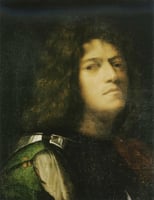
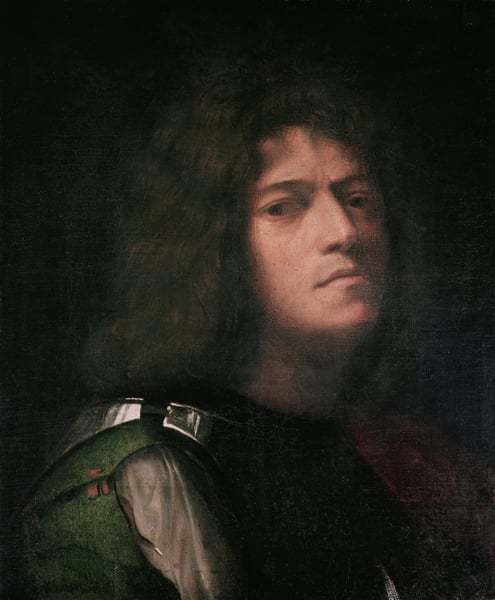
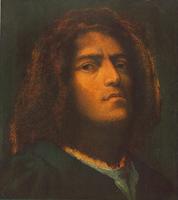
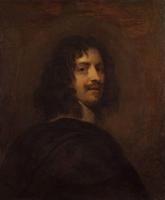
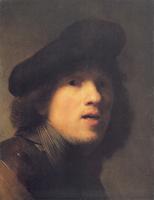
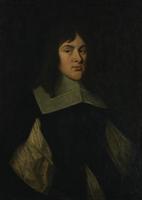
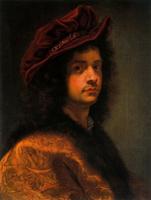
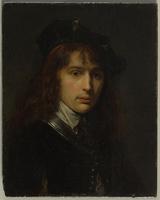
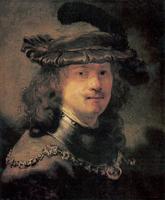
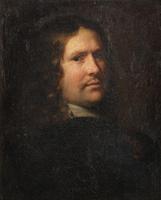
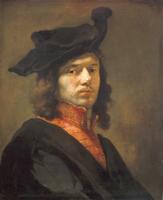
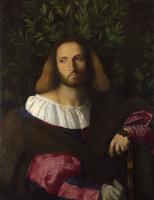
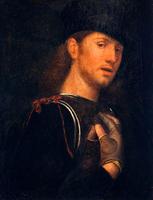
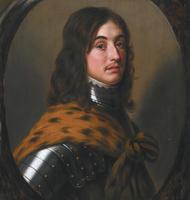
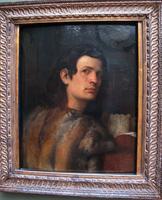
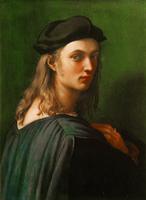
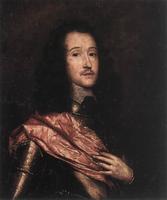
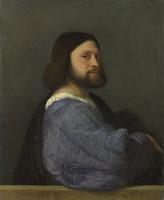
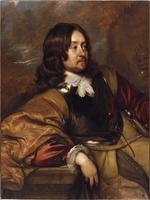
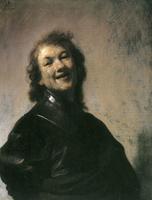
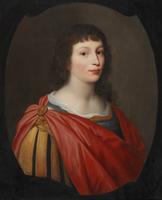
This self-portrait by Giorgione is a singular testament to the High Renaissance fascination with individual identity and artistic introspection. As one of the few securely attributed works by the notoriously enigmatic Venetian master, its significance lies in how it elevates the self-portrait genre from mere documentation to a poetic, almost psychological study.
Despite the sparse details, the work is remarkable for its time: rather than displaying the artist as a craftsman or courtier, Giorgione presents himself with a direct, yet soft, gaze—a hallmark of the High Renaissance quest to capture both physical likeness and internal essence. The use of chiaroscuro (implied by the period’s style) suggests a subtle modeling of the face, creating a sense of living, breathing presence. In an era when self-portraits were still rare, this painting marks a crucial step toward the artist as a self-aware subject, a figure whose inner life is as important as his public role. Its enduring mystery—typical of Giorgione’s entire oeuvre—only deepens its resonance as a foundational work of personal artistic identity.