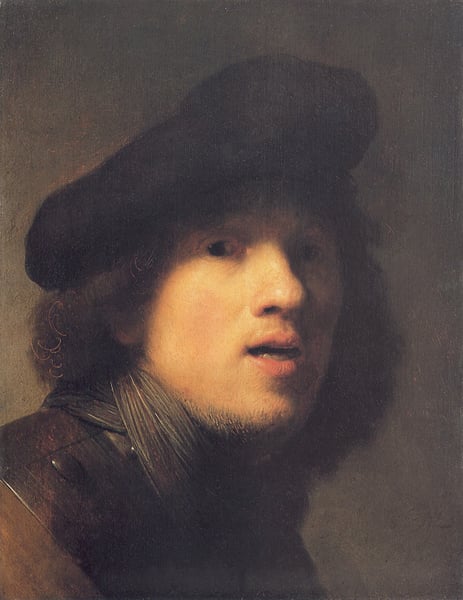
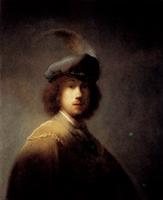
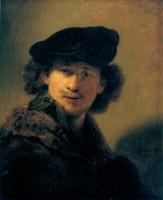
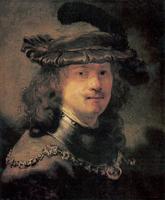
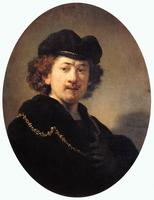
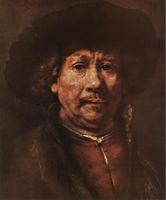
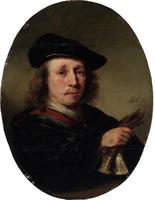
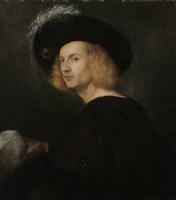
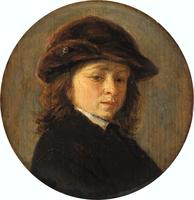
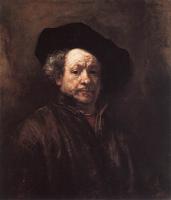
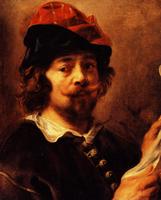
This work is a striking example of Rembrandt’s early mastery within the Baroque style, specifically employing Tenebrism—a dramatic, high-contrast use of light and shadow—to heighten psychological intensity. As a self-portrait that also falls into the category of tronie (a study of an exaggerated expression or costume rather than a formal likeness), it is significant for blurring the line between personal introspection and theatrical character study. The gorget and beret are not merely period accessories; they become tools of chiaroscuro, with the light catching the metallic collar and the artist’s face against a dark, near-abstract background. This choice emphasizes the Baroque fascination with fleeting moments, tactile surfaces, and the artist’s own role as both subject and performer—a hallmark of Rembrandt’s lifelong exploration of identity through self-portraiture.