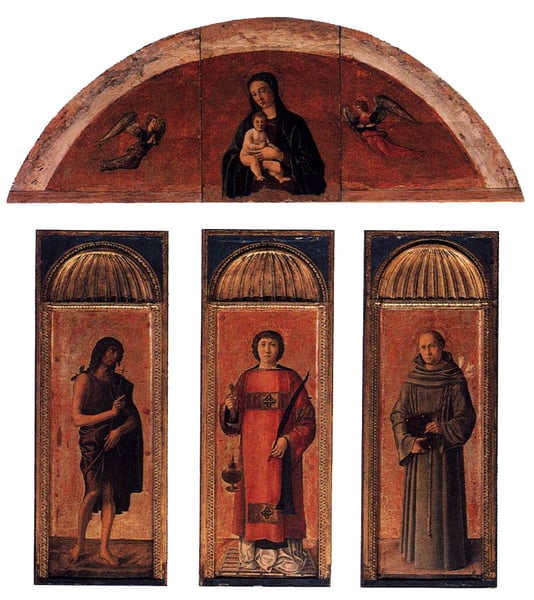
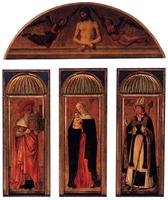
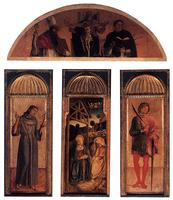
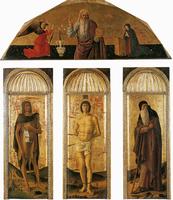
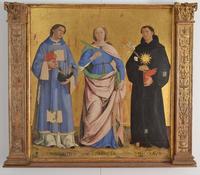
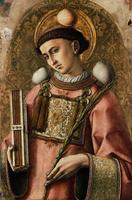
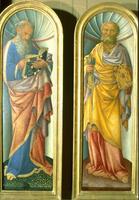
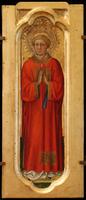
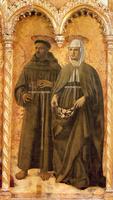
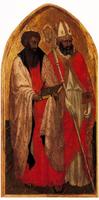
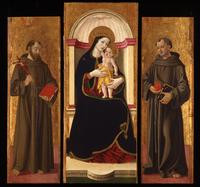
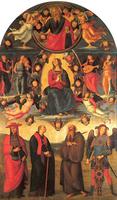
This Early Renaissance religious painting, the Triptych of St Lawrence by Jacopo Bellini, is significant as a transitional work that embodies the shift from the decorative, gold-ground conventions of the Gothic period toward the naturalism and spatial coherence that define the Renaissance. As a triptych—a three-paneled format traditionally used for altarpieces—it serves both a devotional and narrative function, allowing the central saint to be flanked by subsidiary scenes or figures. In the context of the Early Renaissance, such a work would have been valued for its emerging use of linear perspective, more anatomically credible figures, and a greater attention to light and atmosphere, even while retaining some hieratic elements of medieval sacred art. Bellini’s treatment of St Lawrence, a popular early Christian martyr, would have balanced iconographic clarity with a new humanism, making the painting an important document of the era’s evolving visual language.