Analisi esperta di The Tailor di Pietro Longhi
Stile: Rococo · Genere: genre painting
Expert Art Historical Analysis: The Tailor by Pietro Longhi
Style & Period Context (Rococo):
Pietro Longhi’s The Tailor is a quintessential example of the Rococo’s turn toward intimate, everyday subject matter—a departure from the grandiose mythology and aristocratic allegories favored earlier in the century. While Rococo is often associated with playful frivolity and pastel-hued eroticism (as in works by Watteau or Boucher), Longhi’s version of the style is distinctively grounded in the domestic interiors of 18th-century Venice. Here, the Rococo love for refined detail, soft lighting, and gentle narrative is channeled into a quiet, almost ethnographic observation of common life.
Significance within Genre Painting:
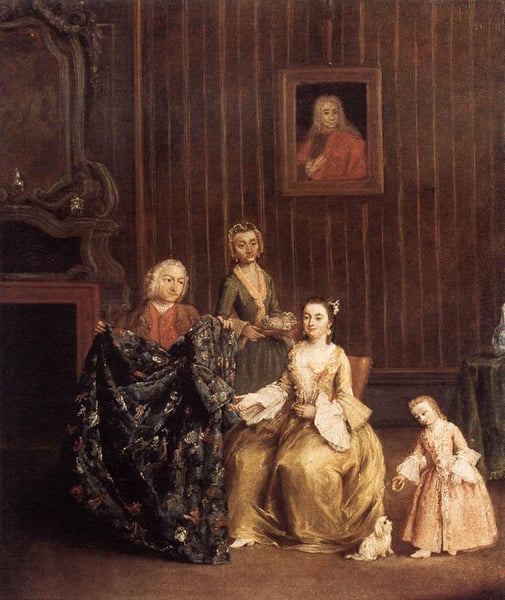
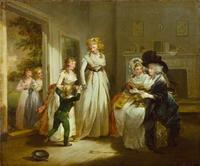
Longhi is celebrated as the “Venetian Hogarth,” and The Tailor exemplifies his role in elevating genre painting from mere decorative anecdote to subtle social commentary. The work depicts a tailor at work, surrounded by bolts of fabric and the tools of his trade—a scene that would have been instantly recognizable to contemporary Venetian viewers. Unlike the flamboyant fête galante scenes of his Rococo peers, Longhi’s art focuses on the unheroic, quotidian activities of the middle and lower classes. This shift reflects the Enlightenment interest in documenting the lives of ordinary people with a sympathetic, if slightly amused, eye.
Stylistic Hallmarks:
Longhi’s brushwork in The Tailor is characteristically delicate and precise, capturing the texture of fabrics and the soft play of light across the workshop. The composition is intimate, inviting the viewer into the tailor’s space, yet there is a faint irony in the contrast between the tailor’s humble labor and the sumptuous materials he handles—a subtle commentary on the social hierarchies of the time. The muted palette, punctuated by small accents of color, is typical of Longhi’s Rococo restraint, prioritizing narrative clarity over decorative excess.
Why It Matters:
The Tailor is significant because it embodies the Rococo’s capacity for realism and social observation, challenging the assumption that the style was exclusively concerned with aristocratic escapism. Longhi’s work documents the vibrant, stratified world of 18th-century Venice, offering modern viewers a rare, unfiltered glimpse into the lives of its craftsmen and merchants. In doing so, it bridges the gap between the decorative Rococo and the more earnest genre scenes of later 18th-century artists like Chardin.
Museum / Gallery
Visivamente simili
20 opere con composizione e palette affini
Presentation
Pietro Longhi
The Sagredo Family
Pietro Longhi
The Little Concert
Pietro Longhi
The Dancing Lesson
Pietro Longhi
The Venetian Lady's Morning
Pietro Longhi
A Patrician Family
Pietro Longhi
The Family
Pietro Longhi
Pope Makes Love To Lady Mary Wortley Montagu
William Powell Frith
Lady at the Dressmaker
Pietro Longhi
The Wet-Nurse
Pietro Longhi
Lady at her Toilette
Pietro Longhi
The Angus Nickelson Family
Ralph Earl
The Family of Jan Jacobsz Hinlopen
Gabriel Metsu
The Countess's Morning Levee
William Hogarth
A Nobleman Kissing a Lady's Hand
Pietro Longhi
Gallant scene
Alexis Van Hamme
The Lost Child Restored
George Harvey

The Family of the Duke of Penthièvre
Jean-Baptiste Charpentier the Elder
The letter
Gerolamo Induno
A Visit to the Boarding School
George Morland