Analisi esperta di The Perfume Seller di Pietro Longhi
Stile: Rococo · Genere: genre painting
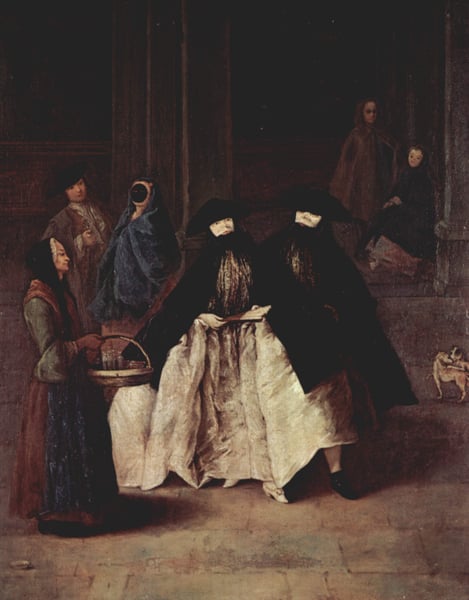
Expert Analysis: The Perfume Seller by Pietro Longhi
As a master of Venetian genre painting within the Rococo period, Pietro Longhi’s The Perfume Seller offers a rare glimpse into the intimate, everyday commerce of 18th-century Venice. While Rococo art often celebrated aristocratic frivolity and mythological fantasy, Longhi distinguished himself by focusing on the quiet, unscripted moments of bourgeois and common life—a quality that makes this work significant.
Stylistic Significance within Rococo
Painted in the characteristic Rococo palette of soft pastels and warm earthen tones, the scene is intimate in scale and composition, typical of Longhi’s domestic vignettes. The brushwork is delicate, yet observant—not idealized, but gently realistic. The figures are placed in a shallow, stage-like space, a hallmark of Longhi’s narrative style. Here, a perfumer presents a bottle to a well-dressed customer, while a servant and a child look on. This quiet transaction is rendered with a subtle humor and tenderness that elevate it above mere documentation: the perfumer’s polite, slightly deferential posture and the customer’s poised curiosity capture the social rituals of consumption.
Genre Painting as Cultural Record
Longhi’s work is significant as a chronicle of Venetian daily life, much like the vedute of Canaletto but focused on interiors and human interactions rather than grand architecture. The Perfume Seller exemplifies the Rococo fascination with sensory pleasures—scent, touch, visual delight—but grounds it in real social hierarchies. The perfume bottle, a luxury good, signals new patterns of trade and leisure in Venice’s declining mercantile era. Unlike the frivolity of Fragonard’s fêtes galantes, Longhi’s scene is restrained, observational, and quietly democratic.
Conclusion
In The Perfume Seller, Pietro Longhi redefines Rococo from within. He turns away from myth and allegory to celebrate the poetry of a handshake, a bottle, a shared glance. This painting is significant because it captures the Rococo ethos of charm and refinement—but refracted through the lens of everyday Venetian life, reminding us that the period’s true beauty also resided in the modest transactions of its people.
Museum / Gallery
Visivamente simili
20 opere con composizione e palette affini
The Ridotto
Pietro Longhi
The Fortune Teller
Pietro Longhi
The Charlatan
Pietro Longhi
A Fortune Teller at Venice
Pietro Longhi
The Parlour
Pietro Longhi
The `New World'
Pietro Longhi
Masked Party in a Courtyard
Pietro Longhi
The Parlour of the San Zaccaria Convent
Francesco Guardi
A Family Group
Jacob Ochtervelt
The Tooth Puller
Pietro Longhi
Johann Hus At The Council Of Constance
Karl Lessing
Masked Figures
William Orpen
A Lady and a Cavalier
Pieter Codde
A Soldier, An Old Woman and a Young Woman
Pieter Codde
Repentant Judas Returning The Pieces Of Silver
Rembrandt
Friars in Venice
Pietro Longhi
The Fortune Teller
Pietro Longhi
The Huntsman and the Lady
Gabriel Metsu
The Painter in his Studio
Pietro Longhi
Portrait of the Family Twent in An Interior
Pieter Codde