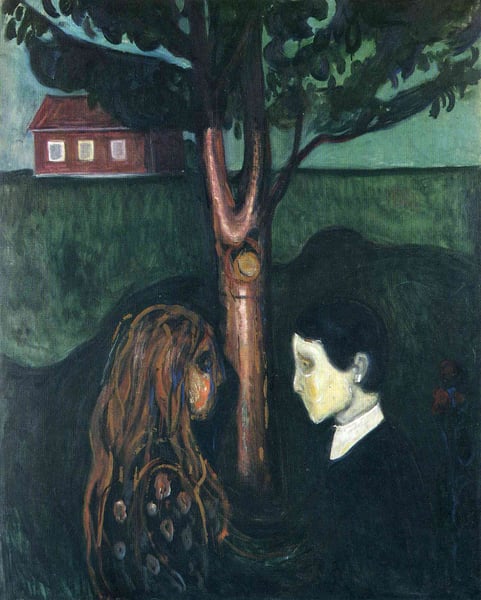
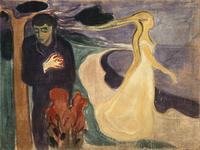
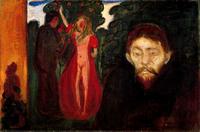
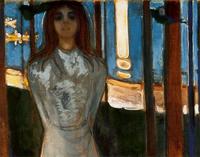
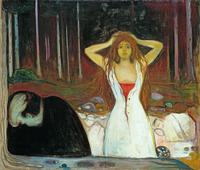
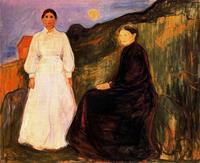
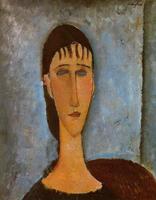
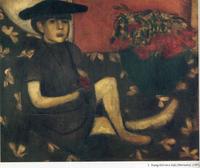
"Eye in Eye" by Edvard Munch is a quintessential Expressionist genre painting that captures the raw psychological intensity central to the artist's work. Created during the European period, it belongs to Munch’s "Frieze of Life" series, which explores themes of love, anxiety, and human connection. The painting's significance lies in its radical departure from naturalistic representation: Munch distorts figures and employs stark, emotive color contrasts to externalize inner emotional states. The locked gazes of the two figures—a man and a woman—transcend mere portraiture, becoming a visual metaphor for the tension, intimacy, and existential vulnerability of human relationships. This work exemplifies Expressionism's mission to prioritize subjective experience over objective reality, making "Eye in Eye" a powerful example of how genre painting can be transformed into a vehicle for profound psychological revelation.