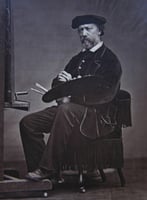
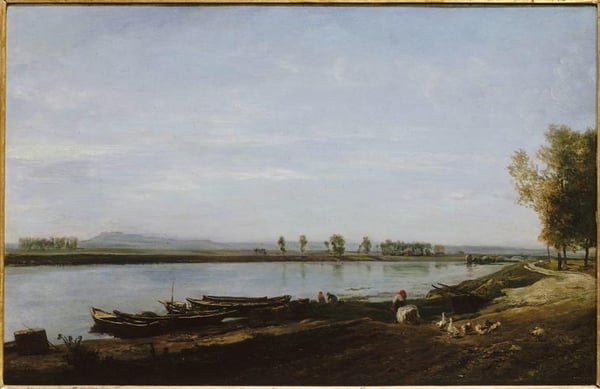
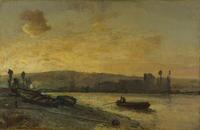
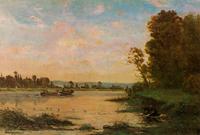
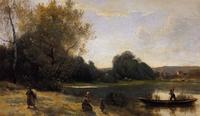
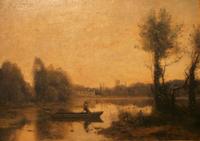
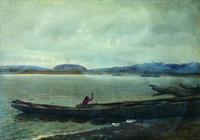
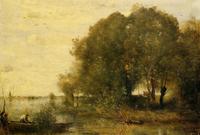
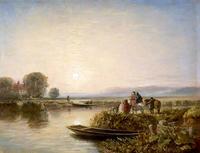
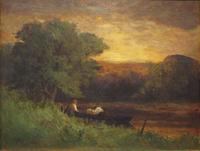
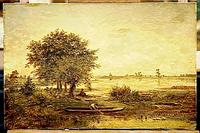
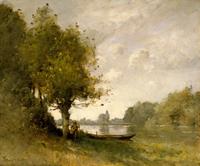
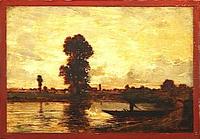
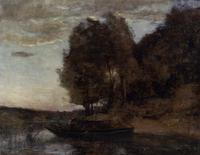
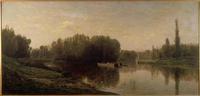
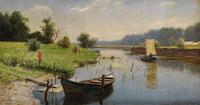
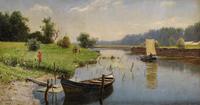
As a masterwork of the Realist movement, Charles-François Daubigny's The Seine in Bezons, Val d'Oise exemplifies the style's commitment to truthful, unidealized depiction of everyday rural life. Its significance lies in the artist's direct observation of the natural landscape—here, a quiet stretch of the Seine near the village of Bezons—captured with precise attention to atmospheric conditions, subtle tonal shifts, and the unvarnished character of the riverbank. Rejecting the dramatic or sublime conventions of Romantic landscape painting, Daubigny anchors the work in a specific, recognizable place, presenting the scenery not as a symbolic or staged composition but as an authentic, documentary view of the French countryside. This fidelity to nature and the ordinary marks a pivotal shift in landscape painting, presaging the later innovations of the Impressionists while firmly grounding the artwork in the Realist ethos of representing life as it is.