Expert Analysis
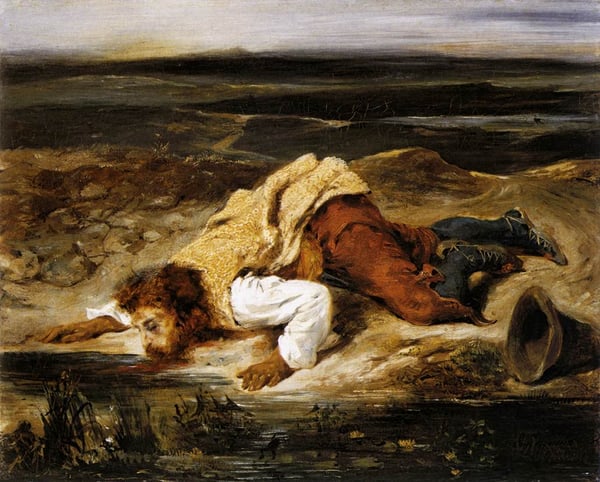
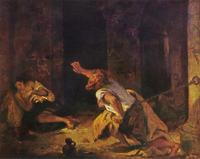
In “A Mortally Wounded Brigand Quenches his Thirst,” Eugène Delacroix elevates a genre painting—a scene of everyday life, here the life of an outlaw—into a quintessential Romantic statement. The work’s significance lies in its raw emotional intensity and its inversion of conventional heroism. The brigand, a social outcast, is portrayed not as a villain but as a tragic figure fighting for survival. Delacroix captures the precise instant of desperate human instinct: even as death approaches, the urge to drink remains overpowering. The painting’s dramatic chiaroscuro and vigorous brushwork heighten the sense of urgency and suffering, while the exotic, rugged setting reflects Romanticism’s fascination with the sublime and the primitive. By focusing on the brigand’s final, visceral act, Delacroix transforms a lowly subject into a powerful meditation on life, mortality, and the indomitable will—key concerns that define the Romantic spirit.