Expertenanalyse zu John William Waterhouses Persephone
Stil: Romanticism · Genre: literary painting
Expert Analysis of "Persephone" by John William Waterhouse
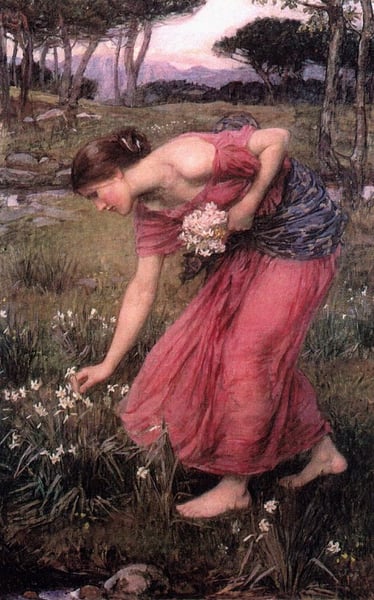
John William Waterhouse’s Persephone stands as a quintessential example of Romanticism applied to literary painting, merging classical mythology with the movement’s deep emotional resonance and fascination with nature. The work draws from the ancient Greek myth of Persephone’s abduction by Hades, a story that symbolizes the cycle of seasons and the tension between light and darkness. Within the Romantic tradition, Waterhouse elevates this narrative beyond mere illustration, using it to explore themes of longing, loss, and the sublime power of the natural world—hallmark concerns of the period.
The painting’s significance lies in its masterful synthesis of Romantic aesthetic principles with a literary source. Waterhouse employs a rich, atmospheric palette dominated by deep greens, cool blues, and the warm glow of flowers, evoking both the lushness of the earth and the impending chill of the underworld. The composition centers on Persephone herself, often depicted in a moment of poignant transition—on the cusp of being taken—her expression a blend of melancholy and resignation. This focus on inner emotional states is a core Romantic ideal, prioritizing subjective experience over objective reality.
As a literary painting, Persephone draws specifically from Ovid’s Metamorphoses and later poetic interpretations, aligning with Romanticism’s reverence for classical texts reinterpreted through a modern, emotional lens. Waterhouse’s treatment is notable for its meticulous attention to symbolic detail: the pomegranate seeds (often included in his versions) represent the binding of Persephone to Hades, while the wildflowers and dark, shadowy background contrast innocence with fate. The landscape itself is deeply Romantic—untamed, immersive, and alive with a sense of mystery and danger.
Moreover, Waterhouse’s work bridges late Romanticism and the emerging Pre-Raphaelite sensibility, though here classified under Romanticism. The painting’s significance in this context is its ability to make an ancient myth feel immediate and personal, inviting the viewer to share in Persephone’s quiet tragedy. Through lyrical brushwork and a harmonious yet somber composition, Waterhouse achieves a timeless emotional impact, ensuring Persephone remains a key work for understanding how Romantic painters used literary sources to explore the human condition.
Museum / Gallery
Visuell ähnlich
20 Werke mit ähnlicher Komposition und Farbpalette
Gather Ye Rosebuds While Ye May
John William Waterhouse
Listen to my Sweet Pipings
John William Waterhouse
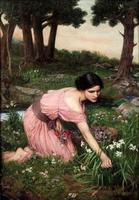
Spring Spreads One Green Lap of Flowers
John William Waterhouse
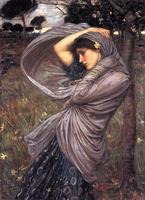
Boreas
John William Waterhouse
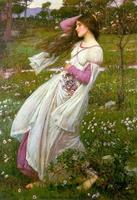
Windflowers
John William Waterhouse
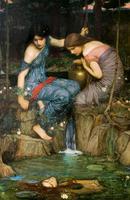
Nymphs Finding the Head of Orpheus
John William Waterhouse
A Song of Springtime
John William Waterhouse
Phyllis and Demophoön
John William Waterhouse
Lamia
John William Waterhouse

A Roman Offering
John William Waterhouse
Psyche entering Cupid's Garden
John William Waterhouse
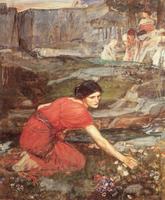
Maidens picking Flowers by a Stream
John William Waterhouse

When Flowers Return
Sir Lawrence Alma-Tadema
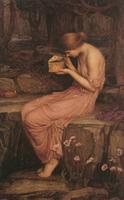
Psyche Opening the Golden Box
John William Waterhouse
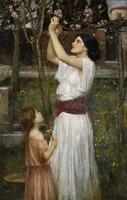
Gathering Almond Blossoms
John William Waterhouse
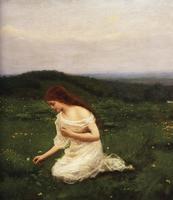
Spring
Noè Bordignon
A Nymph In The Forest
Charles-Amable Lenoir

Springtime
Charles-Amable Lenoir
The Grass of Parnassus
Edward Robert Hughes

Among the Ruins
Sir Lawrence Alma-Tadema