Analisi esperta di The Firebird, Michel Fokine as tsarevitch di Leon Bakst
Stile: Art Nouveau (Modern) · Genere: design
Expert Analysis: The Firebird, Michel Fokine as tsarevitch by Léon Bakst
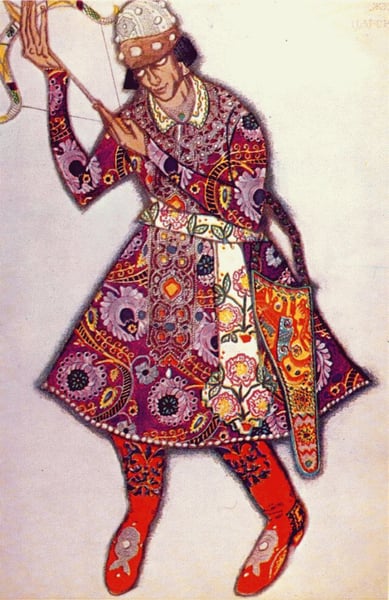
Léon Bakst’s costume design for The Firebird (1910) stands as a paradigm of Art Nouveau’s synthesis of ornament, movement, and theatrical fantasy—a synthesis that would define the visual identity of Sergei Diaghilev’s Ballets Russes and transform modern stagecraft.
Significance within the Art Nouveau (Modern) Style:
- Organic, flowing lines: Bakst’s rendering of the Tsarevitch’s costume employs the sinuous, whiplash curves characteristic of Art Nouveau. The elongated silhouette, swirling fabric folds, and intricate embroidery mimic natural forms (vines, flames, bird feathers) while echoing the dancer’s motion.
- Exoticism and ornamental richness: Art Nouveau often drew from non-Western sources. Here, Bakst fuses Russian folk motifs—the Firebird’s fiery plumage, the Tsarevitch’s caftan—with Persian and Orientalist decorative patterns, creating a fantastical, pan-Slavic fairy-tale world that was both modern and ancient.
- Color and pattern as dramatic force: Bakst’s bold palette (vivid oranges, reds, golds, and deep blues) and dense, repetitive patterning (scales, flames, floral arabesques) demonstrate Art Nouveau’s belief in total design—where costume, set, and choreography form an immersive, unified sensory experience.
Why the design is historically groundbreaking:
- Liberating stage costume: Bakst abandoned conventional ballet tutus for fluid, body-conscious garments that allowed freedom of movement and expression. The Tsarevitch’s costume, with its flowing sleeves and layered skirt-like tunic, amplified the dancer’s gestures rather than constraining them—a radical departure from 19th-century ballet.
- Psychological and narrative expression: The costume’s flame-like forms and jewel-toned hues visually narrate the Tsarevitch’s dual role: a mortal prince who becomes entangled with a magical, elemental bird. The design blurs human and avian motifs, suggesting transformation and otherworldliness.
- Influence on modern art and fashion: Bakst’s work for The Firebird (including this design for Michel Fokine, the choreographer who danced the Tsarevitch) inspired the “Ballets Russes look”—a craze that swept Parisian salons, influenced Poiret’s couture, and introduced modernism’s decorative boldness into everyday design.
In summary, Bakst’s The Firebird design is not merely a costume sketch; it is a manifesto of Art Nouveau’s ambition to dissolve boundaries between fine art, decoration, and performance. It captures the dynamic, exotic, and sensuous spirit of the Ballets Russes, securing Bakst’s legacy as a visionary who elevated stage design to an independent art form.
Visivamente simili
20 opere con composizione e palette affini
Oze
Nicholas Roerich
Costume design of a clown for an opera by A. Spendiarov 'Almast'
Martiros Sarian
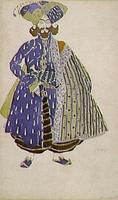
Aide de camp of the Shah, costume design for Diaghilev's production of the ballet Scheherazade
Leon Bakst
Shah Abbas Safavi
Hossein Behzad
Young man with a bottle and a wine-cup
Reza Abbasi
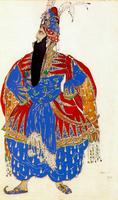
Scheherazade shah shahriar
Leon Bakst
Finger in mouth Girl
Hossein Behzad
Kupava
Nicholas Roerich
If you proclaim the beauty then you're right
Hossein Behzad
Portrait of Sultan Husayn Mirza Bayqara at the Age of About 50 Years.
Kamal ud-Din Behzad
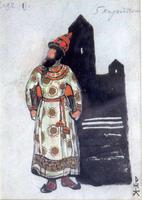
Boyarin
Nicholas Roerich
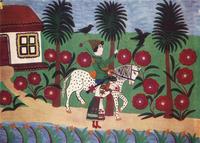
Halia and cossack
Maria Primachenko
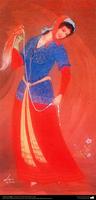
The Young Woman and the Bird
Hossein Behzad
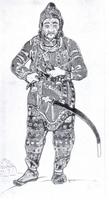
Konchak
Nicholas Roerich
A Lady with a Fan
Reza Abbasi
Yusef and Zuleykha (detail)
Kamal ud-Din Behzad
Bahram Gur and the Dragon
Ahmad Musa
Costume design for the Opera "Prince Igor" by Alexander Borodin
Ivan Bilibin
Sultan Hossein Mirza in Promenade (left part)
Kamal ud-Din Behzad
Prince Yuri (Costume design for the opera "The Enchantress")
Mikhail Vrubel