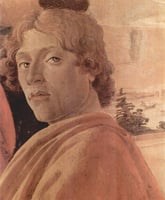
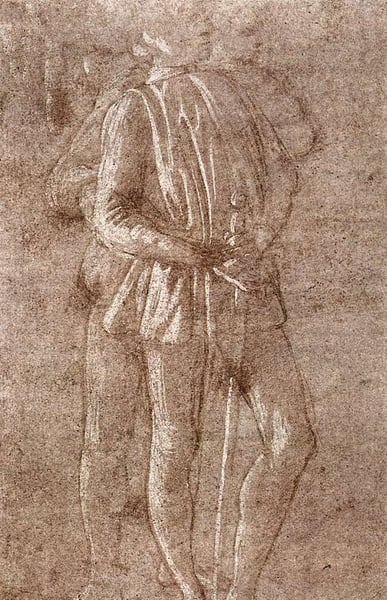
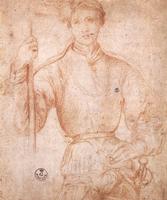
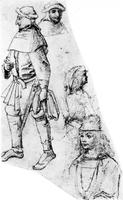
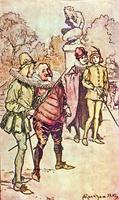
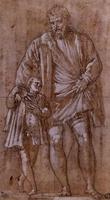
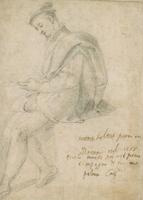
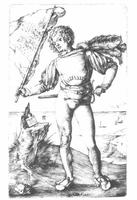
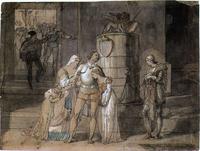
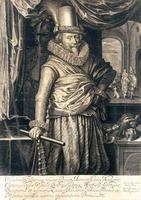
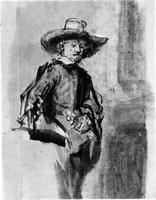
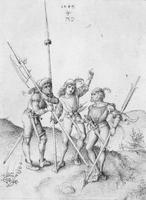
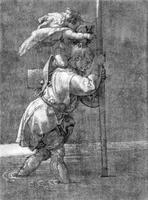
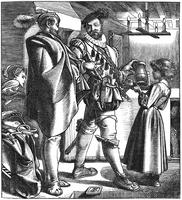
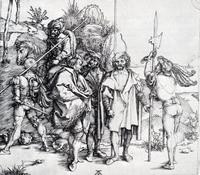
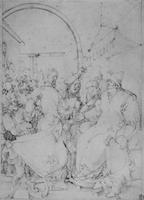
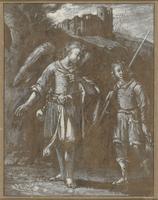
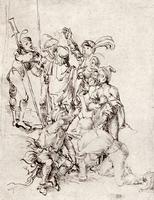
This study by Sandro Botticelli demonstrates his mastery of draftsmanship during the Early Renaissance, a period defined by the revival of classical ideals and a new naturalism in depicting the human figure. As an illustration—likely a preparatory work for a larger composition—it reveals Botticelli’s process of refining gesture and form. The two standing figures are rendered with the distinctive linear grace that characterizes his most famous paintings, such as The Birth of Venus and Primavera. Even in a simple study, Botticelli captures a sense of balanced, flowing anatomy, using line to suggest both weight and movement. This work is significant because it offers a rare glimpse into the artist’s working method, showing how he translated observation into the elegant, rhythmic poses that define Early Renaissance humanism.