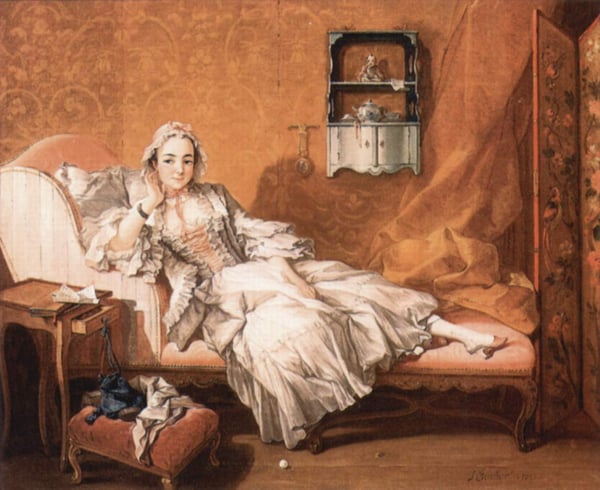
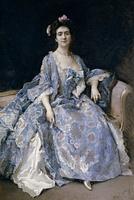
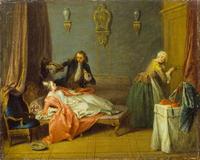
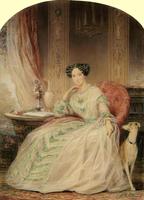
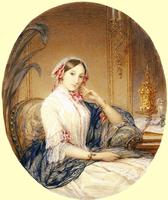
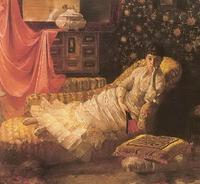
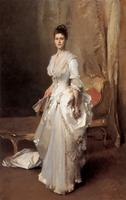
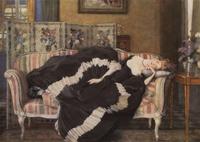
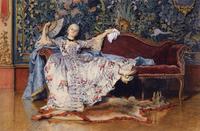
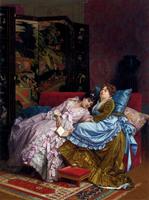
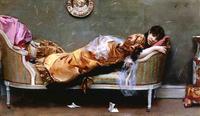
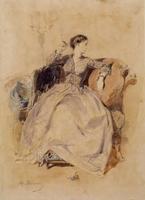
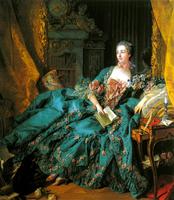
This portrait by François Boucher is a quintessential example of Rococo portraiture, notable for its intimate, personal subject and the artist’s own handling of the genre. As a depiction of the painter’s wife, the work transcends mere likeness to become a study of idealized domestic grace—a common Rococo theme. The significance lies in how Boucher, a leading figure of the style, employs soft, luminous brushwork and a delicate, pastel-toned palette to convey not only his sitter’s elegance but also the era’s taste for charm, sensuality, and refined intimacy. The portrait typifies Rococo’s shift away from formal, monumental portraiture toward a lighter, more affectionate representation, capturing the private, leisurely world of the 18th-century French elite. This personal connection between artist and subject makes the work a compelling document of both Boucher’s artistic ideals and the period’s cultural values.