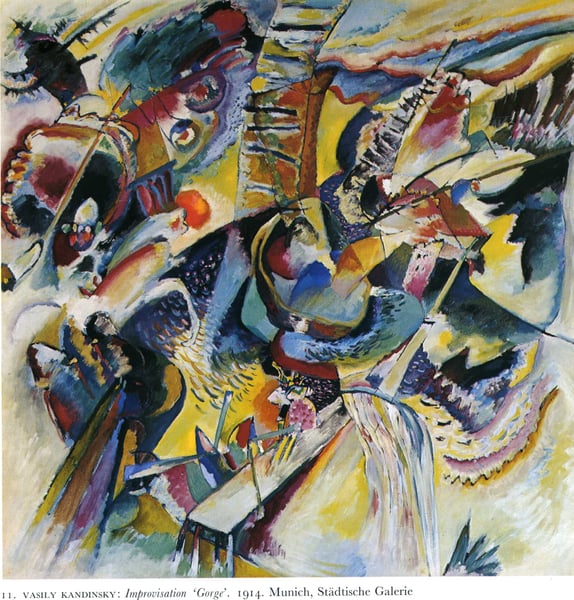
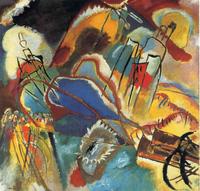
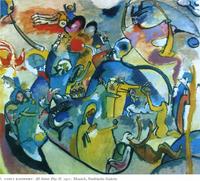
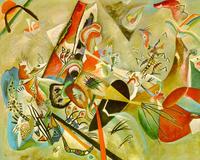
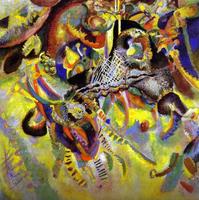
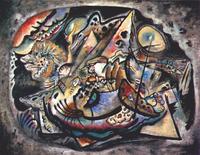
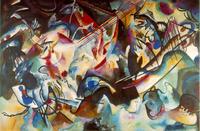
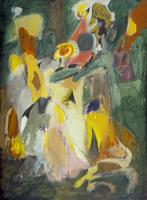
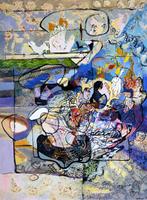
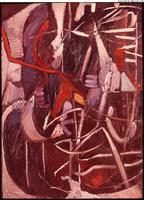
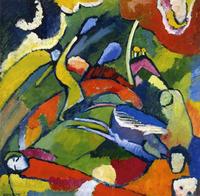
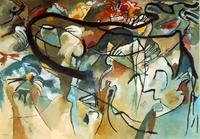
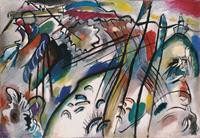
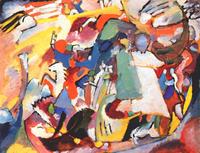
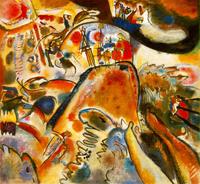
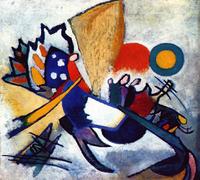
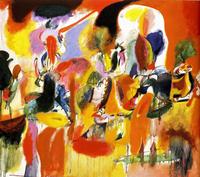
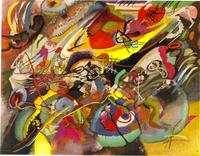
“Improvisation. Gorge” by Wassily Kandinsky stands as a landmark within the early development of Abstract Art. Created as part of his celebrated “Improvisation” series—works explicitly conceived as spontaneous, subconscious expressions—this painting marks a decisive break from representational tradition. Its significance lies in Kandinsky’s radical shift from depicting external landscapes to channeling inner emotional and spiritual states through pure form and color. The title “Gorge” suggests a natural fissure or emotional abyss, yet Kandinsky dissolves any literal depiction into swirling masses of pigment, angular lines, and clashing hues. This work exemplifies how he used abstract vocabulary to evoke visceral sensations, aligning with his theoretical belief that art should resonate like music—directly, without narrative. For the history of 20th‑century art, “Improvisation. Gorge” is a crucial document of the moment when abstraction became a language of its own, liberated from the need to imitate the visible world.